Dress up practice

2–3 सालEmotional Wellbeingसामग्री: Oversized hats, slippers, mittens, or other easy dress-up items

Practice simple dressing skills using items that are easier than regular clothes. Try putting on a big hat, stepping into large slippers, or pulling on mittens. These tasks are challenging enough to require effort but achievable with practice. When your child struggles, you might say, 'Dressing can be tricky. Let's work on it together.' Then break it down into smaller steps. This shows that hard things can be made easier by approaching them differently and that asking for help is a good strategy when stuck.

Steadily की विकासात्मक यात्रा का हिस्सा — जो तुम्हारे बच्चे के लिए व्यक्तिगत रूप से तैयार की गई है।
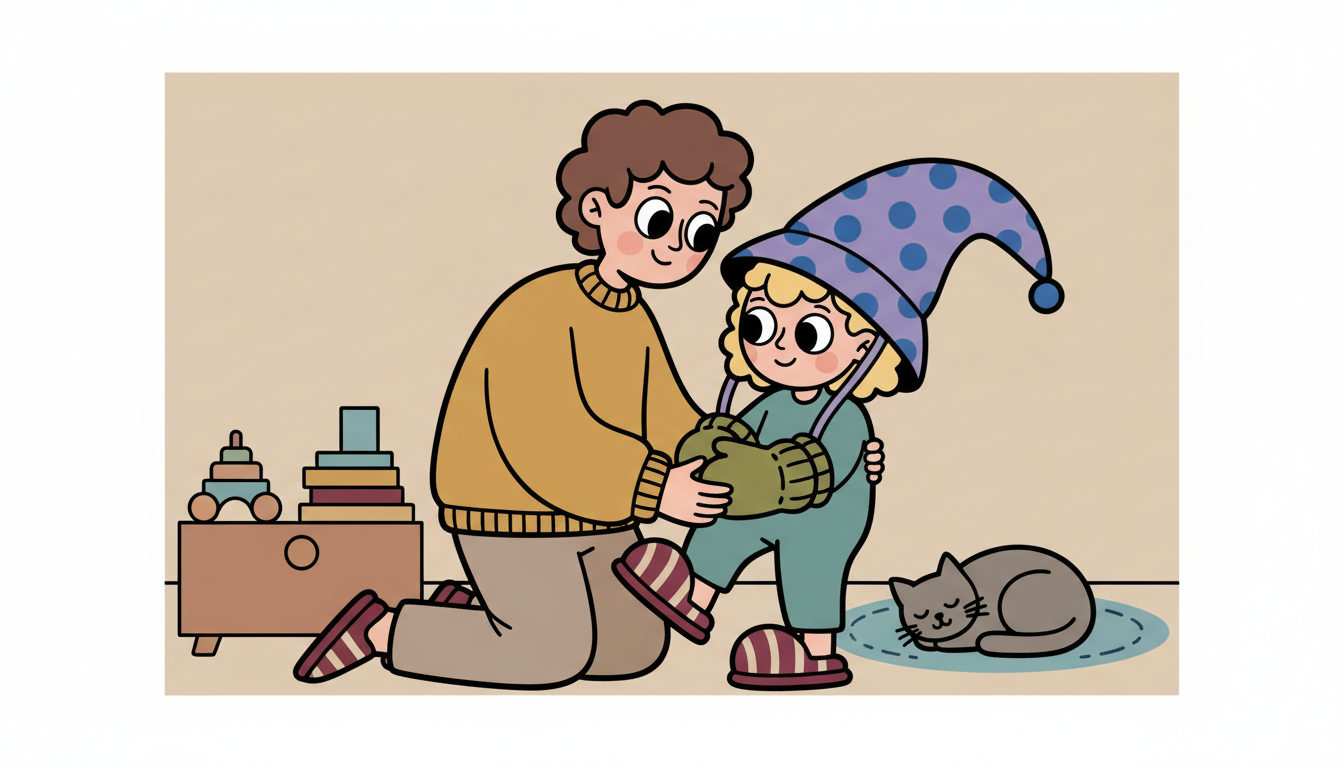
Dress up practice

यह गतिविधि कैसे करें

Practice simple dressing skills using items that are easier than regular clothes. Try putting on a big hat, stepping into large slippers, or pulling on mittens. These tasks are challenging enough to require effort but achievable with practice. When your child struggles, you might say, 'Dressing can be tricky. Let's work on it together.' Then break it down into smaller steps. This shows that hard things can be made easier by approaching them differently and that asking for help is a good strategy when stuck.

यह क्यों काम करता है

Self-care tasks provide natural, daily opportunities to practice persistence and build independence. These activities involve manageable challenges with clear goals, which research shows are essential for building resilience. Adults with high resilience developed in childhood exhibit significantly lower rates of anxiety and depression (Masten & Motti-Stefanidi, 2020). By supporting your child through dressing challenges rather than doing it for them, you help them develop the self-efficacy and problem-solving skills that form the foundation of resilience.

माता-पिता के लिए टिप्स

Choose items that are slightly easier than their regular clothes. Success builds confidence to tackle harder challenges. Break tasks into small steps. Say, 'First put your hand in. Now pull,' which matches their ability to follow two-step instructions. Let them struggle a bit before helping. This builds resilience, but step in before frustration becomes overwhelming.

ज़रूरी सामग्री

Oversized hats, slippers, mittens, or other easy dress-up items

सीखने के तरीके

Interactive Play-Based LearningSymbolic and Pretend PlaySocial Learning Through Peers

यह गतिविधि पसंद आई? चलो, प्लानिंग हम तुम्हारे लिए कर देते हैं या योजना बनाने का काम हम पर छोड़ दो।

Steadily हर गतिविधि को तुम्हारे बच्चे की रुचियों, उनके पड़ाव, और जिन गुणों को वे विकसित कर रहे हैं उनके अनुसार तैयार करता है — ताकि खेल का समय और मज़ेदार हो और हर पल काम आए।

जानो कि Steadily कैसे काम करता है →
