Comfort the sad toy
2–3 सालFamily Connectionसामग्री: Toys or stuffed animals
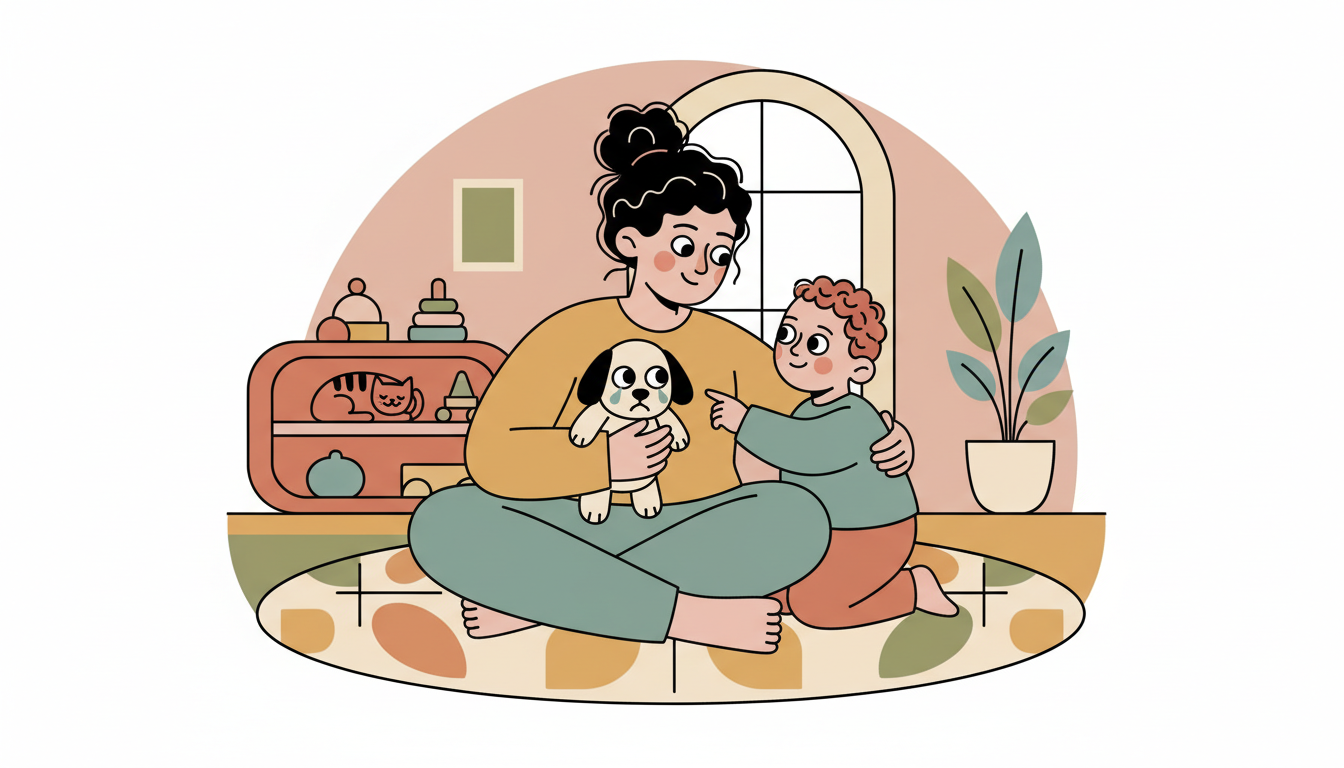
During play, pretend one of your child's toys is sad or hurt. Say 'Oh no, doggy fell down. Doggy is sad and crying.' See what your child does. If needed, model comforting: 'I will give doggy a hug. There, there, you will be okay.' Invite your child to help comfort the toy too.
Steadily की विकासात्मक यात्रा का हिस्सा — जो तुम्हारे बच्चे के लिए व्यक्तिगत रूप से तैयार की गई है।
यह गतिविधि कैसे करें
During play, pretend one of your child's toys is sad or hurt. Say 'Oh no, doggy fell down. Doggy is sad and crying.' See what your child does. If needed, model comforting: 'I will give doggy a hug. There, there, you will be okay.' Invite your child to help comfort the toy too.
यह क्यों काम करता है
Early empathy training through pretend play scenarios predicts prosocial behavior and peer acceptance later in childhood. This activity uses symbolic and pretend play, which is critical for emotional development, to practice responding compassionately to others' distress (Hoffman, M. L., 2000). The theory of mind foundations being established now through such activities are critical for all future empathy development.
माता-पिता के लिए टिप्स
Follow your child's lead. Some children will naturally comfort the toy. Others need you to show them first.
Praise any caring response. Even just touching the toy gently shows emerging empathy.
ज़रूरी सामग्री
Toys or stuffed animals
सीखने के तरीके
Symbolic and Pretend PlaySongs, Stories, and RhymesSocial Learning Through Peers

यह गतिविधि पसंद आई? चलो, प्लानिंग हम तुम्हारे लिए कर देते हैं या योजना बनाने का काम हम पर छोड़ दो।
Steadily हर गतिविधि को तुम्हारे बच्चे की रुचियों, उनके पड़ाव, और जिन गुणों को वे विकसित कर रहे हैं उनके अनुसार तैयार करता है — ताकि खेल का समय और मज़ेदार हो और हर पल काम आए।
जानो कि Steadily कैसे काम करता है →