When we are done
2–3 ansFamily ConnectionAucun matériel nécessaire
Give your child some control over when the activity ends. You can set a general timeframe, but let them decide when they're done within it. "We have 15 minutes to play. Let me know when you're ready to stop." Or offer a choice about ending. "Do you want to do one more puzzle or one more drawing before we finish?" This respects their engagement level and helps them practice recognizing their own readiness to move on.
Fait partie du parcours de développement Steadily — personnalisé pour ton enfant.
Comment faire cette activité
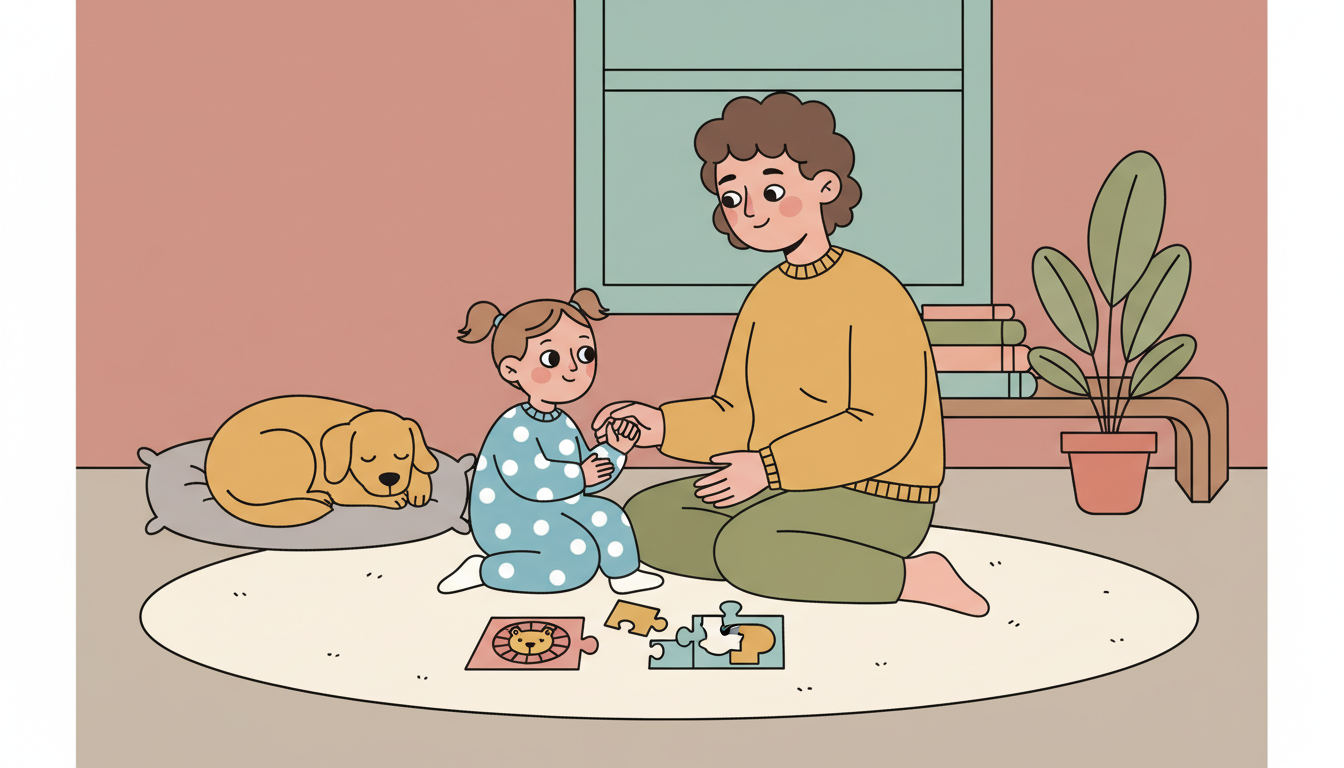
Give your child some control over when the activity ends. You can set a general timeframe, but let them decide when they're done within it. "We have 15 minutes to play. Let me know when you're ready to stop." Or offer a choice about ending. "Do you want to do one more puzzle or one more drawing before we finish?" This respects their engagement level and helps them practice recognizing their own readiness to move on.
Pourquoi ça marche
Allowing children to participate in decisions about transitions supports their developing autonomy while teaching time management. Children who experience appropriate autonomy support show better academic achievement and social competence (Grolnick & Ryan, 1989). Involving them in when activities end helps them feel respected and makes transitions smoother because they have some control over the process.
Conseils pour les parents
You can give a warning that time is running short without demanding an immediate stop. "We have a few more minutes" prepares them for the transition.
Some children will want to keep playing forever. You can still offer a choice about the ending. "It's time to finish. Do you want to end now or in two minutes?"
Matériel nécessaire
None
Méthodes d'apprentissage
Interactive Play-Based LearningHands-On Sensory ActivitiesSymbolic and Pretend Play

Tu as aimé cette activité ? Laisse-nous planifier pour toi.
Steadily personnalise chaque activité pour ton enfant — ses centres d'intérêt, son stade de développement, les traits qu'il développe — pour que le jeu soit plus amusant et que chaque instant compte.
Découvre comment fonctionne Steadily →