What helps you feel better
3–4 ansEmotional WellbeingAucun matériel nécessaire
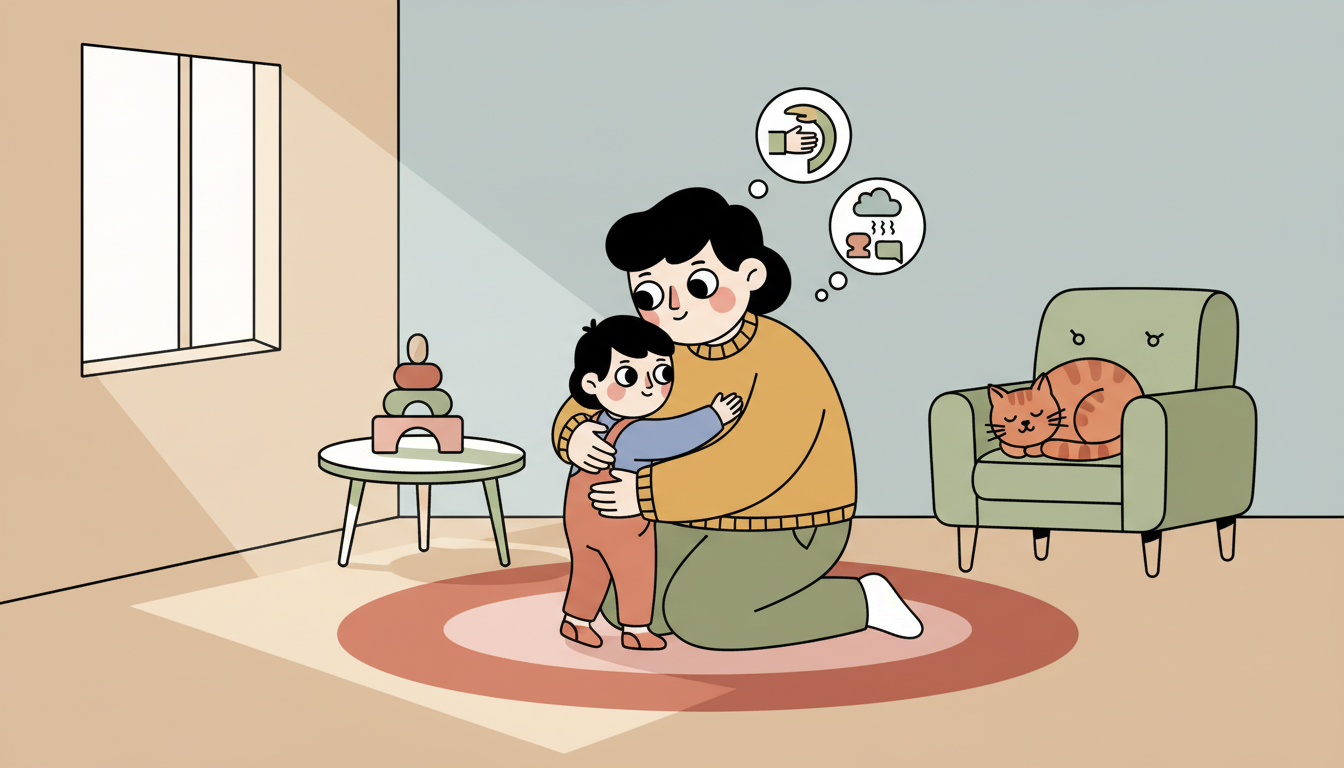
During quiet activities together, ask your child to think about times they felt upset and what made them feel better. Was it a hug, taking deep breaths, or talking about it? Help them notice what works for them. This builds self-awareness and gives them tools for future challenges.
Fait partie du parcours de développement Steadily — personnalisé pour ton enfant.
Comment faire cette activité
During quiet activities together, ask your child to think about times they felt upset and what made them feel better. Was it a hug, taking deep breaths, or talking about it? Help them notice what works for them. This builds self-awareness and gives them tools for future challenges.
Pourquoi ça marche
Identifying personal coping strategies builds the self-awareness and emotional regulation that underpin resilience. Research demonstrates that resilience interventions teaching students to identify and use coping skills lead to significant increases in emotional regulation and adaptive behaviors (Castro-Olivo et al., 2022). Children who develop this self-knowledge show better ability to manage stress throughout their lives.
Conseils pour les parents
Start with recent, specific examples your child can remember.
Validate all their answers, even if they seem simple like "Mommy's hug."
Revisit this conversation regularly as your child grows and discovers new coping strategies.
Matériel nécessaire
None
Méthodes d'apprentissage
Project-Based LearningInquiry-Based LearningStructured Learning Activities

Tu as aimé cette activité ? Laisse-nous planifier pour toi.
Steadily personnalise chaque activité pour ton enfant — ses centres d'intérêt, son stade de développement, les traits qu'il développe — pour que le jeu soit plus amusant et que chaque instant compte.
Découvre comment fonctionne Steadily →