Try it a different way
3–4 ansEmotional WellbeingAucun matériel nécessaire
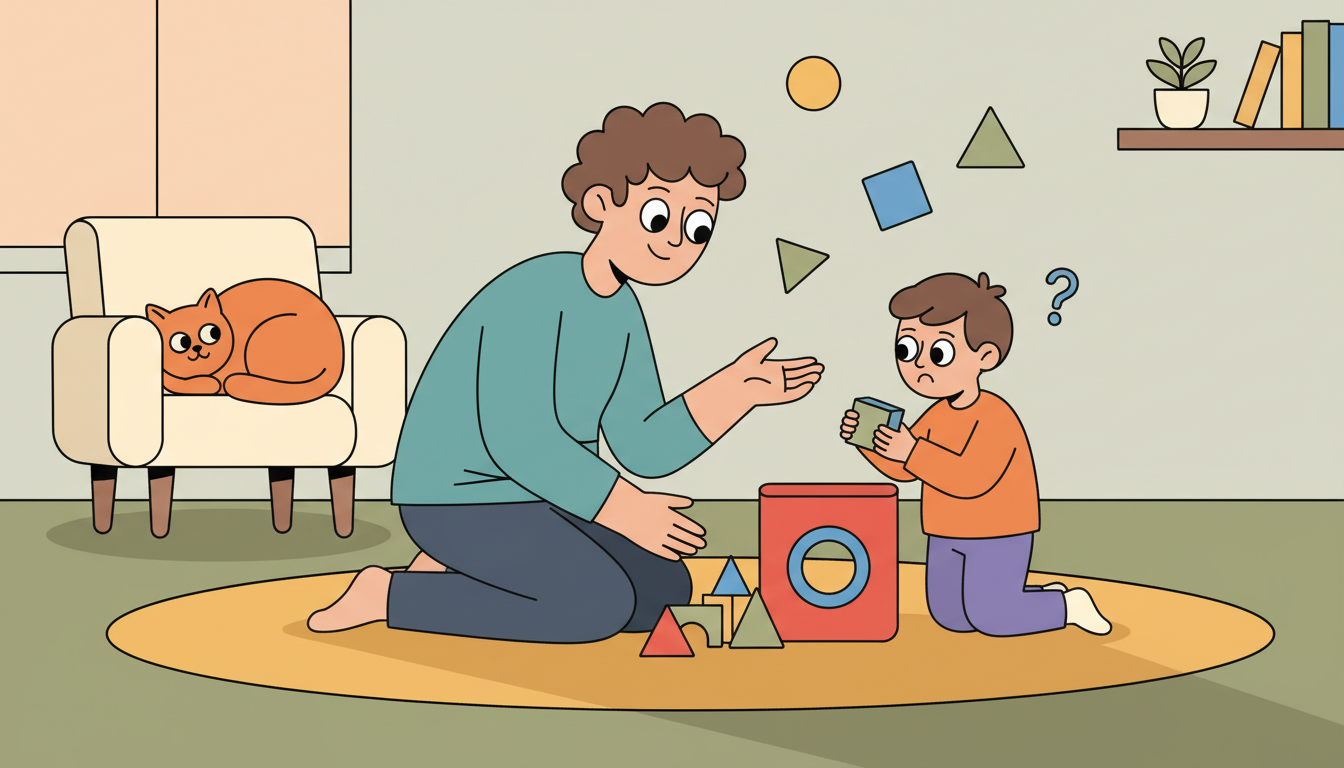
During play activities, when your child encounters a problem, encourage them to think of different solutions. If they can't open a container, ask what else they could try. If their drawing isn't working, suggest a new approach. This builds flexibility and the understanding that there are multiple ways to solve problems.
Fait partie du parcours de développement Steadily — personnalisé pour ton enfant.
Comment faire cette activité
During play activities, when your child encounters a problem, encourage them to think of different solutions. If they can't open a container, ask what else they could try. If their drawing isn't working, suggest a new approach. This builds flexibility and the understanding that there are multiple ways to solve problems.
Pourquoi ça marche
Problem-solving skills are a core protective factor in resilience development. Research shows that resilient children demonstrate better problem-solving skills and adaptability when facing challenges (Martin & Marsh, 2006). Teaching multiple approaches to difficulties helps children build the cognitive flexibility and persistence that predict better academic achievement and emotional well-being despite adversity.
Conseils pour les parents
Wait before stepping in to solve the problem yourself. Give your child time to think.
Ask open-ended questions like "What's another way we could do this?"
Praise creative thinking and effort, not just successful solutions.
Matériel nécessaire
None
Méthodes d'apprentissage
Project-Based LearningInquiry-Based LearningStructured Learning Activities

Tu as aimé cette activité ? Laisse-nous planifier pour toi.
Steadily personnalise chaque activité pour ton enfant — ses centres d'intérêt, son stade de développement, les traits qu'il développe — pour que le jeu soit plus amusant et que chaque instant compte.
Découvre comment fonctionne Steadily →