Truth-telling puppet show
2–3 ansSuccess MindsetMatériel : Stuffed animals or simple puppets
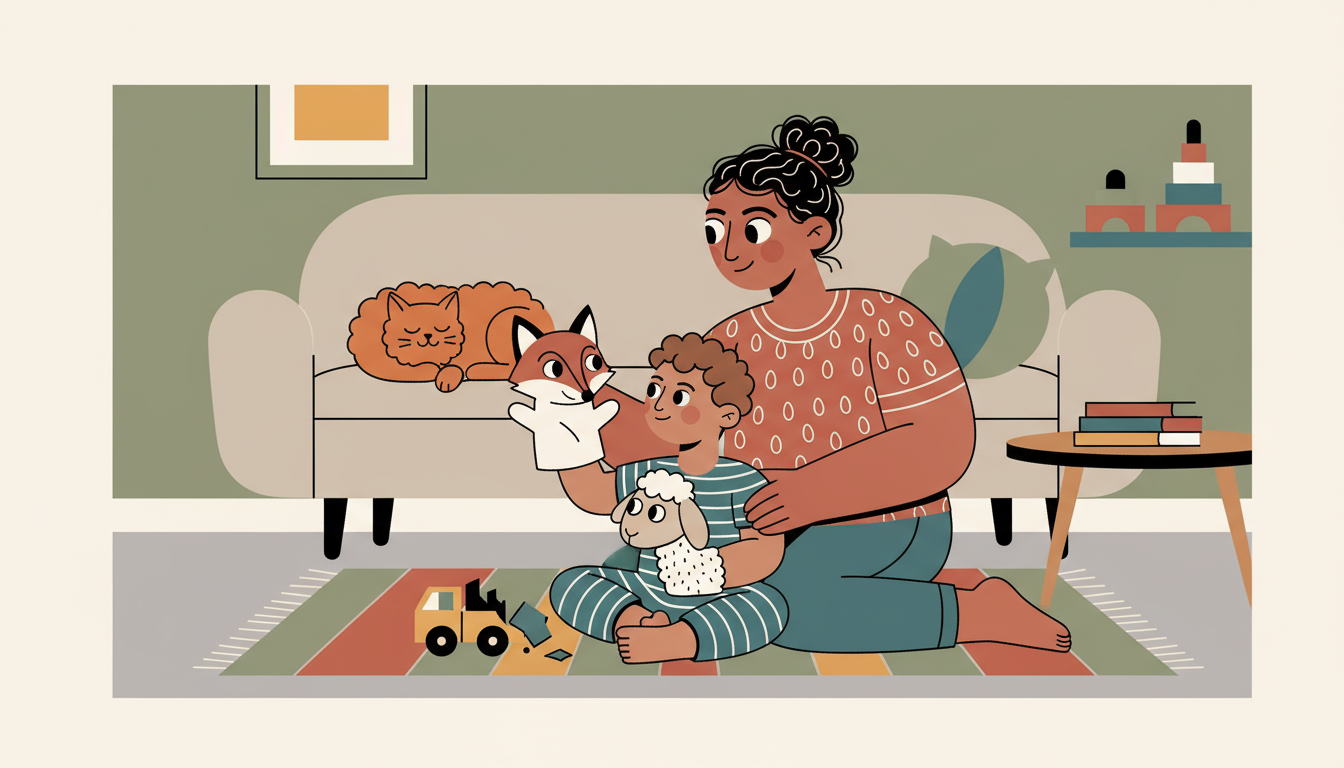
Use stuffed animals or simple hand puppets to act out short scenarios where a character faces a choice about telling the truth. Keep scenes simple, like a puppet accidentally breaking a toy and deciding whether to tell. After each scene, talk with your child about what happened and what the puppet should do.
Fait partie du parcours de développement Steadily — personnalisé pour ton enfant.
Comment faire cette activité
Use stuffed animals or simple hand puppets to act out short scenarios where a character faces a choice about telling the truth. Keep scenes simple, like a puppet accidentally breaking a toy and deciding whether to tell. After each scene, talk with your child about what happened and what the puppet should do.
Pourquoi ça marche
Role-playing and pretend play help young children explore moral concepts in a safe, playful context. Children who demonstrate truthfulness and accountability for mistakes show stronger trust-building capabilities, which correlate with better collaborative relationships and academic success in group settings (Hoffman, 2000). At this age, symbolic play allows children to practice honesty scenarios without the pressure of real consequences.
Conseils pour les parents
Keep scenarios very simple and relatable to your child's daily experiences. Use a warm, calm tone when the puppet admits mistakes.
Praise your child when they identify the honest choice. You can say something like, "You're right, telling the truth helps everyone feel better."
Matériel nécessaire
Stuffed animals or simple puppets
Méthodes d'apprentissage
Symbolic and Pretend PlaySongs, Stories, and Rhymes

Tu as aimé cette activité ? Laisse-nous planifier pour toi.
Steadily personnalise chaque activité pour ton enfant — ses centres d'intérêt, son stade de développement, les traits qu'il développe — pour que le jeu soit plus amusant et que chaque instant compte.
Découvre comment fonctionne Steadily →