The why behind feelings
3–4 ansFamily ConnectionAucun matériel nécessaire
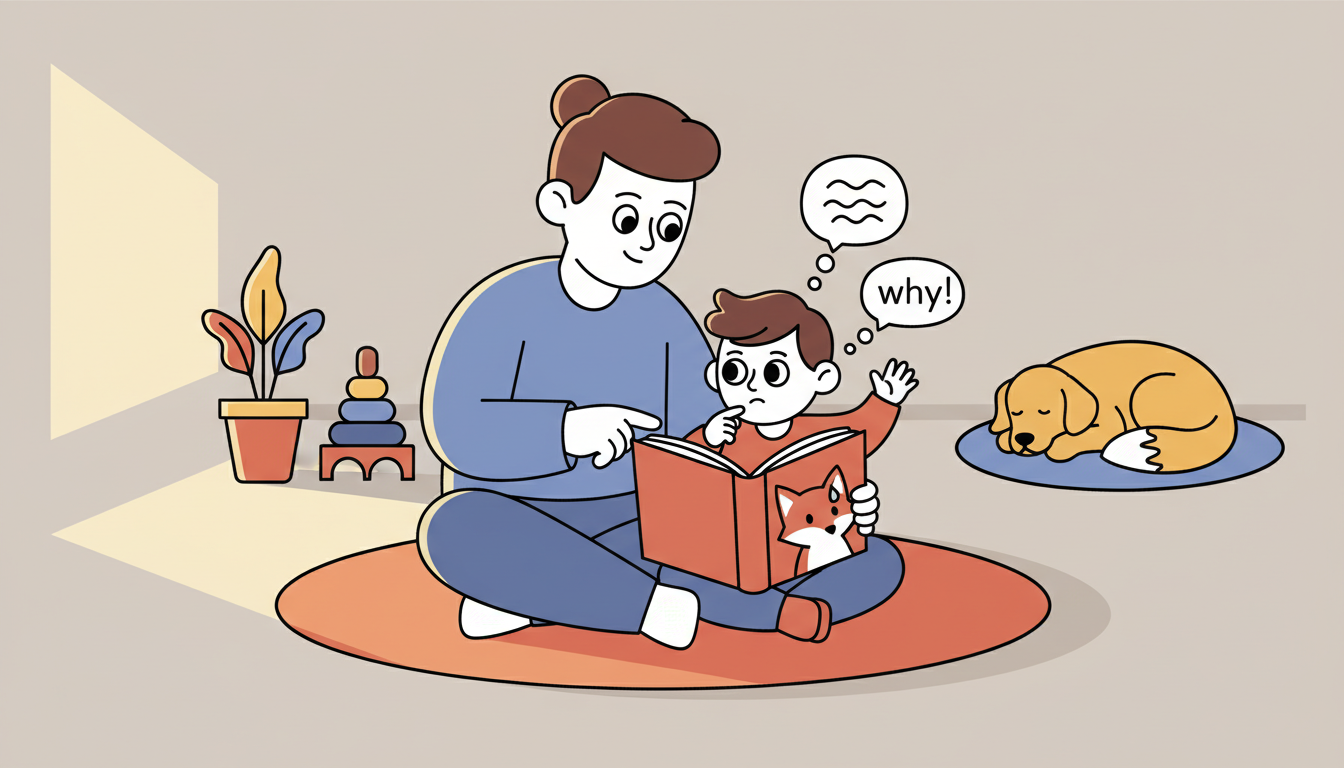
Throughout your activity time, whenever emotions come up naturally, ask your child why someone might feel that way. If your child says, 'She looks sad,' follow up with, 'What do you think made her sad?' or 'Why might she feel that way?' This moves beyond just labeling emotions to understanding their causes. You can practice with people you see, characters in books, or family members. Understanding the reasons behind feelings is a key step toward true empathy.
Fait partie du parcours de développement Steadily — personnalisé pour ton enfant.
Comment faire cette activité
Throughout your activity time, whenever emotions come up naturally, ask your child why someone might feel that way. If your child says, 'She looks sad,' follow up with, 'What do you think made her sad?' or 'Why might she feel that way?' This moves beyond just labeling emotions to understanding their causes. You can practice with people you see, characters in books, or family members. Understanding the reasons behind feelings is a key step toward true empathy.
Pourquoi ça marche
Understanding the causes of emotions is central to cognitive empathy development. Research shows that empathy plays a critical role in emotional well-being, and when parents help children understand emotions deeply, children develop better emotional regulation and social skills (Bhansali, 2023). At 36-48 months, children's cognitive abilities allow them to make simple cause-effect connections. Teaching them to link events with emotional responses builds the cognitive empathy that predicts social competence.
Conseils pour les parents
Start with simple, obvious causes like 'He fell down, so he feels hurt.'
If your child struggles, offer two possible reasons to choose from.
Connect feelings to your child's own experiences by asking, 'Would you feel sad if that happened to you?'
Matériel nécessaire
None
Méthodes d'apprentissage
Narrative and Literacy-Rich ExperiencesCollaborative and Cooperative PlayInquiry-Based Learning

Tu as aimé cette activité ? Laisse-nous planifier pour toi.
Steadily personnalise chaque activité pour ton enfant — ses centres d'intérêt, son stade de développement, les traits qu'il développe — pour que le jeu soit plus amusant et que chaque instant compte.
Découvre comment fonctionne Steadily →