Teach each other games
4–5 ansFamily ConnectionMatériel : Playing cards, dice, or simple board games
Paper to write down game names
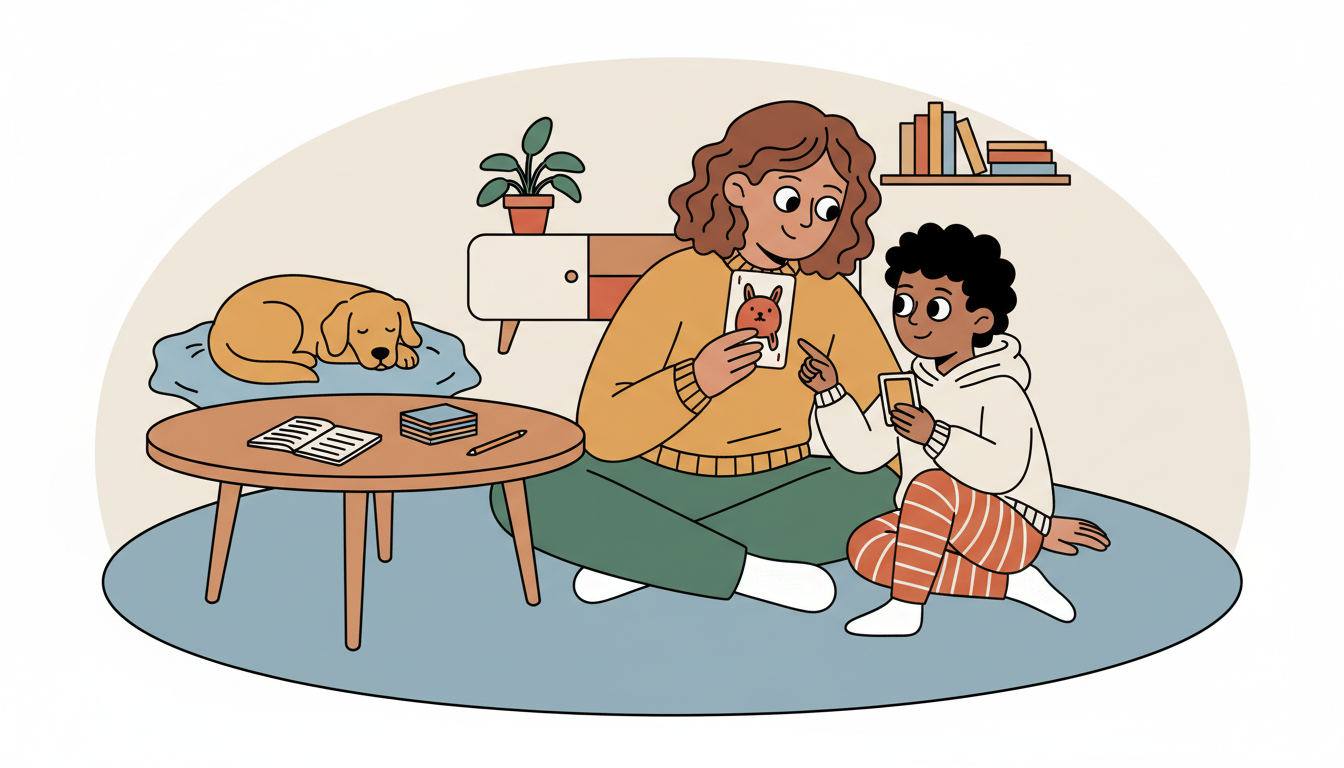
Take turns teaching each other simple games. You might teach your child a card game you played as a child, while they teach you a game they learned at school or made up themselves. Play the games together regularly. Keep a list of games you both know.
Fait partie du parcours de développement Steadily — personnalisé pour ton enfant.
Comment faire cette activité
Take turns teaching each other simple games. You might teach your child a card game you played as a child, while they teach you a game they learned at school or made up themselves. Play the games together regularly. Keep a list of games you both know.
Pourquoi ça marche
Teaching each other builds reciprocal sharing and shows that both people's interests matter equally. Adults who maintain shared hobbies or interests with parents report 35% higher relationship satisfaction and emotional closeness (Crosnoe & Trinitapoli, 2008). The turn-taking and rule-following also support children's developing logical thinking and social skills.
Conseils pour les parents
Be patient when learning their game, even if the rules seem confusing. Show genuine interest.
Choose simple games that can be learned in one session and played in 10 to 15 minutes.
Matériel nécessaire
Playing cards, dice, or simple board games
Paper to write down game names
Méthodes d'apprentissage
Project-Based and Thematic LearningCooperative LearningGuided Discovery and Inquiry

Tu as aimé cette activité ? Laisse-nous planifier pour toi.
Steadily personnalise chaque activité pour ton enfant — ses centres d'intérêt, son stade de développement, les traits qu'il développe — pour que le jeu soit plus amusant et que chaque instant compte.
Découvre comment fonctionne Steadily →