Simple science experiments
4–5 ansSuccess MindsetMatériel : Common household items:
Baking soda and vinegar
Water and various containers
Ice cubes
Items to test (fruits, toys, etc.)
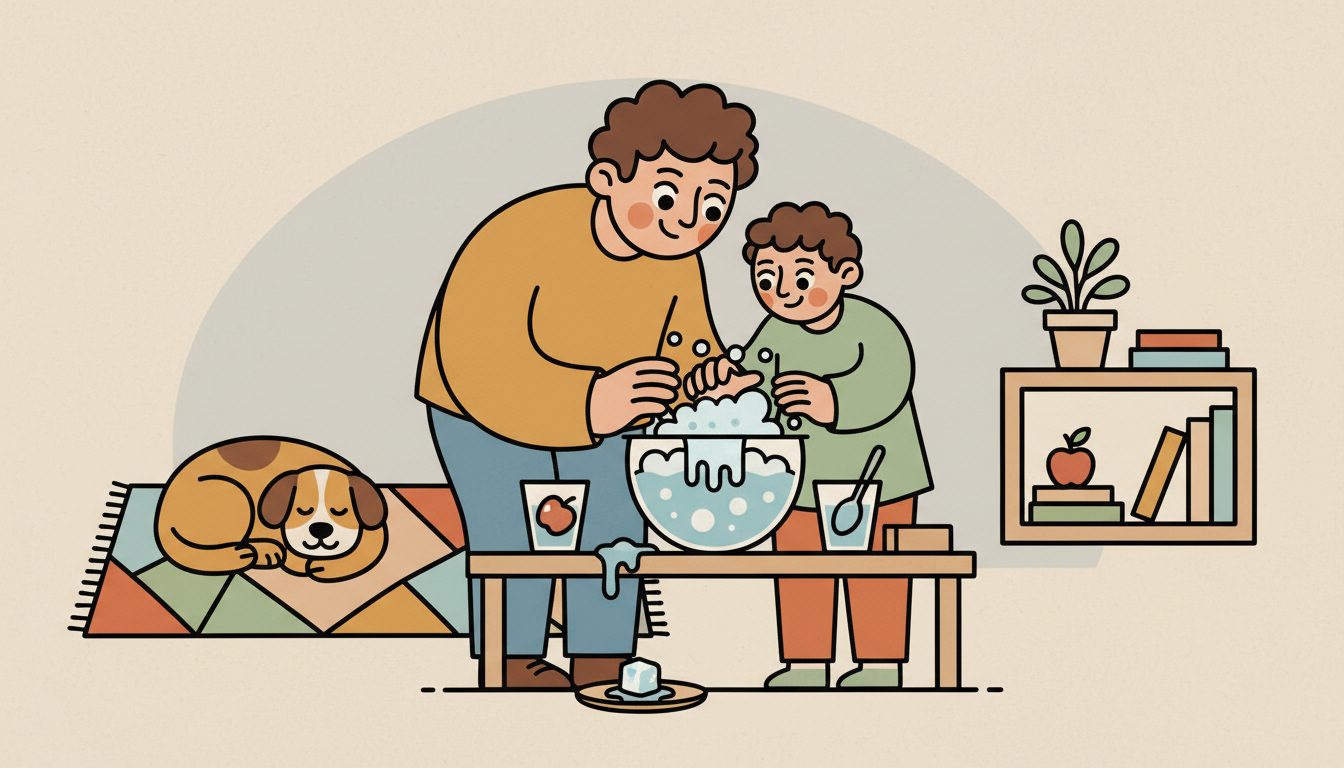
Conduct one simple experiment each week using household items. Mix baking soda and vinegar to see the reaction. Float and sink different objects. Watch ice melt at different speeds. Before each experiment, ask your child to predict what will happen and why. Afterward, discuss what you observed together. Let your child suggest variations to try next time.
Fait partie du parcours de développement Steadily — personnalisé pour ton enfant.
Comment faire cette activité
Conduct one simple experiment each week using household items. Mix baking soda and vinegar to see the reaction. Float and sink different objects. Watch ice melt at different speeds. Before each experiment, ask your child to predict what will happen and why. Afterward, discuss what you observed together. Let your child suggest variations to try next time.
Pourquoi ça marche
Hands-on experiments create the curiosity states that enhance learning and memory. Research shows children demonstrated enhanced memory for information they were curious about (Gruber et al., 2014). Simple science experiments naturally generate wonder and questions. Your child's developing understanding of cause-effect relationships allows them to make and test predictions. This scientific thinking process builds the deeper engagement with learning that research identifies as crucial for academic achievement (Arnone et al., 2011). The experimental approach teaches that questions can be answered through systematic investigation.
Conseils pour les parents
The prediction step is crucial. It engages your child's logical thinking before they see the result.
You do not need to explain the science perfectly. Wondering together and making observations is the goal.
Let experiments get a little messy. Over-controlling reduces the exploratory nature that builds curiosity.
Matériel nécessaire
Common household items:
Baking soda and vinegar
Water and various containers
Ice cubes
Items to test (fruits, toys, etc.)
Méthodes d'apprentissage
Guided Discovery and InquiryProject-Based and Thematic Learning

Tu as aimé cette activité ? Laisse-nous planifier pour toi.
Steadily personnalise chaque activité pour ton enfant — ses centres d'intérêt, son stade de développement, les traits qu'il développe — pour que le jeu soit plus amusant et que chaque instant compte.
Découvre comment fonctionne Steadily →