Scoop and pour water play

2–3 ansEmotional WellbeingMatériel : Plastic cups or containers, water, and a sink or shallow tub

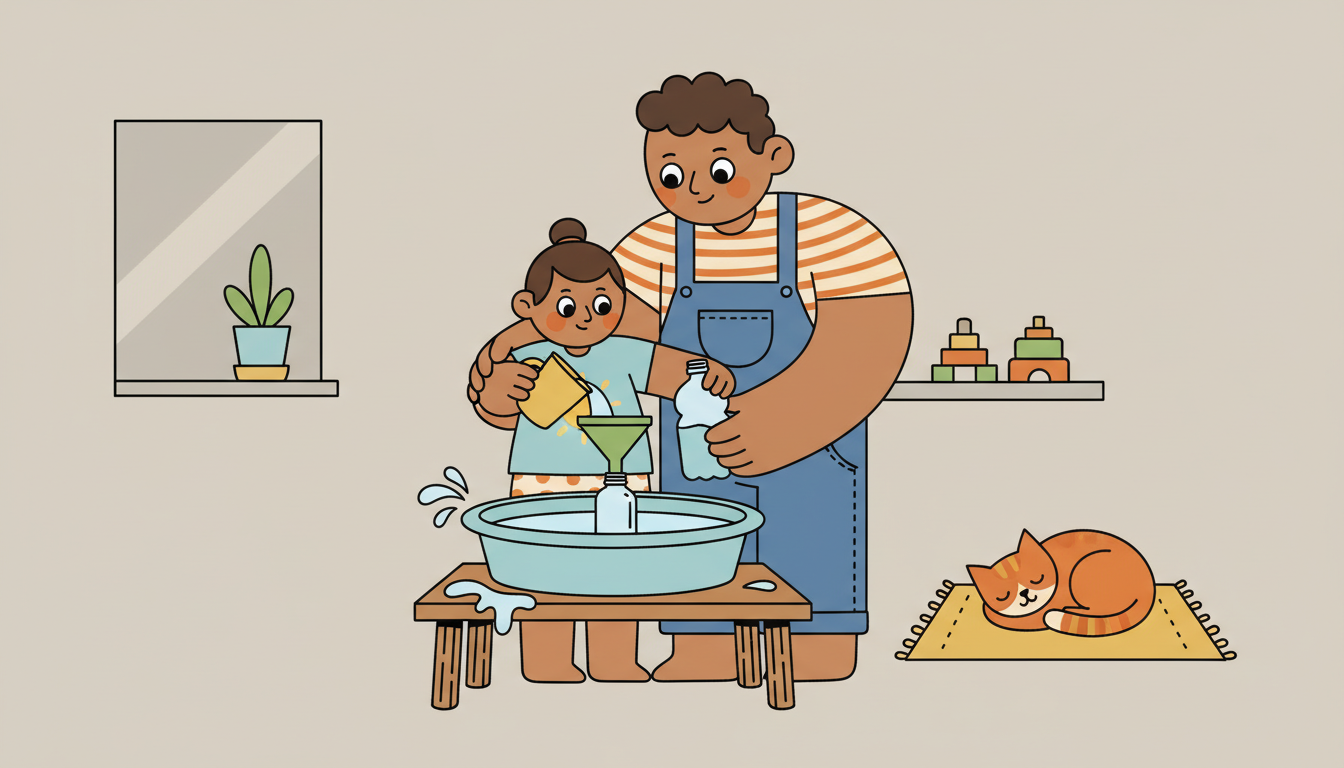
Set up a simple water play activity at the sink or in a shallow tub. Give your child cups or containers to scoop and pour water. This activity naturally involves spills, misses, and trying again to get the water where they want it. When water spills, stay calm and say, 'The water spilled. Let's try pouring more slowly.' This shows that mistakes happen and we can adjust our approach. The immediate feedback of water helps children see the results of their efforts and adjust their strategy.

Fait partie du parcours de développement Steadily — personnalisé pour ton enfant.
Scoop and pour water play

Comment faire cette activité

Set up a simple water play activity at the sink or in a shallow tub. Give your child cups or containers to scoop and pour water. This activity naturally involves spills, misses, and trying again to get the water where they want it. When water spills, stay calm and say, 'The water spilled. Let's try pouring more slowly.' This shows that mistakes happen and we can adjust our approach. The immediate feedback of water helps children see the results of their efforts and adjust their strategy.

Pourquoi ça marche

Water play provides immediate, concrete feedback that matches toddlers' learning style while building frustration tolerance. The trial-and-error process of learning to control pouring builds problem-solving skills that are core to resilience. Research shows that resilience is positively correlated with better problem-solving skills (Martin & Marsh, 2006). The manageable frustrations in this activity, combined with your supportive presence, create ideal conditions for resilience learning during this sensitive period when desires often outpace abilities.

Conseils pour les parents

Keep cleanup supplies nearby and expect spills. Your calm response to mess teaches your child that mistakes are manageable. Use this time to practice two-step instructions like, 'Fill the cup, then pour it in the bowl.' This matches their cognitive abilities. Point out their progress. Say, 'You're getting more water in the bowl now,' which highlights improvement through practice.

Matériel nécessaire

Plastic cups or containers, water, and a sink or shallow tub

Méthodes d'apprentissage

Interactive Play-Based LearningSymbolic and Pretend PlaySocial Learning Through Peers

Tu as aimé cette activité ? Laisse-nous planifier pour toi.

Steadily personnalise chaque activité pour ton enfant — ses centres d'intérêt, son stade de développement, les traits qu'il développe — pour que le jeu soit plus amusant et que chaque instant compte.

Découvre comment fonctionne Steadily →
