Respectful disagreement practice
4–5 ansFamily ConnectionAucun matériel nécessaire
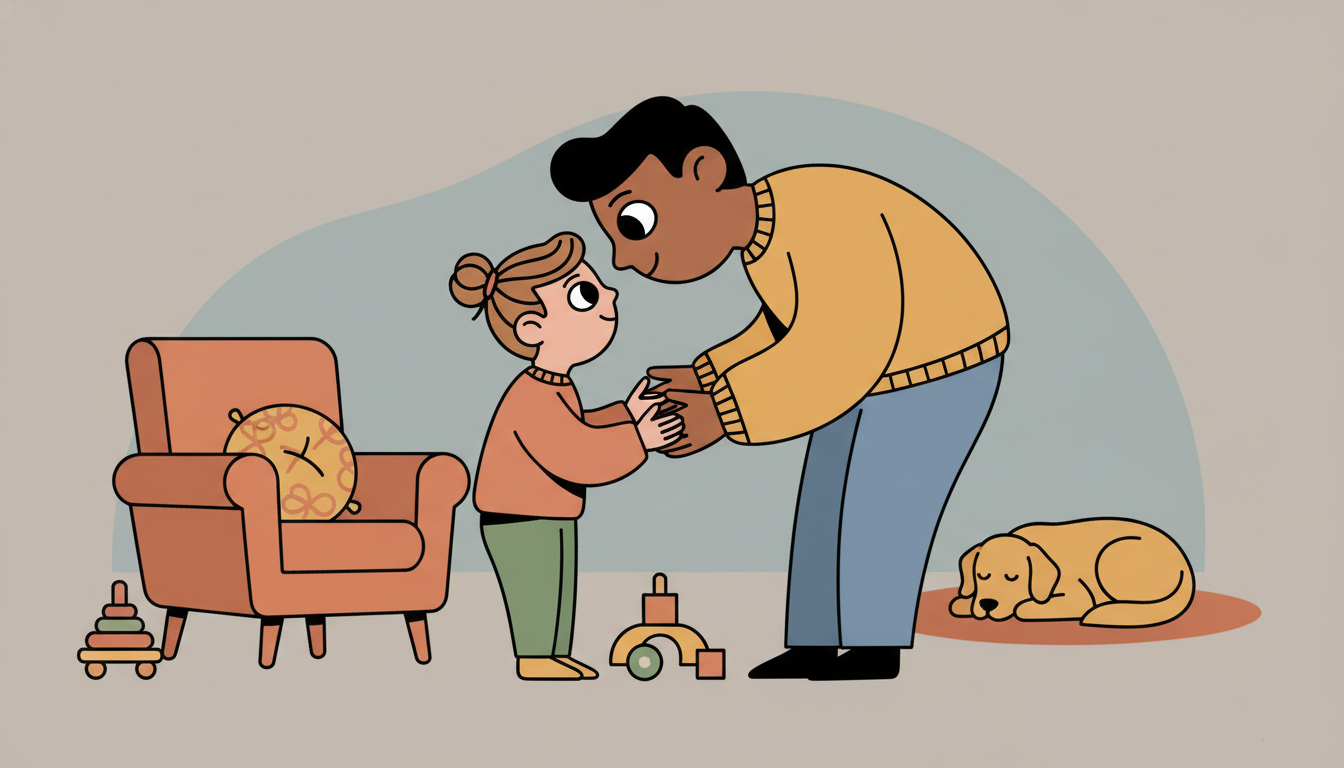
When you and your child have different preferences during activities, model how to disagree respectfully. Use phrases like I see it differently or I understand your point. Explain your thinking calmly and ask your child to share theirs. This teaches children that disagreement can happen within respectful, caring communication and does not threaten relationships.
Fait partie du parcours de développement Steadily — personnalisé pour ton enfant.
Comment faire cette activité
When you and your child have different preferences during activities, model how to disagree respectfully. Use phrases like I see it differently or I understand your point. Explain your thinking calmly and ask your child to share theirs. This teaches children that disagreement can happen within respectful, caring communication and does not threaten relationships.
Pourquoi ça marche
Research shows that validation and active listening are more important than agreement in determining communication quality and relationship satisfaction (Hartos & Power, 2000). Teaching children to communicate respectfully even during disagreement builds social competencies essential for school and relationships (Widiastuti & Purwandari, 2019). Mirroring and empathy during conflict strengthen relationship quality (Zhang & Li, 2024).
Conseils pour les parents
Stay calm and use a normal tone during disagreements.
Acknowledge what your child wants before explaining your view.
Look for compromise solutions when appropriate.
Matériel nécessaire
None
Méthodes d'apprentissage
Cooperative LearningStructured Academic LearningProject-Based and Thematic Learning

Tu as aimé cette activité ? Laisse-nous planifier pour toi.
Steadily personnalise chaque activité pour ton enfant — ses centres d'intérêt, son stade de développement, les traits qu'il développe — pour que le jeu soit plus amusant et que chaque instant compte.
Découvre comment fonctionne Steadily →