Puppet emotion play
3–4 ansEmotional WellbeingMatériel : Stuffed animals or simple puppets
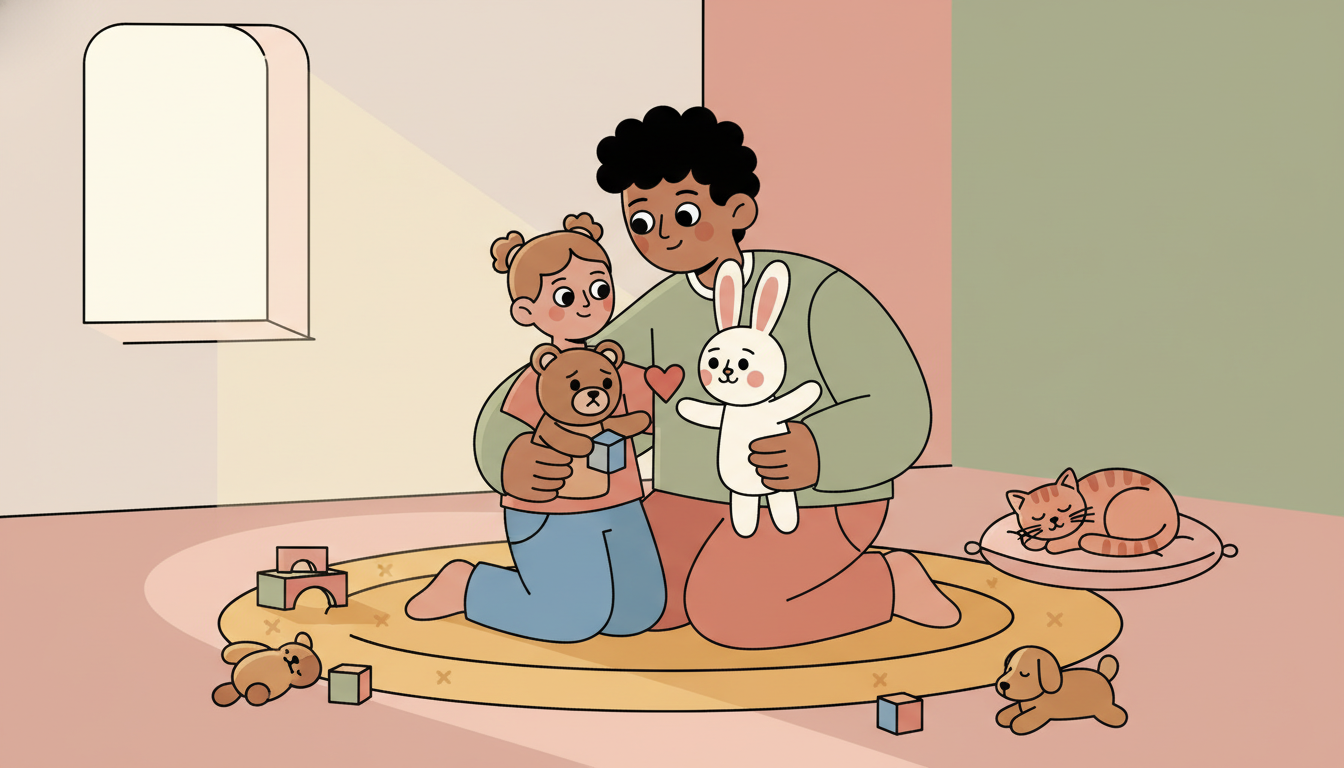
Use stuffed animals or simple puppets to act out emotional scenarios. Have one puppet lose a toy and feel sad, then work through the feeling together. Let your child guide the puppets through different situations. This provides safe distance to explore big emotions and practice empathy through pretend play.
Fait partie du parcours de développement Steadily — personnalisé pour ton enfant.
Comment faire cette activité
Use stuffed animals or simple puppets to act out emotional scenarios. Have one puppet lose a toy and feel sad, then work through the feeling together. Let your child guide the puppets through different situations. This provides safe distance to explore big emotions and practice empathy through pretend play.
Pourquoi ça marche
Pretend play builds theory of mind and perspective-taking abilities during this critical developmental window. Children with higher emotional intelligence experience better relationship satisfaction and mental health (Bar-On, 2006). Using puppets gives children safe practice with emotional situations when emotional competence becomes developmentally possible.
Conseils pour les parents
Start with simple scenarios your child can relate to easily.
Let your child choose what happens next in the story.
Validate all emotions the puppets express during play.
Matériel nécessaire
Stuffed animals or simple puppets
Méthodes d'apprentissage
Narrative and Literacy-Rich ExperiencesCollaborative and Cooperative PlayInquiry-Based Learning

Tu as aimé cette activité ? Laisse-nous planifier pour toi.
Steadily personnalise chaque activité pour ton enfant — ses centres d'intérêt, son stade de développement, les traits qu'il développe — pour que le jeu soit plus amusant et que chaque instant compte.
Découvre comment fonctionne Steadily →