Mistakes help us learn
4–5 ansEmotional WellbeingAucun matériel nécessaire
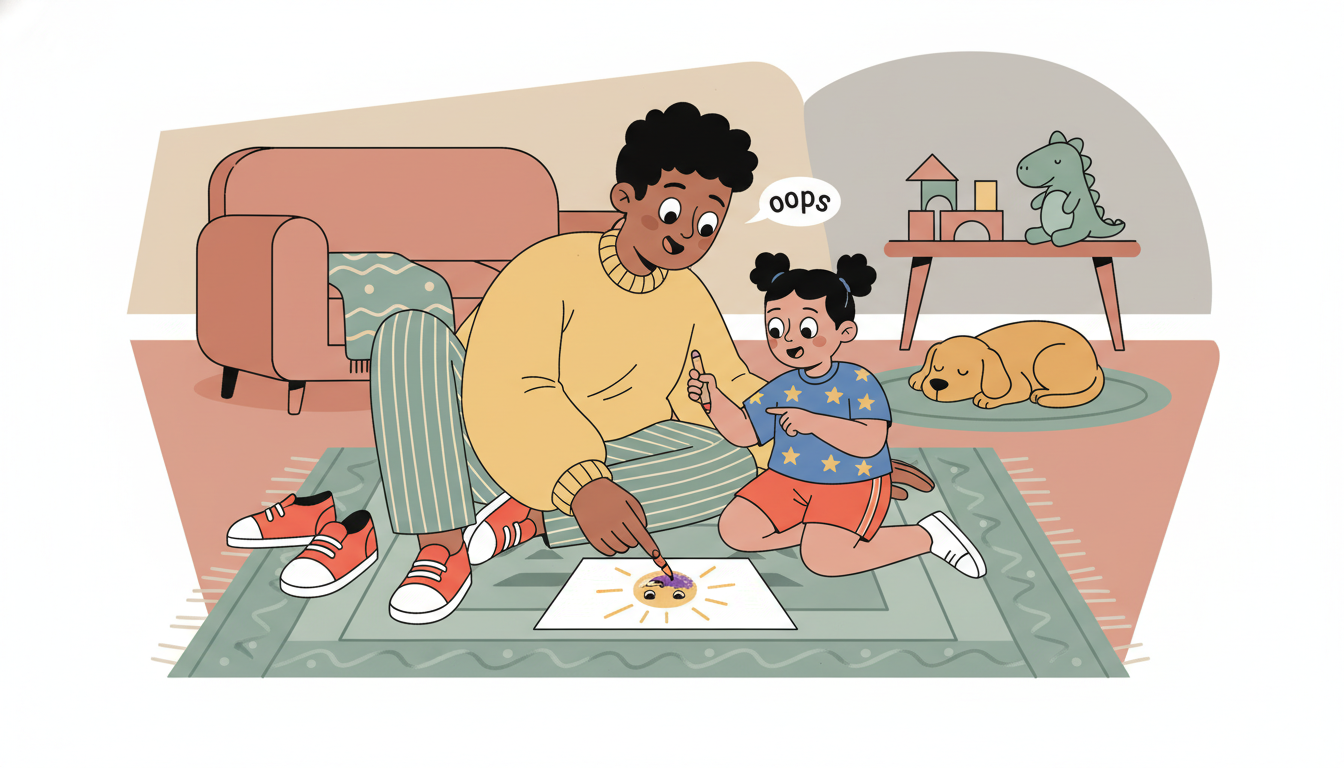
During an activity, intentionally make a small, harmless mistake like putting your shoe on the wrong foot or mixing up colors in a drawing. Laugh gently and say 'Oops, I made a mistake. I can fix it.' Show your child how you calmly correct it. This models that mistakes are normal, fixable, and nothing to feel bad about. When they make mistakes, reference your own earlier mistake to normalize the experience.
Fait partie du parcours de développement Steadily — personnalisé pour ton enfant.
Comment faire cette activité
During an activity, intentionally make a small, harmless mistake like putting your shoe on the wrong foot or mixing up colors in a drawing. Laugh gently and say 'Oops, I made a mistake. I can fix it.' Show your child how you calmly correct it. This models that mistakes are normal, fixable, and nothing to feel bad about. When they make mistakes, reference your own earlier mistake to normalize the experience.
Pourquoi ça marche
Modeling resilience through adult challenges is an evidence-based approach for this age. Research demonstrates that resilient children develop better ability to recover from adversity when they see adults managing setbacks calmly (Masten & Motti-Stefanidi, 2020). At 48-60 months, children can understand cause-effect relationships and learn through observation, making adult modeling particularly effective for teaching emotional responses to mistakes.
Conseils pour les parents
Make the mistake obvious but not silly or exaggerated.
Show a calm, matter-of-fact response rather than frustration or embarrassment.
When your child makes mistakes later, remind them 'Remember when I put my shoe on wrong. We all make mistakes.'
Matériel nécessaire
None
Méthodes d'apprentissage
Guided Discovery and InquiryProject-Based and Thematic LearningMetacognitive Strategies

Tu as aimé cette activité ? Laisse-nous planifier pour toi.
Steadily personnalise chaque activité pour ton enfant — ses centres d'intérêt, son stade de développement, les traits qu'il développe — pour que le jeu soit plus amusant et que chaque instant compte.
Découvre comment fonctionne Steadily →