I can't do it yet
3–4 ansSuccess MindsetAucun matériel nécessaire
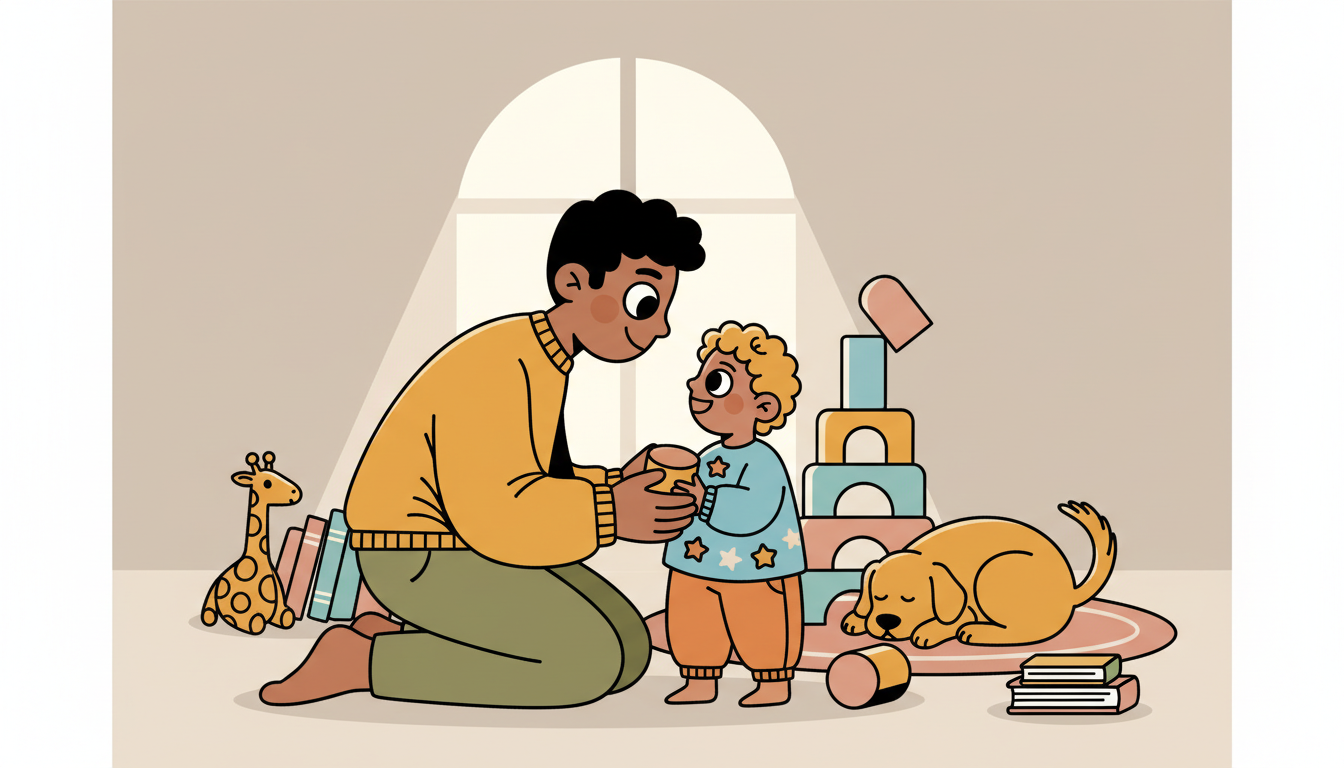
When your child says 'I can't do it,' add the word 'yet' to the end. Practice using 'yet' language together throughout your activities. Make it playful and notice when your child starts using it on their own. Celebrate when you hear them say 'I can't do it yet.'
Fait partie du parcours de développement Steadily — personnalisé pour ton enfant.
Comment faire cette activité
When your child says 'I can't do it,' add the word 'yet' to the end. Practice using 'yet' language together throughout your activities. Make it playful and notice when your child starts using it on their own. Celebrate when you hear them say 'I can't do it yet.'
Pourquoi ça marche
The word 'yet' fundamentally changes how children think about their abilities. It transforms a statement of inability into a statement about current status and future potential. Research shows that children who adopt growth mindset language show greater persistence and develop stronger skills over time, with parents' growth mindset beliefs directly influencing children's persistence.
(Song, Y., Barger, M. M., & Bub, K. L. (2022). Growth mindset and children's persistence and academic skills. Frontiers in Education, 6, 791652.)
Conseils pour les parents
Model 'yet' language yourself: 'I can't open this jar yet. Let me try twisting harder.'
When your child uses 'yet' naturally, acknowledge it warmly: 'I heard you say yet. That shows you know you'll get better with practice.' Don't turn this into pressure. Keep it light and positive.
Matériel nécessaire
None
Méthodes d'apprentissage
Inquiry-Based LearningStructured Learning ActivitiesProject-Based Learning

Tu as aimé cette activité ? Laisse-nous planifier pour toi.
Steadily personnalise chaque activité pour ton enfant — ses centres d'intérêt, son stade de développement, les traits qu'il développe — pour que le jeu soit plus amusant et que chaque instant compte.
Découvre comment fonctionne Steadily →