Feelings face drawing
4–5 ansEmotional WellbeingMatériel : Paper
Crayons or markers
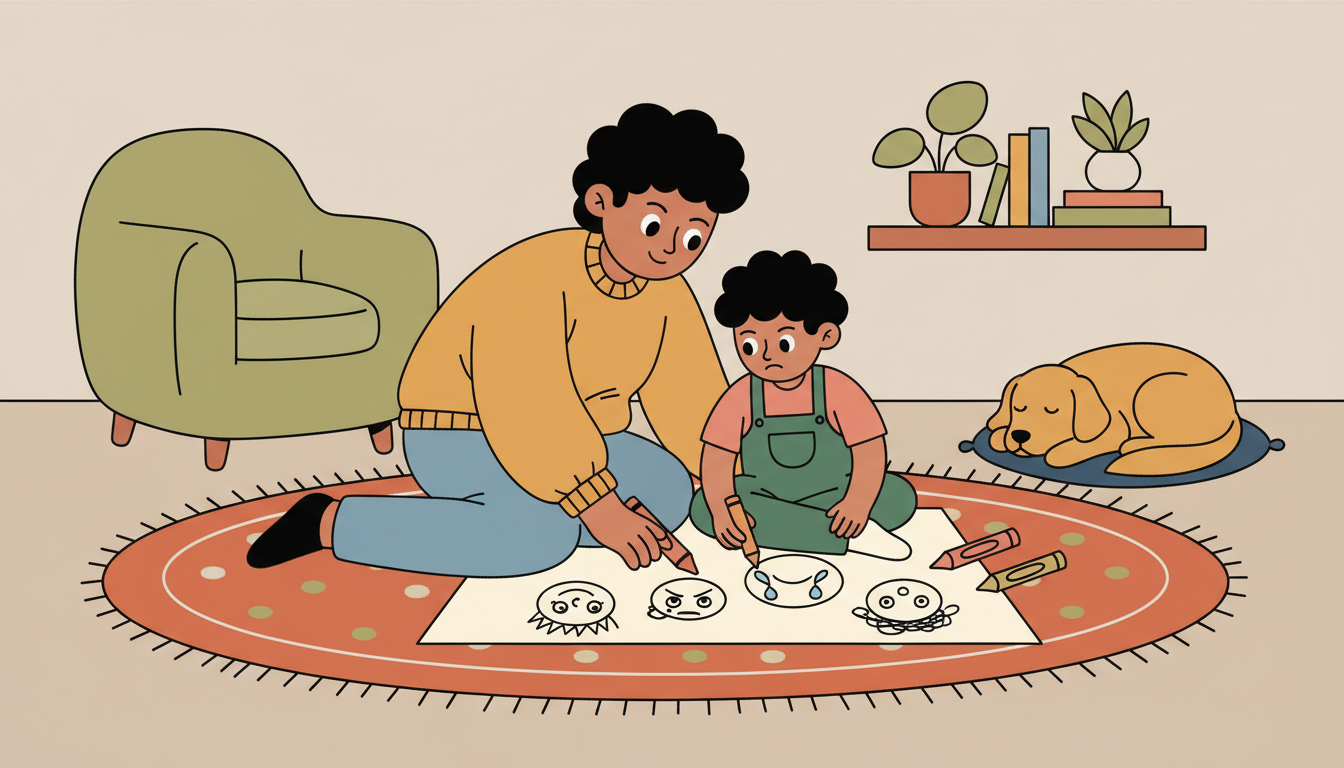
During your time together, draw different emotion faces with your child. Start with basic emotions like happy, sad, angry, and scared. Then introduce complex emotions like frustrated, disappointed, proud, or embarrassed. Take turns drawing and naming emotions. Talk about times when you each felt these emotions. This builds emotional vocabulary in a fun, creative way.
Fait partie du parcours de développement Steadily — personnalisé pour ton enfant.
Comment faire cette activité
During your time together, draw different emotion faces with your child. Start with basic emotions like happy, sad, angry, and scared. Then introduce complex emotions like frustrated, disappointed, proud, or embarrassed. Take turns drawing and naming emotions. Talk about times when you each felt these emotions. This builds emotional vocabulary in a fun, creative way.
Pourquoi ça marche
Building rich emotional vocabulary is essential for emotional intelligence development. When children can identify and label their emotions accurately, they develop better emotional regulation and self-awareness. Research shows that emotional knowledge at age five predicts social competence and academic achievement, as children who can identify and understand emotions show better peer relationships and classroom behavior (Brackett, M. A., Rivers, S. E., & Salovey, P., 2011). At this age, children's theory of mind is fully developed, enabling them to understand sophisticated emotions beyond basic feelings.
Conseils pour les parents
Let your child lead sometimes by choosing which emotion to draw next. This builds their confidence.
Ask what each emotion feels like in their body. This helps them recognize emotions when they happen.
Keep drawings simple. Stick figures work perfectly for this activity.
Matériel nécessaire
Paper
Crayons or markers
Méthodes d'apprentissage
Metacognitive StrategiesCooperative LearningStructured Academic Learning

Tu as aimé cette activité ? Laisse-nous planifier pour toi.
Steadily personnalise chaque activité pour ton enfant — ses centres d'intérêt, son stade de développement, les traits qu'il développe — pour que le jeu soit plus amusant et que chaque instant compte.
Découvre comment fonctionne Steadily →