Feelings after setbacks
3–4 ansEmotional WellbeingAucun matériel nécessaire
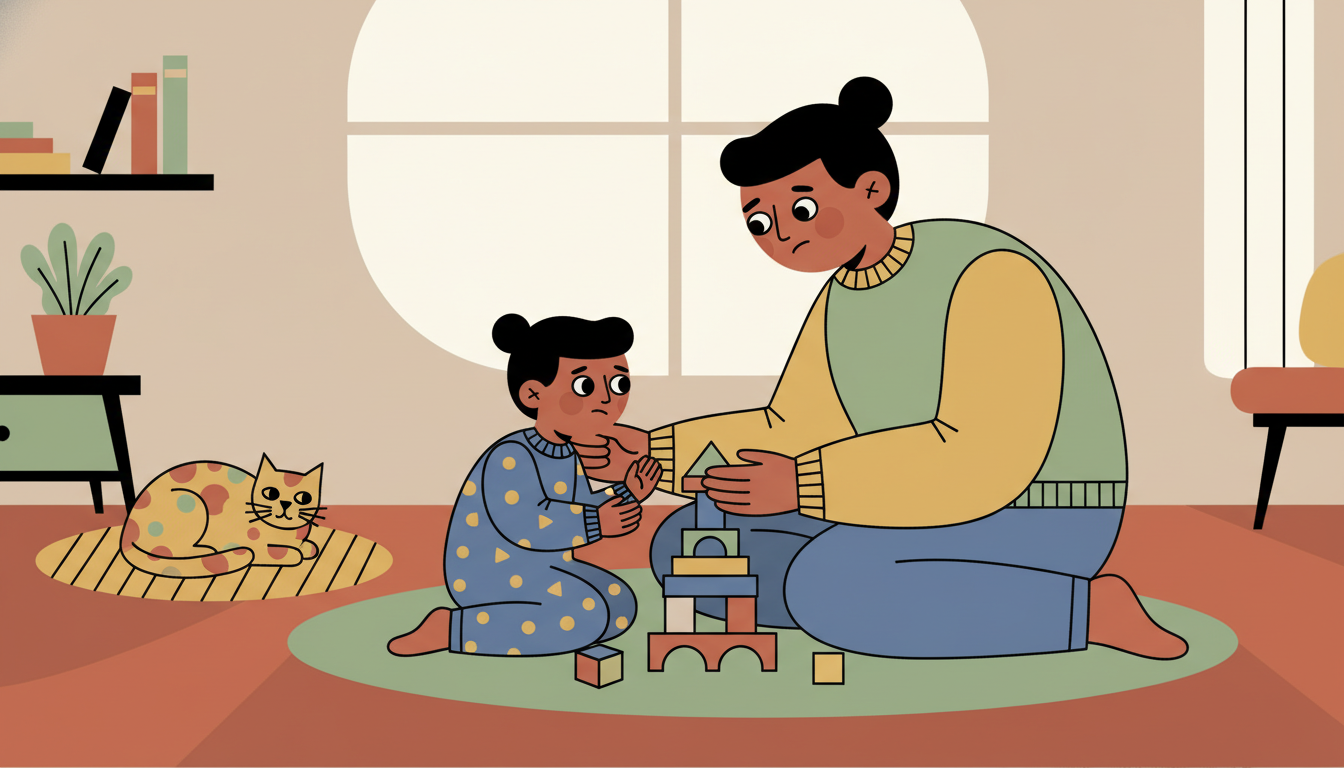
When something doesn't go as planned during play, like a block tower falling or a drawing not turning out right, sit with your child and talk about what happened. Ask how they feel and what might help them feel better. This normalizes disappointment and teaches that we can recover from small setbacks.
Fait partie du parcours de développement Steadily — personnalisé pour ton enfant.
Comment faire cette activité
When something doesn't go as planned during play, like a block tower falling or a drawing not turning out right, sit with your child and talk about what happened. Ask how they feel and what might help them feel better. This normalizes disappointment and teaches that we can recover from small setbacks.
Pourquoi ça marche
Discussing feelings after challenges builds emotional regulation skills that form the foundation of resilience. Children with higher emotional and behavioral resilience show significantly better outcomes in managing stress and adapting to difficulties (Liew et al., 2008). This practice helps children develop the self-awareness and coping strategies that protect against anxiety and depression later in life.
Conseils pour les parents
Use simple feeling words like sad, frustrated, or disappointed to help your child identify emotions.
Share a time when something similar happened to you and how you handled it.
Offer choices for what to do next, like trying again or doing something different.
Matériel nécessaire
None
Méthodes d'apprentissage
Project-Based LearningInquiry-Based LearningStructured Learning Activities

Tu as aimé cette activité ? Laisse-nous planifier pour toi.
Steadily personnalise chaque activité pour ton enfant — ses centres d'intérêt, son stade de développement, les traits qu'il développe — pour que le jeu soit plus amusant et que chaque instant compte.
Découvre comment fonctionne Steadily →