Empathy practice together
4–5 ansFamily ConnectionAucun matériel nécessaire
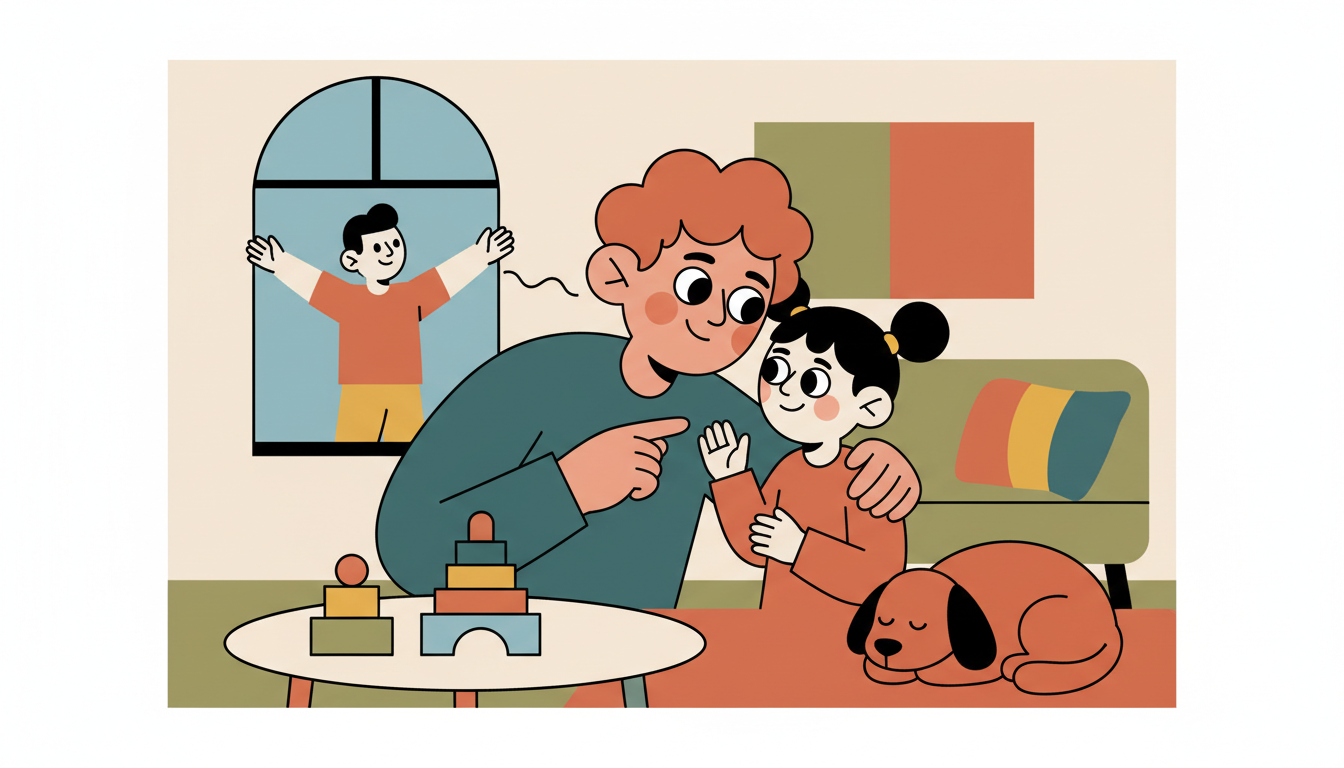
Throughout the day, help your child notice and understand others' feelings by modeling empathy yourself. When you see someone who seems sad or happy, mention it warmly to your child. You might say, "Look, that person is smiling. I think they feel happy." Or when your child talks about a friend, respond with warmth and curiosity about how that friend might be feeling. Your empathetic responses teach your child to care about others.
Fait partie du parcours de développement Steadily — personnalisé pour ton enfant.
Comment faire cette activité
Throughout the day, help your child notice and understand others' feelings by modeling empathy yourself. When you see someone who seems sad or happy, mention it warmly to your child. You might say, "Look, that person is smiling. I think they feel happy." Or when your child talks about a friend, respond with warmth and curiosity about how that friend might be feeling. Your empathetic responses teach your child to care about others.
Pourquoi ça marche
Your empathetic, warm responses shape how your child develops socioemotional competence. Parental empathy has indirect effects on children's positive peer relations through more supportive reactions to children's emotions (Hu et al., 2021). When you model and respond to empathy with warmth, you're helping your child develop the social and emotional skills they need for healthy relationships throughout life.
Conseils pour les parents
Use everyday moments as teaching opportunities. Books, TV shows, and real-life situations all offer chances to discuss feelings.
Share your own empathetic reactions. When you say "I feel sad when I see someone hurt," you model emotional awareness.
Praise your child warmly when you notice them showing empathy or concern for others.
Matériel nécessaire
None
Méthodes d'apprentissage
Cooperative LearningMetacognitive StrategiesGuided Discovery and Inquiry

Tu as aimé cette activité ? Laisse-nous planifier pour toi.
Steadily personnalise chaque activité pour ton enfant — ses centres d'intérêt, son stade de développement, les traits qu'il développe — pour que le jeu soit plus amusant et que chaque instant compte.
Découvre comment fonctionne Steadily →