Emotion sorting game
4–5 ansEmotional WellbeingMatériel : Paper
Crayons or magazines with pictures
Scissors (with parent supervision)
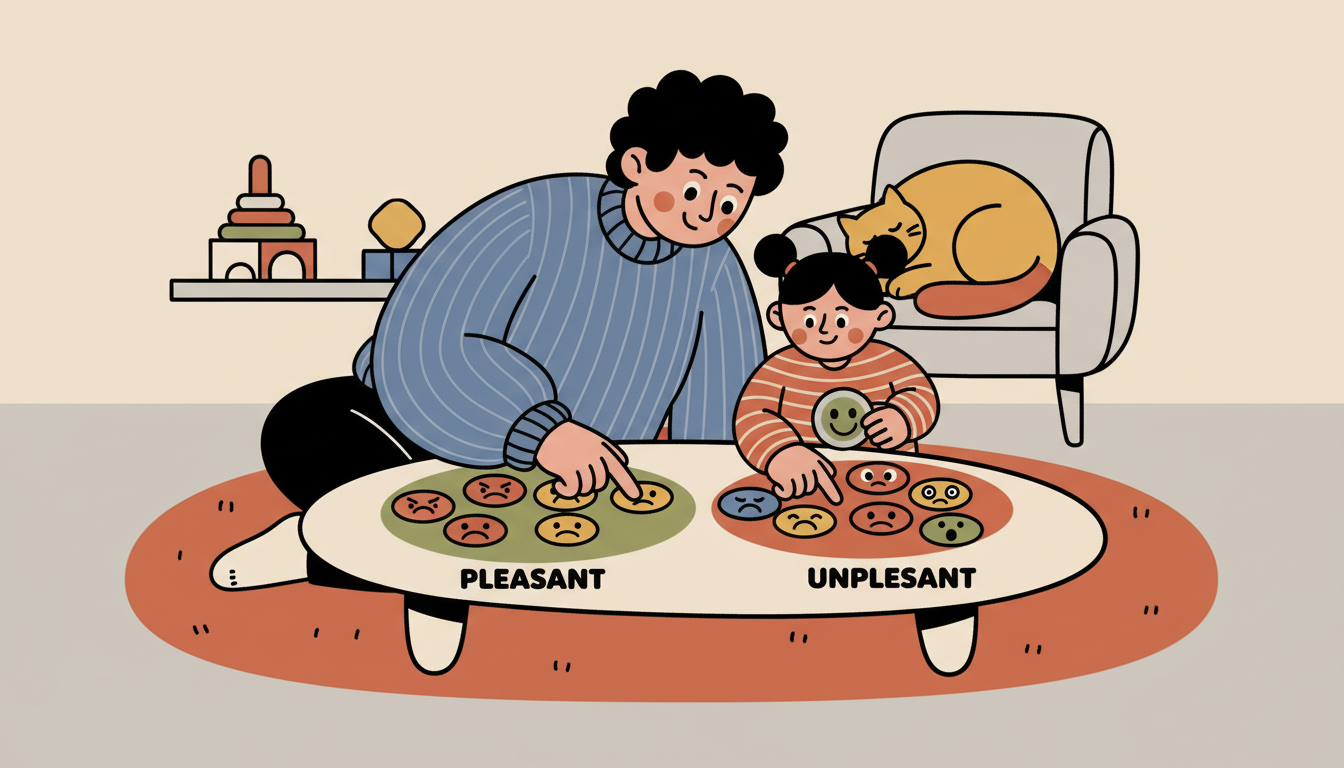
Draw or cut out pictures of faces showing different emotions. Work together to sort them into groups. You might sort by similar emotions, like grouping frustrated and angry together. Or sort by pleasant and unpleasant feelings. Talk about why certain emotions go together and how they are similar or different. This builds emotional understanding and categorization skills.
Fait partie du parcours de développement Steadily — personnalisé pour ton enfant.
Comment faire cette activité
Draw or cut out pictures of faces showing different emotions. Work together to sort them into groups. You might sort by similar emotions, like grouping frustrated and angry together. Or sort by pleasant and unpleasant feelings. Talk about why certain emotions go together and how they are similar or different. This builds emotional understanding and categorization skills.
Pourquoi ça marche
This activity leverages children's emerging ability to classify by multiple attributes simultaneously, a key cognitive capability at this age. Sorting and categorizing emotions builds the emotional knowledge that predicts social competence and academic achievement. Students with higher emotional intelligence show significantly better academic performance and psychological well-being (Brackett, M. A., Rivers, S. E., & Salovey, P., 2011). The activity also builds sophisticated emotion vocabulary, which is essential for emotional recognition and expression. Children who can understand and differentiate complex emotions develop better emotional regulation abilities.
Conseils pour les parents
Let your child lead the sorting process. Their categories might surprise you and show their thinking.
Discuss why emotions belong in different groups. This builds deeper understanding beyond just naming feelings.
There is no single right way to sort emotions. Accept your child's reasoning and explore it together.
Matériel nécessaire
Paper
Crayons or magazines with pictures
Scissors (with parent supervision)
Méthodes d'apprentissage
Metacognitive StrategiesCooperative LearningStructured Academic Learning

Tu as aimé cette activité ? Laisse-nous planifier pour toi.
Steadily personnalise chaque activité pour ton enfant — ses centres d'intérêt, son stade de développement, les traits qu'il développe — pour que le jeu soit plus amusant et que chaque instant compte.
Découvre comment fonctionne Steadily →