Emotion faces game
4–5 ansFamily ConnectionMatériel : Optional: a mirror
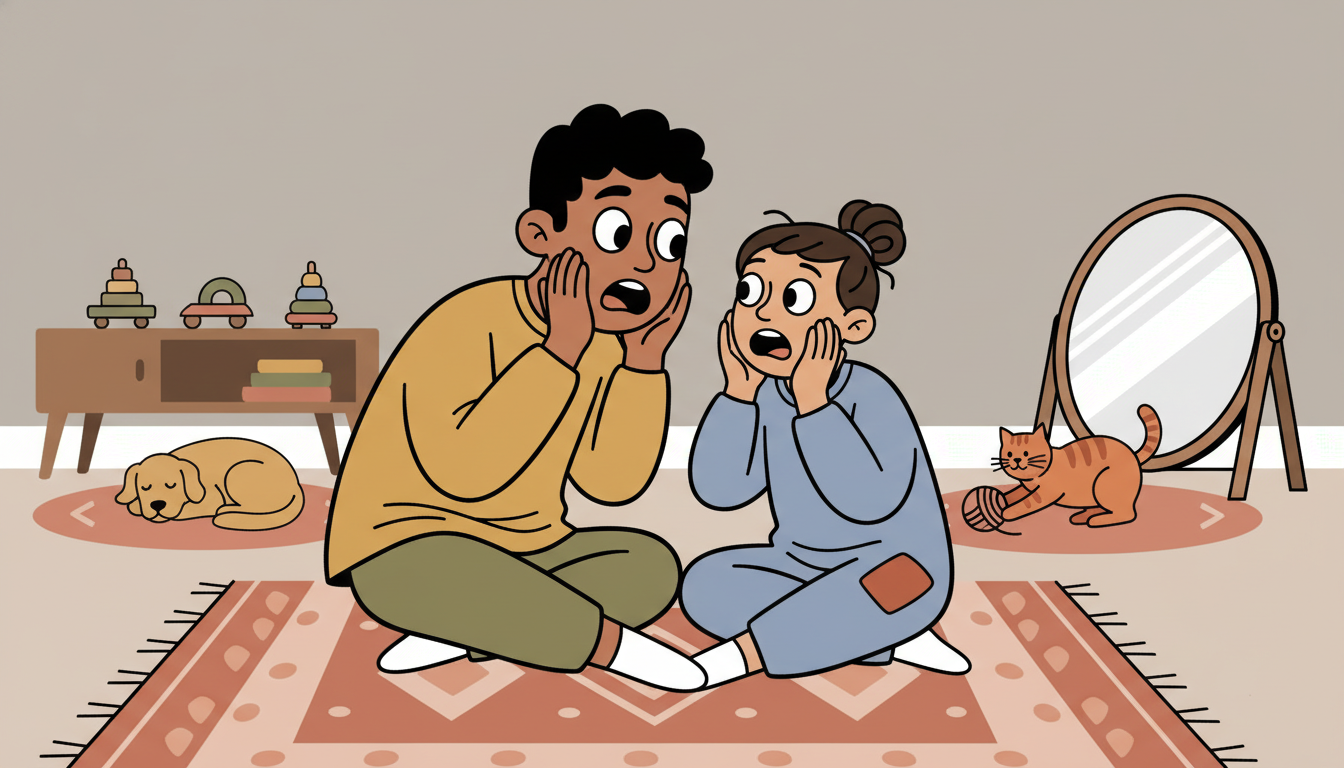
Take turns making different feeling faces and guessing what emotion the other person is showing. Start with basic emotions like happy, sad, angry, and scared, then add more complex ones like surprised, frustrated, or proud. Talk about times you each felt that way. You can also use a mirror to explore facial expressions together. This makes emotion recognition fun and interactive.
Fait partie du parcours de développement Steadily — personnalisé pour ton enfant.
Comment faire cette activité
Take turns making different feeling faces and guessing what emotion the other person is showing. Start with basic emotions like happy, sad, angry, and scared, then add more complex ones like surprised, frustrated, or proud. Talk about times you each felt that way. You can also use a mirror to explore facial expressions together. This makes emotion recognition fun and interactive.
Pourquoi ça marche
Secure attachment helps children develop better emotion expression and recognition. Research shows securely attached children exhibit significantly more appropriate emotion expression and less task-incongruent affect during interactions (Borelli et al., 2021). Playing with emotions in a safe, fun context teaches children that feelings can be expressed and understood.
Conseils pour les parents
Make this playful and light. Exaggerate expressions to make it easier and more fun for your child.
Validate whatever emotions your child mentions. All feelings are okay to have and talk about.
Matériel nécessaire
Optional: a mirror
Méthodes d'apprentissage
Cooperative LearningMetacognitive StrategiesProject-Based and Thematic Learning

Tu as aimé cette activité ? Laisse-nous planifier pour toi.
Steadily personnalise chaque activité pour ton enfant — ses centres d'intérêt, son stade de développement, les traits qu'il développe — pour que le jeu soit plus amusant et que chaque instant compte.
Découvre comment fonctionne Steadily →