Collaborative problem solving
4–5 ansFamily ConnectionAucun matériel nécessaire
When small conflicts arise, solve them together instead of imposing solutions. Present the problem neutrally and ask for your child's ideas first. Then share your thoughts. Work toward a solution you both can accept. For example, if toys are not getting cleaned up, ask, "The toys are still out and we need to set the table. What ideas do you have?"
Fait partie du parcours de développement Steadily — personnalisé pour ton enfant.
Comment faire cette activité
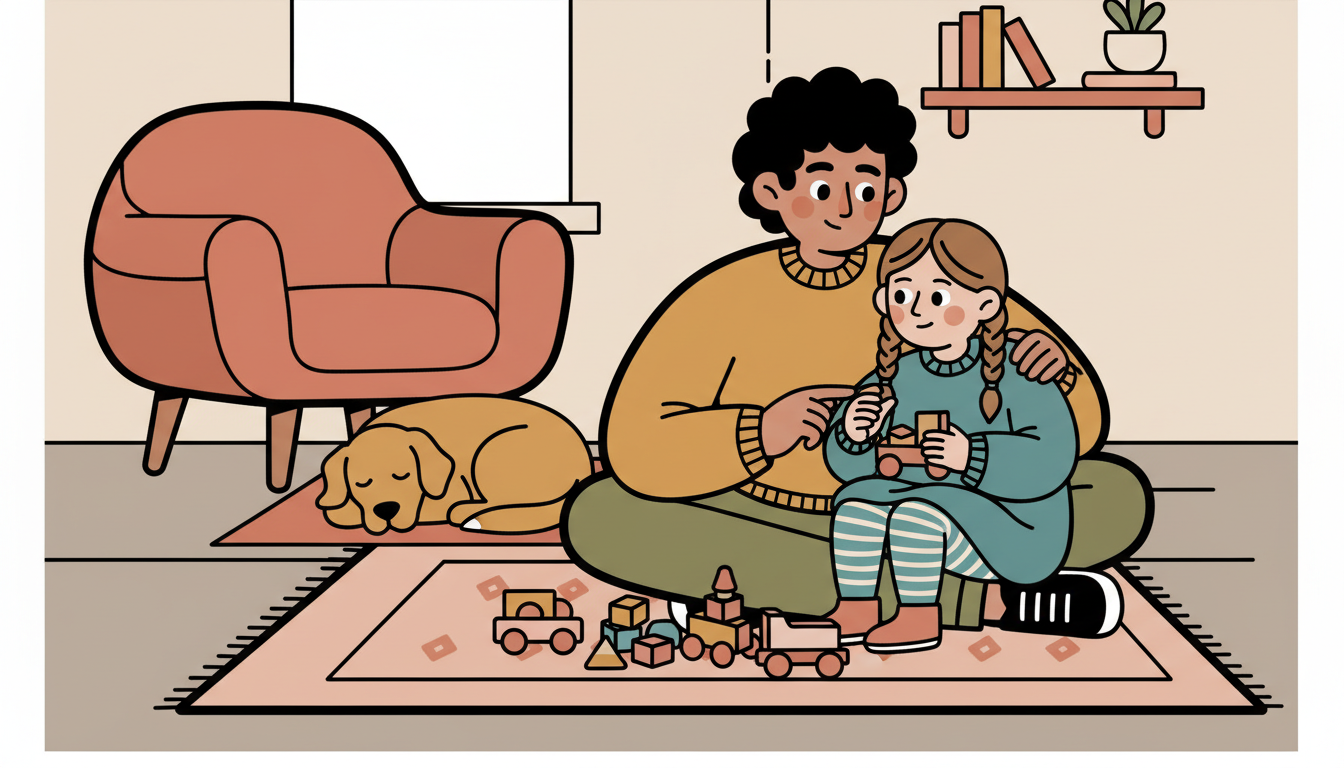
When small conflicts arise, solve them together instead of imposing solutions. Present the problem neutrally and ask for your child's ideas first. Then share your thoughts. Work toward a solution you both can accept. For example, if toys are not getting cleaned up, ask, "The toys are still out and we need to set the table. What ideas do you have?"
Pourquoi ça marche
Solving problems together shows that you value your child's thinking and respect their perspective. Reciprocal trust and respect established early predict lower rates of parent-child conflict and better cooperation during challenging developmental periods (Collins & Steinberg, 2006). At this age, children can think logically about concrete situations and participate meaningfully in finding solutions.
Conseils pour les parents
Focus on problems you both want to solve, not major discipline issues. Start with low-stakes situations like choosing activities or organizing toys.
If their solution will not work, explain why respectfully and suggest modifications rather than rejecting it completely.
Matériel nécessaire
None
Méthodes d'apprentissage
Cooperative LearningMetacognitive StrategiesProject-Based and Thematic Learning

Tu as aimé cette activité ? Laisse-nous planifier pour toi.
Steadily personnalise chaque activité pour ton enfant — ses centres d'intérêt, son stade de développement, les traits qu'il développe — pour que le jeu soit plus amusant et que chaque instant compte.
Découvre comment fonctionne Steadily →