Calm voice practice
4–5 ansFamily ConnectionAucun matériel nécessaire
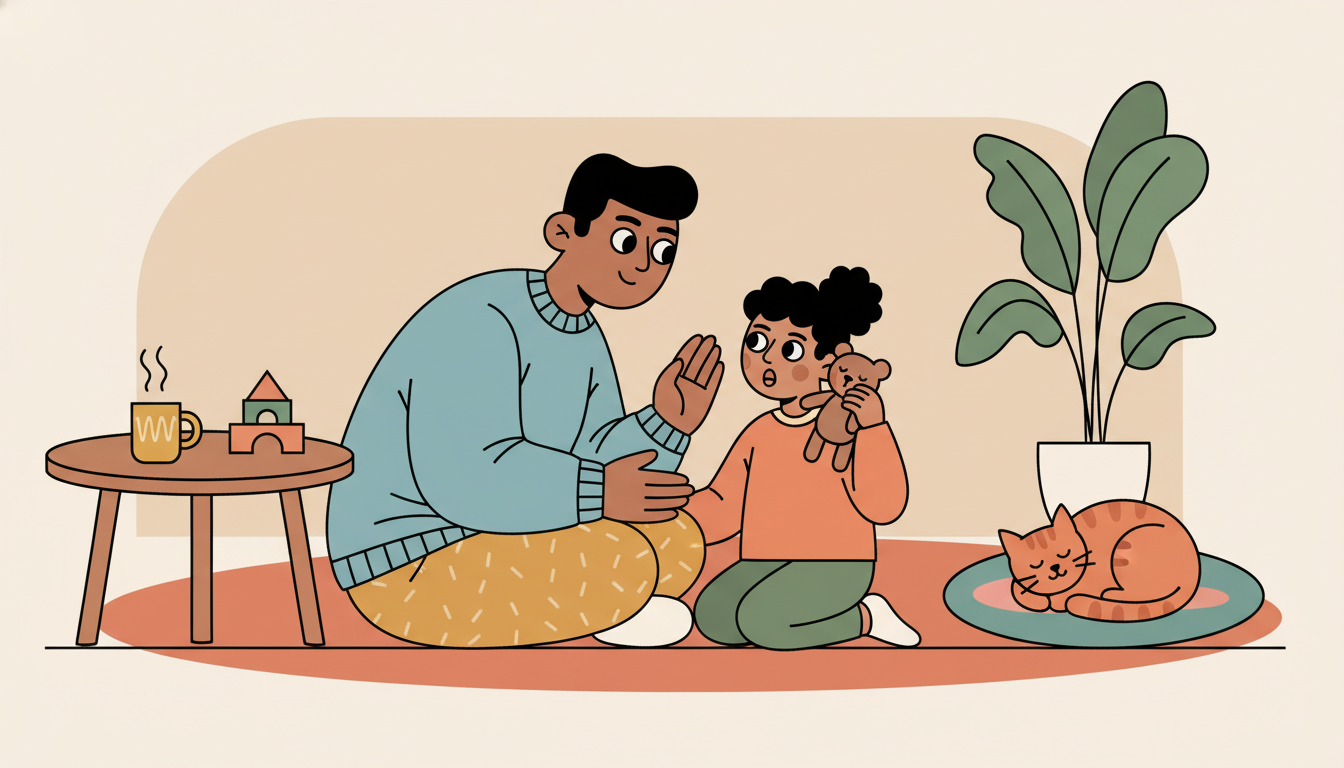
When your child gets upset during a disagreement, model and teach using a calm voice to express feelings. You might say your own feelings in a calm way first, then coach your child to try the same. Praise any effort to use words instead of yelling or physical responses. If needed, take a brief calm-down break before continuing the conversation about the conflict.
Fait partie du parcours de développement Steadily — personnalisé pour ton enfant.
Comment faire cette activité
When your child gets upset during a disagreement, model and teach using a calm voice to express feelings. You might say your own feelings in a calm way first, then coach your child to try the same. Praise any effort to use words instead of yelling or physical responses. If needed, take a brief calm-down break before continuing the conversation about the conflict.
Pourquoi ça marche
Children who learn to calmly discuss disagreements show 30% better emotional regulation and relationship maintenance throughout development (Shantz, 1987). Staying regulated during your child's dysregulation models the exact skill you want them to develop. At this age, children can understand explicit teaching about emotional expression and have the language capacity to express frustration with words when coached.
Conseils pour les parents
Your own calm tone matters more than what you say. Children learn by watching you.
Keep your coaching brief. A simple reminder like calm words helps is often enough.
Recognize that learning this skill takes time and many practice opportunities.
Matériel nécessaire
None
Méthodes d'apprentissage
Cooperative LearningMetacognitive StrategiesStructured Academic Learning

Tu as aimé cette activité ? Laisse-nous planifier pour toi.
Steadily personnalise chaque activité pour ton enfant — ses centres d'intérêt, son stade de développement, les traits qu'il développe — pour que le jeu soit plus amusant et que chaque instant compte.
Découvre comment fonctionne Steadily →