Body feelings map
4–5 ansEmotional WellbeingMatériel : Paper
Crayons or markers
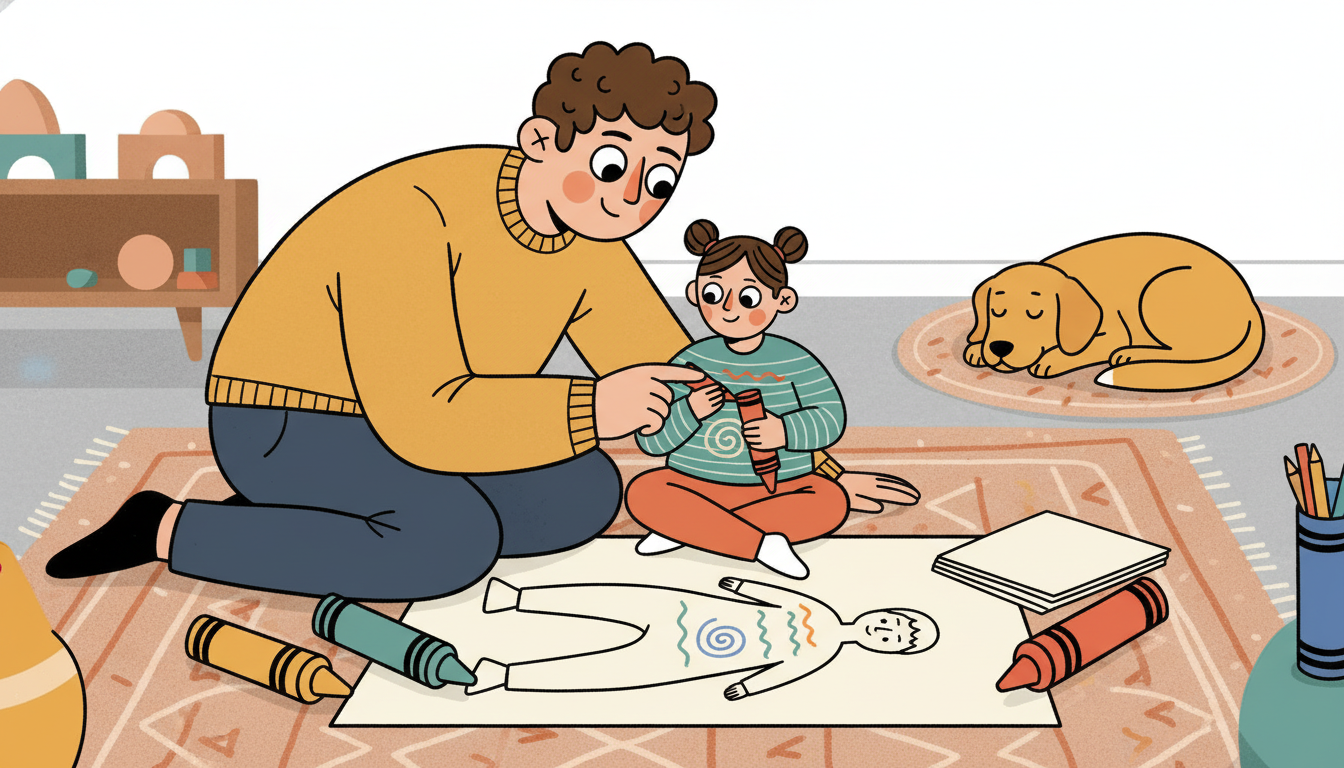
Draw an outline of a body together and talk about where different emotions show up physically. Discuss how anger might feel hot in the chest, worry might feel like butterflies in the stomach, or happiness might feel light. Let your child color or mark where they feel different emotions. This helps them recognize emotions through body signals before feelings become overwhelming.
Fait partie du parcours de développement Steadily — personnalisé pour ton enfant.
Comment faire cette activité
Draw an outline of a body together and talk about where different emotions show up physically. Discuss how anger might feel hot in the chest, worry might feel like butterflies in the stomach, or happiness might feel light. Let your child color or mark where they feel different emotions. This helps them recognize emotions through body signals before feelings become overwhelming.
Pourquoi ça marche
Connecting emotions to physical sensations builds the self-awareness component of emotional intelligence. This activity makes abstract emotional experiences concrete, which aligns with children's cognitive ability to understand concrete situations at this age. Children with higher emotional intelligence experience significantly better mental health and relationship satisfaction throughout life (Bar-On, R., 2006). Teaching children to recognize early physical signs of emotions gives them more time to use regulation strategies before emotions escalate. This early awareness is foundational for the emotional regulation skills that contribute to lifelong emotional intelligence and well-being.
Conseils pour les parents
Share where you feel emotions in your own body. This normalizes the physical experience of emotions.
Revisit this map when your child experiences strong emotions. Ask where they feel it in their body.
Keep the body outline simple. A basic stick figure or oval works perfectly for this activity.
Matériel nécessaire
Paper
Crayons or markers
Méthodes d'apprentissage
Metacognitive StrategiesCooperative LearningStructured Academic Learning

Tu as aimé cette activité ? Laisse-nous planifier pour toi.
Steadily personnalise chaque activité pour ton enfant — ses centres d'intérêt, son stade de développement, les traits qu'il développe — pour que le jeu soit plus amusant et que chaque instant compte.
Découvre comment fonctionne Steadily →