What comes next puzzle
3–4 ansSuccess MindsetMatériel : Toys, blocks, or drawings of simple objects
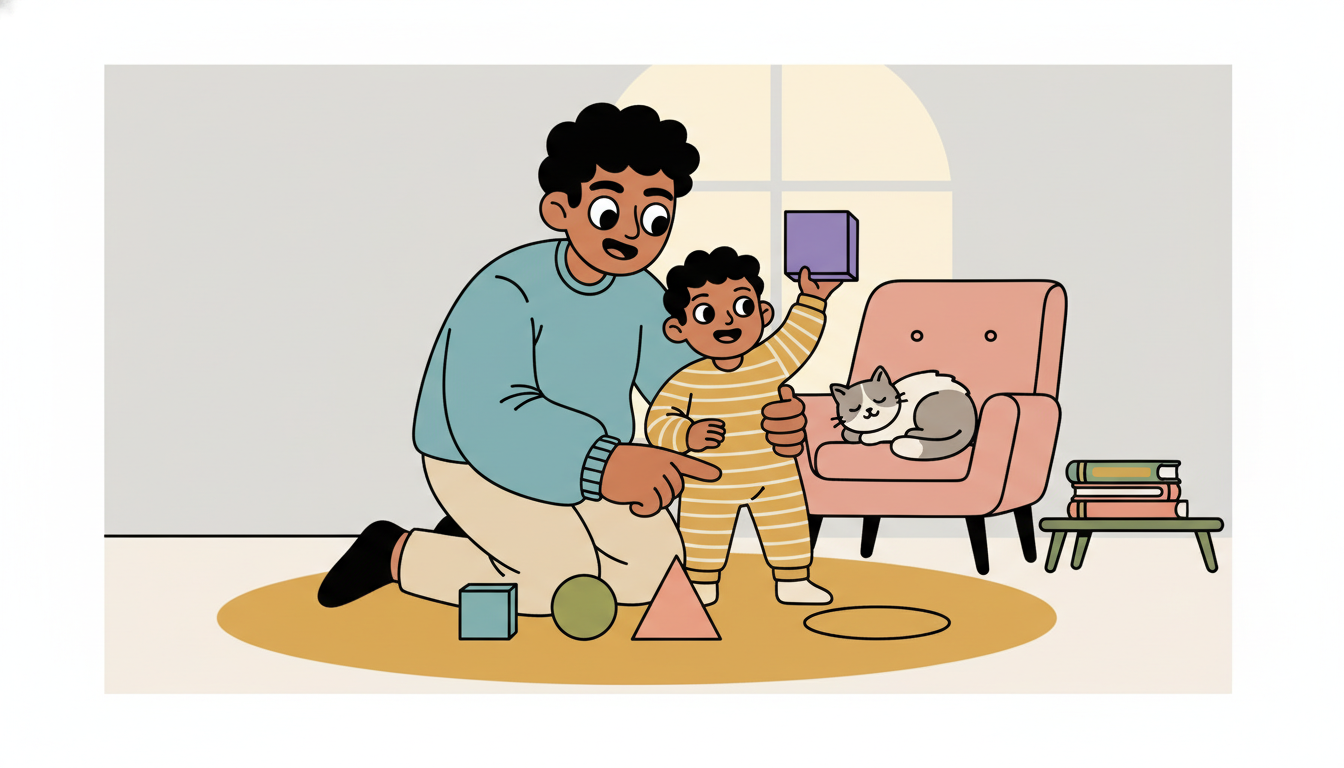
Create simple logic puzzles during quiet time together. Use toys or drawings to make sequences where something is missing. For example, show shoe-sock-shoe and ask what comes next. Or create size sequences with three blocks getting bigger and ask which block comes fourth. This encourages predictive thinking and pattern recognition. Keep it playful and celebrate their reasoning process, not just correct answers.
Fait partie du parcours de développement Steadily — personnalisé pour ton enfant.
Comment faire cette activité
Create simple logic puzzles during quiet time together. Use toys or drawings to make sequences where something is missing. For example, show shoe-sock-shoe and ask what comes next. Or create size sequences with three blocks getting bigger and ask which block comes fourth. This encourages predictive thinking and pattern recognition. Keep it playful and celebrate their reasoning process, not just correct answers.
Pourquoi ça marche
Predictive thinking and logical reasoning are key components of fluid intelligence that develop rapidly during ages three to four. These problem-solving activities strengthen working memory and attention control, which research shows make unique contributions to emergent literacy and numeracy skills and predict kindergarten achievement (Welsh, Nix, Blair, Bierman, & Nelson, 2010). Building these cognitive foundations supports long-term intellectual development.
Conseils pour les parents
Make it concrete with objects your child can touch and manipulate.
Ask your child to explain their thinking. This builds verbal reasoning skills.
If they struggle, give hints by pointing out the pattern you see together.
Matériel nécessaire
Toys, blocks, or drawings of simple objects
Méthodes d'apprentissage
Inquiry-Based LearningStructured Learning ActivitiesNarrative and Literacy-Rich Experiences

Tu as aimé cette activité ? Laisse-nous planifier pour toi.
Steadily personnalise chaque activité pour ton enfant — ses centres d'intérêt, son stade de développement, les traits qu'il développe — pour que le jeu soit plus amusant et que chaque instant compte.
Découvre comment fonctionne Steadily →