Water absorption test
3–4 ansSuccess MindsetMatériel : Small bowl of water
Dropper or spoon
Various materials (paper towel, fabric, plastic, foil, cardboard)
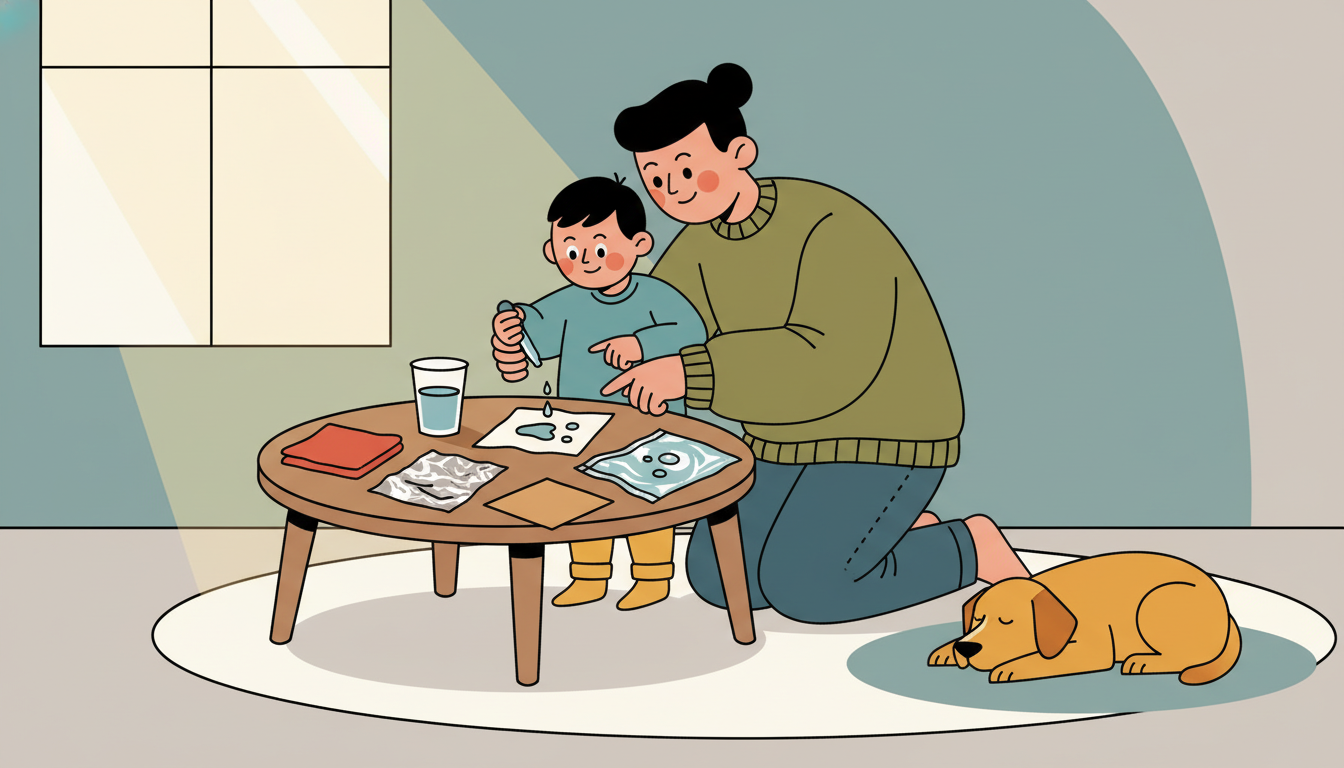
Gather different materials from around your home (paper towel, cloth, plastic bag, cardboard, foil) and let your child predict which ones will soak up water and which will not. Then test each one by placing a few drops of water on it. Your child discovers which materials are absorbent through hands-on experimentation.
Fait partie du parcours de développement Steadily — personnalisé pour ton enfant.
Comment faire cette activité
Gather different materials from around your home (paper towel, cloth, plastic bag, cardboard, foil) and let your child predict which ones will soak up water and which will not. Then test each one by placing a few drops of water on it. Your child discovers which materials are absorbent through hands-on experimentation.
Pourquoi ça marche
Testing predictions builds scientific thinking and curiosity about material properties. Studies show that curiosity enhances memory and learning, with children remembering answers to questions they are curious about (Gruber et al., 2014). This simple experiment teaches children that wondering leads to discovery, establishing a pattern of curiosity-driven learning.
Conseils pour les parents
Record predictions before testing to make the learning visible. You can draw simple pictures or use the actual materials as a reference.
Celebrate both correct and incorrect predictions. Wrong guesses lead to the most interesting discoveries.
Matériel nécessaire
Small bowl of water
Dropper or spoon
Various materials (paper towel, fabric, plastic, foil, cardboard)
Méthodes d'apprentissage
Inquiry-Based LearningProject-Based LearningCollaborative and Cooperative Play

Tu as aimé cette activité ? Laisse-nous planifier pour toi.
Steadily personnalise chaque activité pour ton enfant — ses centres d'intérêt, son stade de développement, les traits qu'il développe — pour que le jeu soit plus amusant et que chaque instant compte.
Découvre comment fonctionne Steadily →