The take turns timer
3–4 ansFamily ConnectionMatériel : Timer (kitchen timer or phone)
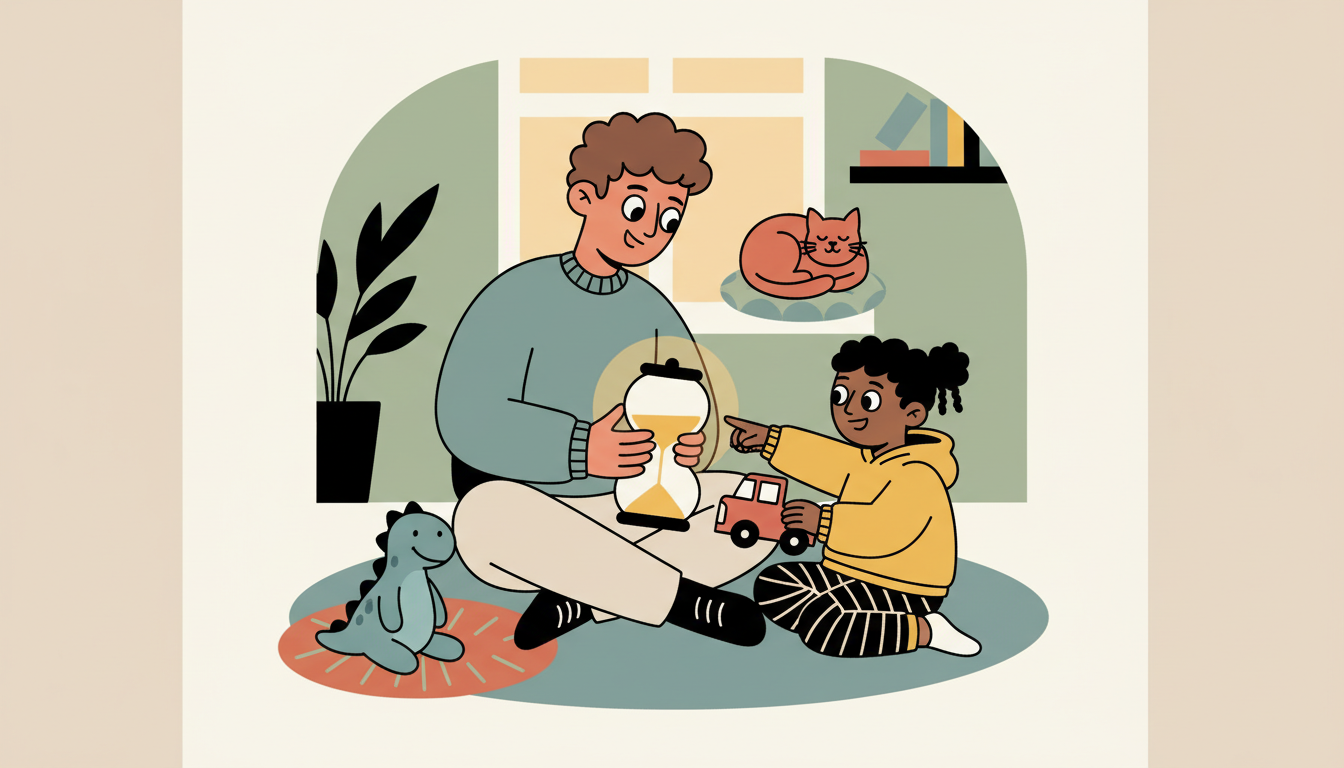
When your child and someone else both want the same thing, set a simple timer. One person gets a turn while the other waits, then you switch. This teaches that both people can get what they want if they wait and share time. Use a visual timer if possible so your child can see the time passing. Start with short turns of two to three minutes.
Fait partie du parcours de développement Steadily — personnalisé pour ton enfant.
Comment faire cette activité
When your child and someone else both want the same thing, set a simple timer. One person gets a turn while the other waits, then you switch. This teaches that both people can get what they want if they wait and share time. Use a visual timer if possible so your child can see the time passing. Start with short turns of two to three minutes.
Pourquoi ça marche
Turn-taking is a concrete form of compromise that children this age can understand and practice. Early training in problem-solving skills leads to better peer relationships and reduced aggression (Webster-Stratton & Reid, 2004). Using a timer makes the solution feel fair and objective, reducing arguments about whose turn it is.
Conseils pour les parents
Be consistent with the timer. If you set it for three minutes, honor that time even if your child protests.
Praise your child when they wait patiently, even if they find it hard.
Gradually increase turn times as your child gets better at waiting.
Matériel nécessaire
Timer (kitchen timer or phone)
Méthodes d'apprentissage
Collaborative and Cooperative PlayNarrative and Literacy-Rich ExperiencesStructured Learning Activities

Tu as aimé cette activité ? Laisse-nous planifier pour toi.
Steadily personnalise chaque activité pour ton enfant — ses centres d'intérêt, son stade de développement, les traits qu'il développe — pour que le jeu soit plus amusant et que chaque instant compte.
Découvre comment fonctionne Steadily →