Someone is crying
2–3 ansFamily ConnectionAucun matériel nécessaire
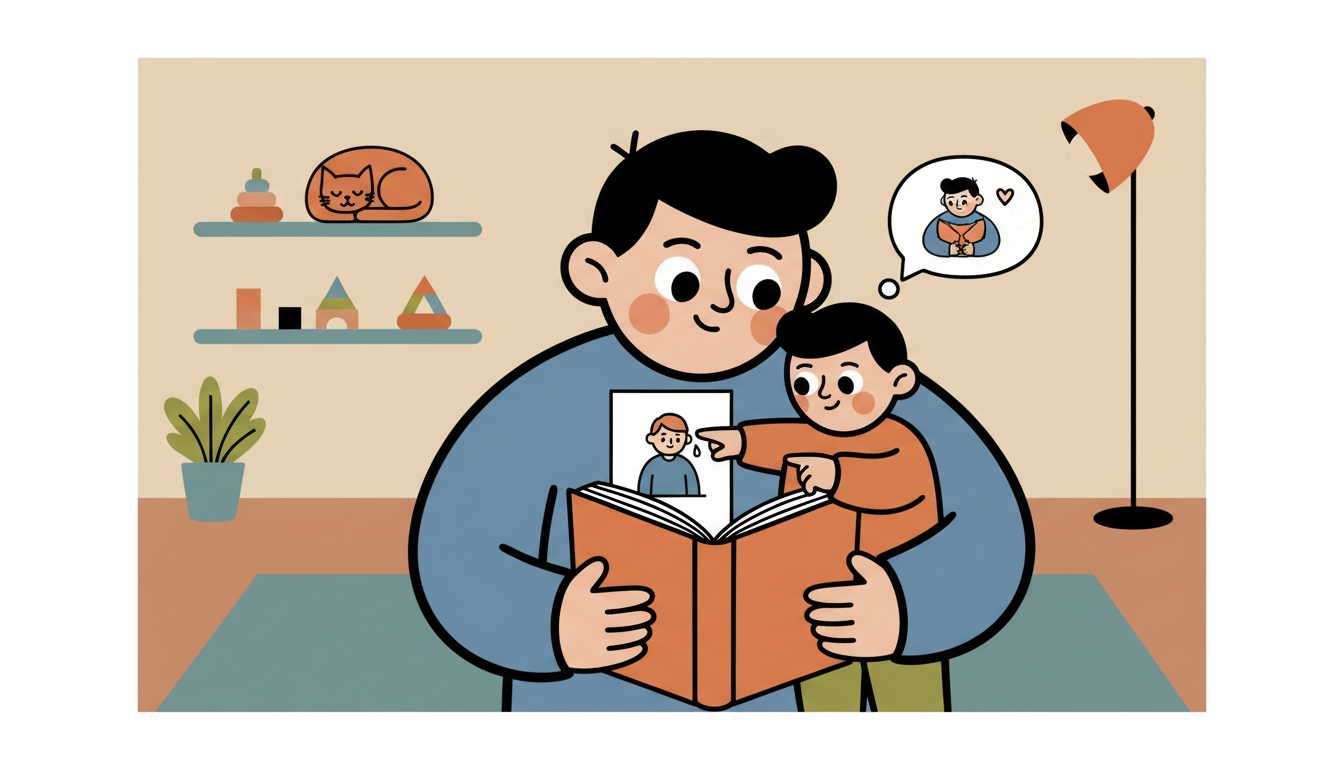
When you notice someone crying in a book, show, or in public, point it out gently. Say 'See, she is crying. She feels sad.' Ask your child 'What could help her feel better?' Suggest simple ideas like a hug or kind words. This teaches your child to notice and care about others' feelings.
Fait partie du parcours de développement Steadily — personnalisé pour ton enfant.
Comment faire cette activité
When you notice someone crying in a book, show, or in public, point it out gently. Say 'See, she is crying. She feels sad.' Ask your child 'What could help her feel better?' Suggest simple ideas like a hug or kind words. This teaches your child to notice and care about others' feelings.
Pourquoi ça marche
Between 24 and 36 months, children are developing the ability to distinguish self from others and recognize that others have feelings. Pointing out others' emotions helps children move from egocentric thinking toward empathetic awareness (Hoffman, M. L., 2000). Research shows that recognizing and responding sensitively to others' emotions in childhood predicts stronger empathy in adulthood (Eisenberg, N., Spinrad, T. L., & Knafo-Noam, A., 2015).
Conseils pour les parents
Keep your tone calm and gentle. You are teaching awareness, not creating worry.
If your child suggests a way to help, praise the kind thinking even if the idea is not practical.
Matériel nécessaire
None
Méthodes d'apprentissage
Symbolic and Pretend PlaySongs, Stories, and RhymesSocial Learning Through Peers

Tu as aimé cette activité ? Laisse-nous planifier pour toi.
Steadily personnalise chaque activité pour ton enfant — ses centres d'intérêt, son stade de développement, les traits qu'il développe — pour que le jeu soit plus amusant et que chaque instant compte.
Découvre comment fonctionne Steadily →