Repair after conflict
3–4 ansFamily ConnectionAucun matériel nécessaire
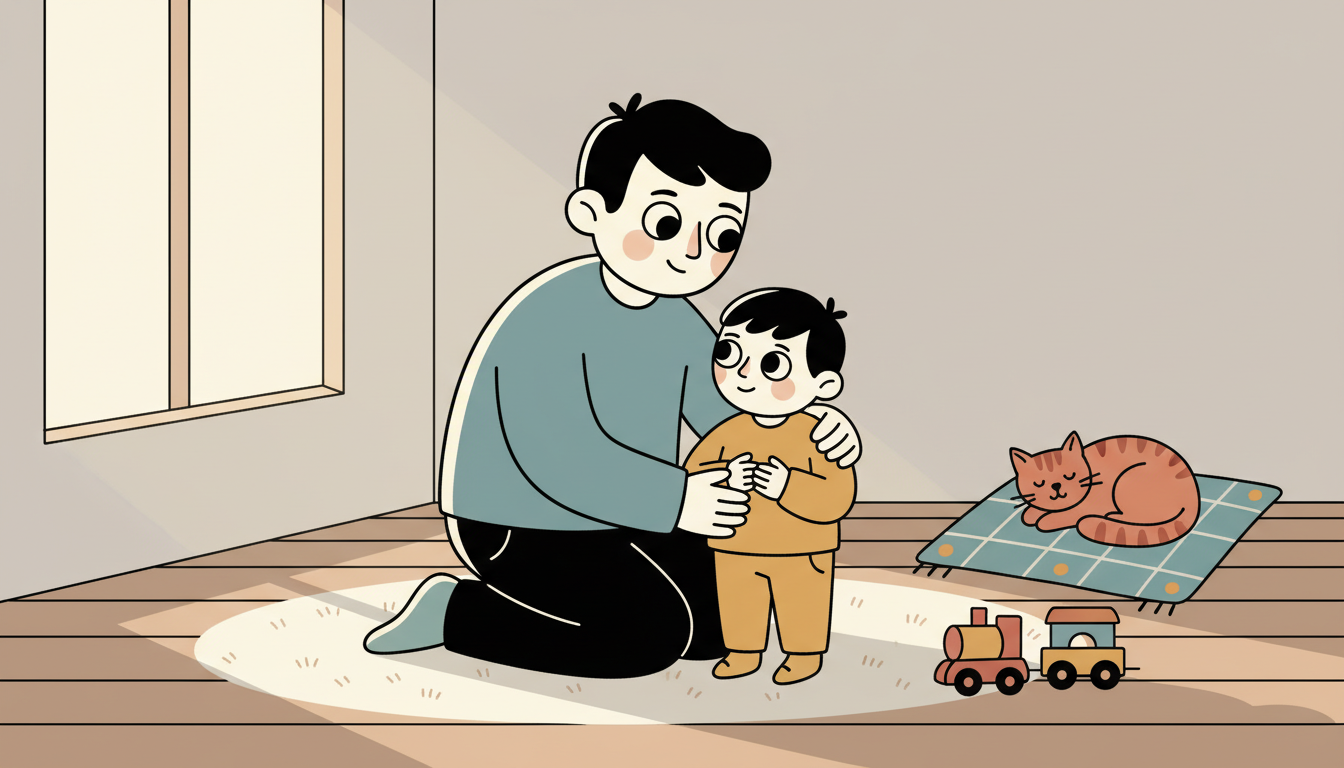
When you have had a difficult moment with your child, take time to repair the connection. Acknowledge what happened, share your feelings calmly, and reconnect. You might say, "I raised my voice earlier and that was not okay. I was frustrated, but you did not deserve that. I love you."
Fait partie du parcours de développement Steadily — personnalisé pour ton enfant.
Comment faire cette activité
When you have had a difficult moment with your child, take time to repair the connection. Acknowledge what happened, share your feelings calmly, and reconnect. You might say, "I raised my voice earlier and that was not okay. I was frustrated, but you did not deserve that. I love you."
Pourquoi ça marche
Repairing relationship ruptures promptly teaches your child that relationships can recover from difficult moments. This builds trust and resilience. Secure attachment provides the foundation for healthy development across the lifespan (Ainsworth et al., 1978). When you model repair, you demonstrate emotional availability and help your child develop better emotional regulation (Thompson, 2008).
Conseils pour les parents
Repair as soon as you both are calm enough to talk. Waiting too long can leave your child feeling uncertain.
Keep it simple and honest. Young children understand authentic emotions better than complex explanations.
End with physical connection if your child wants it. A hug or sitting close can seal the repair.
Matériel nécessaire
None
Méthodes d'apprentissage
Collaborative and Cooperative PlayNarrative and Literacy-Rich ExperiencesProject-Based Learning

Tu as aimé cette activité ? Laisse-nous planifier pour toi.
Steadily personnalise chaque activité pour ton enfant — ses centres d'intérêt, son stade de développement, les traits qu'il développe — pour que le jeu soit plus amusant et que chaque instant compte.
Découvre comment fonctionne Steadily →