Name the feeling game
3–4 ansFamily ConnectionAucun matériel nécessaire
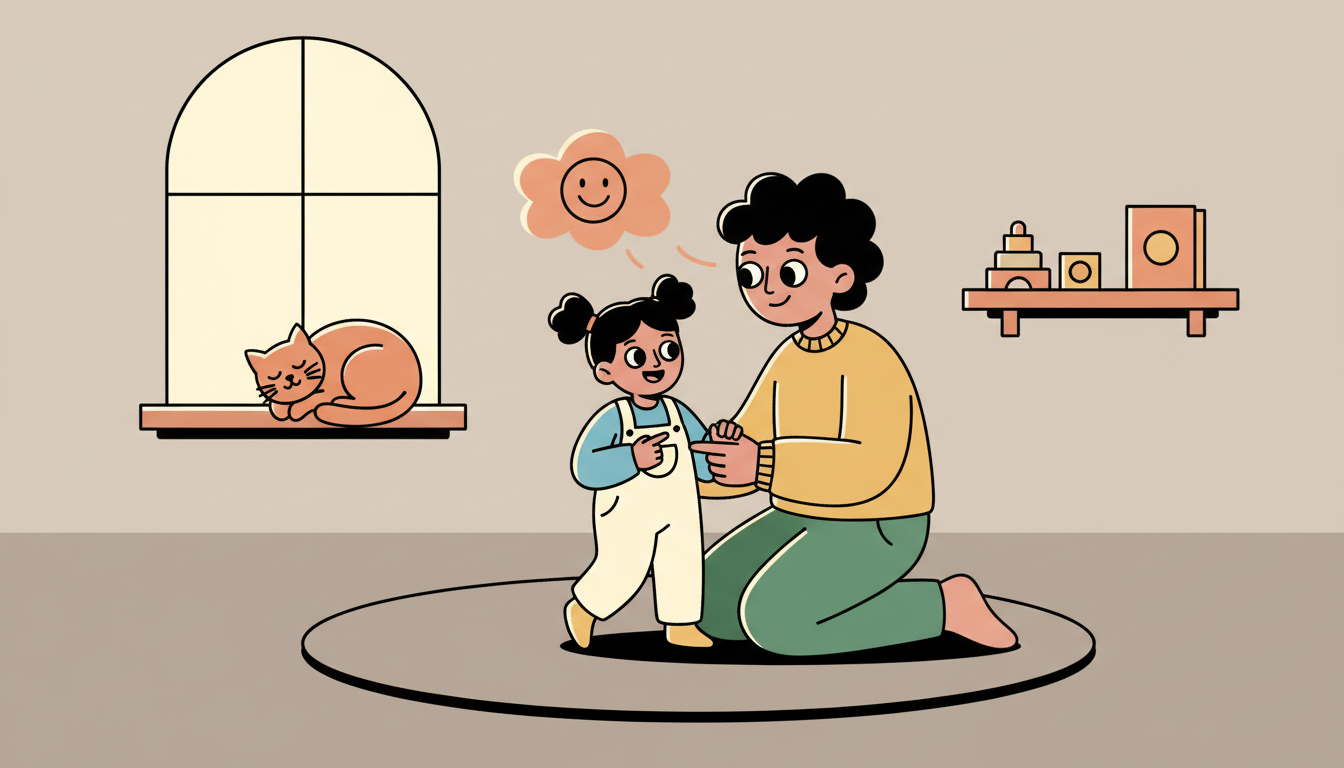
Throughout the day, help your child name their feelings as they experience them. When you notice an emotion, gently label it. "You look excited about going to the park." Or, "I see you are feeling sad about saying goodbye." This helps your child develop emotional vocabulary and feel understood.
Fait partie du parcours de développement Steadily — personnalisé pour ton enfant.
Comment faire cette activité
Throughout the day, help your child name their feelings as they experience them. When you notice an emotion, gently label it. "You look excited about going to the park." Or, "I see you are feeling sad about saying goodbye." This helps your child develop emotional vocabulary and feel understood.
Pourquoi ça marche
Helping your child identify and express emotions builds emotional literacy and strengthens your bond. Securely attached children showed greater decrease in negative affect and better emotional recovery when parents were attuned to their emotions (Borelli et al., 2021). This emotional validation promotes developmental competence in emotion expression and helps children appraise situations more effectively (Thompson, 2008).
Conseils pour les parents
Start with basic emotions like happy, sad, angry, scared, and excited. Build vocabulary gradually.
Describe what you see without judgment. Simply notice and name the emotion.
Share your own feelings too. "I feel tired right now" helps your child learn emotions are normal.
Matériel nécessaire
None
Méthodes d'apprentissage
Collaborative and Cooperative PlayNarrative and Literacy-Rich ExperiencesProject-Based Learning

Tu as aimé cette activité ? Laisse-nous planifier pour toi.
Steadily personnalise chaque activité pour ton enfant — ses centres d'intérêt, son stade de développement, les traits qu'il développe — pour que le jeu soit plus amusant et que chaque instant compte.
Découvre comment fonctionne Steadily →