Modeling your own feelings
1–2 ansEmotional WellbeingAucun matériel nécessaire
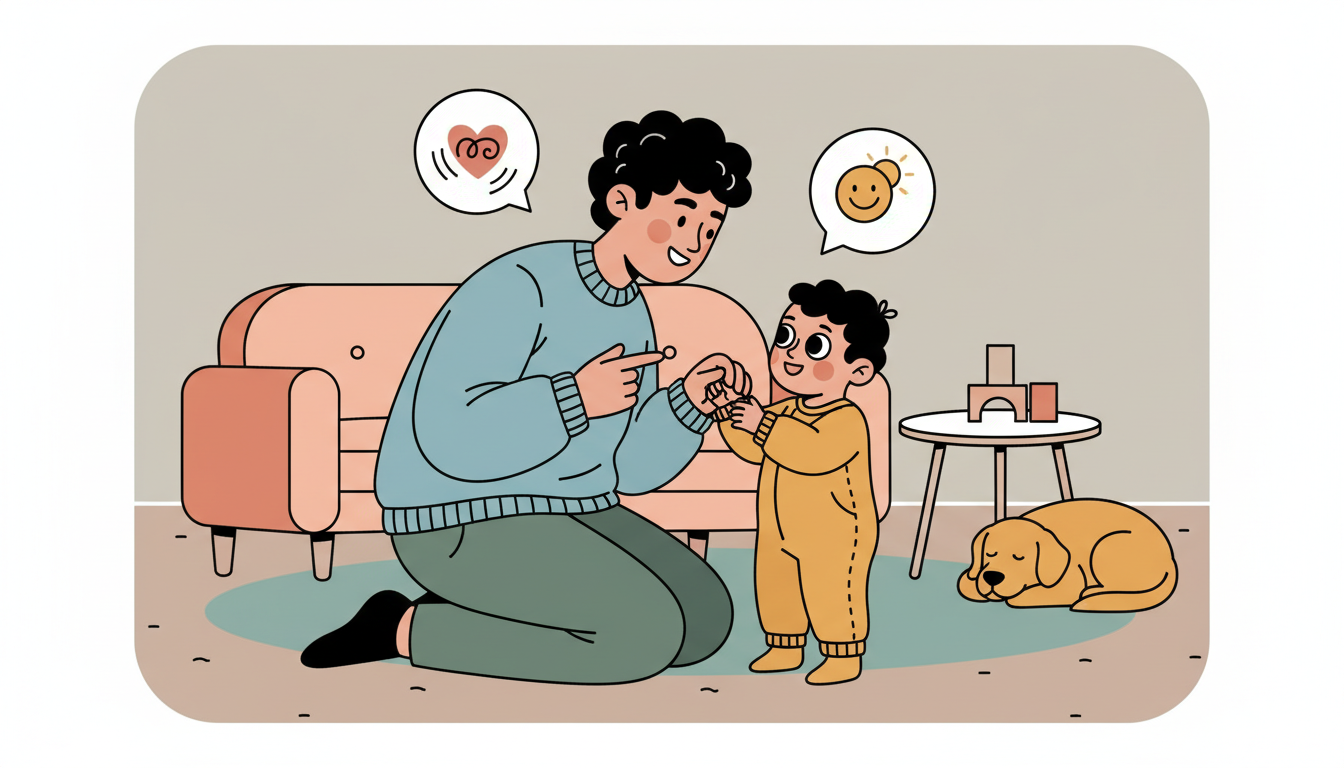
Throughout the day, narrate your own emotions in simple terms your child can understand. Say things like 'I'm feeling happy because we're together' or 'I'm feeling tired, so I need to rest.' Show your child that everyone has feelings and that it's okay to express them. This takes no extra time, just awareness.
Fait partie du parcours de développement Steadily — personnalisé pour ton enfant.
Comment faire cette activité
Throughout the day, narrate your own emotions in simple terms your child can understand. Say things like 'I'm feeling happy because we're together' or 'I'm feeling tired, so I need to rest.' Show your child that everyone has feelings and that it's okay to express them. This takes no extra time, just awareness.
Pourquoi ça marche
Learning through imitation and modeling is a powerful tool at this age. When parents model healthy emotional expression, children learn that emotions are normal and manageable. This supports self-regulation development. Research shows a strong positive link between emotional intelligence and better psychological well-being, with early EQ development predicting reduced anxiety in later life (Mayer, Caruso, & Salovey, 1999).
Conseils pour les parents
Use simple emotion words your child knows.
Show appropriate ways to handle emotions, like taking deep breaths when frustrated.
Be honest but avoid overwhelming your child with complex adult emotions.
Matériel nécessaire
None
Méthodes d'apprentissage
Language-Rich EnvironmentImitation and ModelingBeginning Symbolic Play

Tu as aimé cette activité ? Laisse-nous planifier pour toi.
Steadily personnalise chaque activité pour ton enfant — ses centres d'intérêt, son stade de développement, les traits qu'il développe — pour que le jeu soit plus amusant et que chaque instant compte.
Découvre comment fonctionne Steadily →