Happy words practice
3–4 ansEmotional WellbeingAucun matériel nécessaire
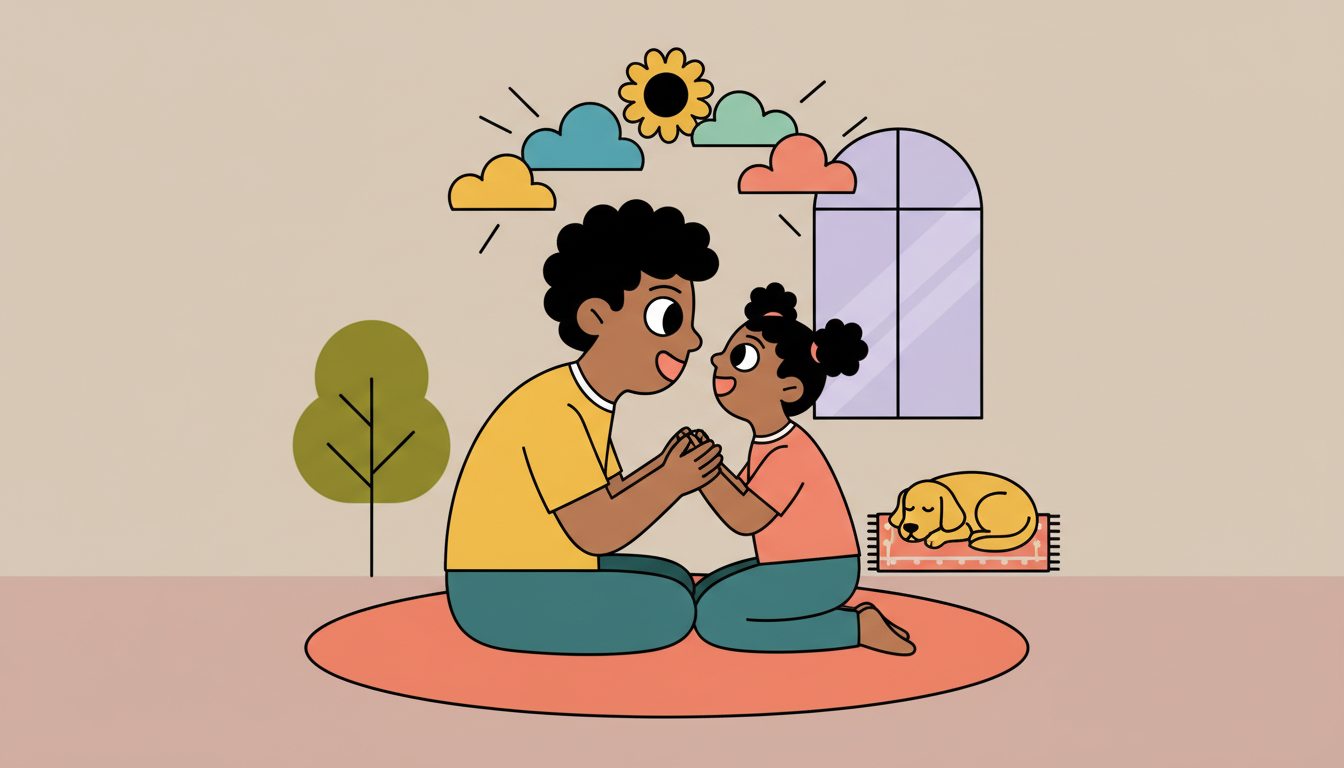
Throughout your time together, use optimistic language to describe everyday moments. When something small goes wrong, model hopeful responses like, we can try again, or that's okay, we'll figure it out. When talking about upcoming events, use positive phrases like, this will be fun, or I think you'll enjoy this. Your child will begin to mirror this language and internalize an optimistic way of thinking about experiences.
Fait partie du parcours de développement Steadily — personnalisé pour ton enfant.
Comment faire cette activité
Throughout your time together, use optimistic language to describe everyday moments. When something small goes wrong, model hopeful responses like, we can try again, or that's okay, we'll figure it out. When talking about upcoming events, use positive phrases like, this will be fun, or I think you'll enjoy this. Your child will begin to mirror this language and internalize an optimistic way of thinking about experiences.
Pourquoi ça marche
Children at this age absorb explanatory styles from the adults around them, and modeling optimistic language shapes their expectations about outcomes. Research shows that optimistic explanatory style predicts better outcomes and can be taught through environmental influences (Seligman et al., 2009; Carver et al., 2010). Consistent exposure to hopeful, solution-focused language helps children develop the internal dialogue that supports lasting optimism.
Conseils pour les parents
Pay attention to your own explanatory style and consciously frame setbacks as temporary and solvable. Avoid catastrophizing small problems or using language that suggests things won't improve. Children learn optimism primarily through the models around them.
Matériel nécessaire
None
Méthodes d'apprentissage
Narrative and Literacy-Rich ExperiencesInquiry-Based LearningCollaborative and Cooperative Play

Tu as aimé cette activité ? Laisse-nous planifier pour toi.
Steadily personnalise chaque activité pour ton enfant — ses centres d'intérêt, son stade de développement, les traits qu'il développe — pour que le jeu soit plus amusant et que chaque instant compte.
Découvre comment fonctionne Steadily →