Happy ending stories
2–3 ansEmotional WellbeingMatériel : Picture books or none for made-up stories
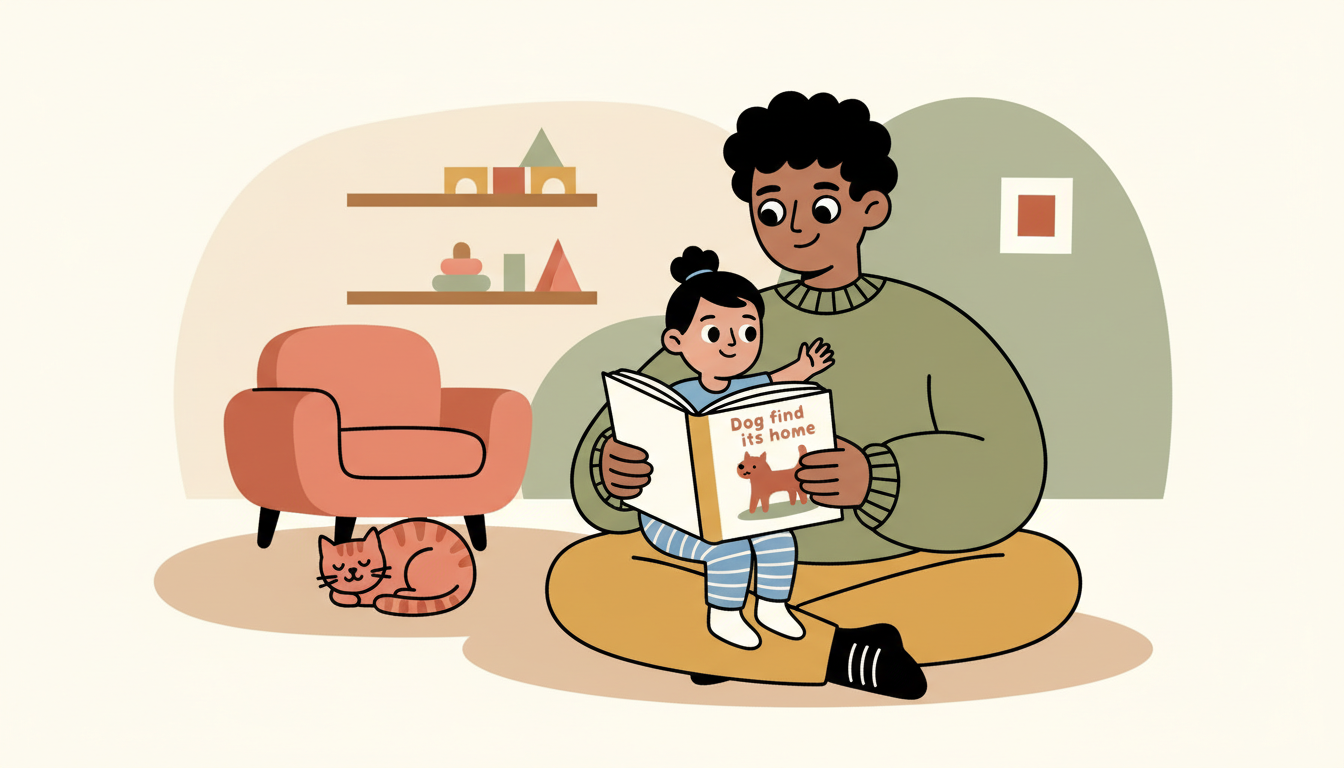
Read or tell simple stories where characters face small challenges but things work out well. For example, "The puppy was lost, but then he found his way home." Keep stories short and clear. Point out how things got better at the end. This teaches your child that problems can have positive solutions.
Fait partie du parcours de développement Steadily — personnalisé pour ton enfant.
Comment faire cette activité
Read or tell simple stories where characters face small challenges but things work out well. For example, "The puppy was lost, but then he found his way home." Keep stories short and clear. Point out how things got better at the end. This teaches your child that problems can have positive solutions.
Pourquoi ça marche
Stories with positive resolutions help children develop optimistic expectations about outcomes. Research demonstrates that learned optimism can be taught and significantly improves confidence and perseverance (Seligman, M. E. P., Ernst, R. M., Gillham, J., Reivich, K., & Linkins, M. (2009). Positive education: Positive psychology and classroom interventions. Oxford Review of Education, 35(3), 293-311.). At this age, narrative learning is powerful because children are beginning to understand simple cause and effect, and positive story patterns shape their expectations about how situations resolve.
Conseils pour les parents
Use picture books you already have, or make up simple stories about everyday situations.
Emphasize the positive resolution. You might say, "See, it was okay in the end."
Connect stories to your child's experiences when possible. This helps them see how positive outcomes happen in real life too.
Matériel nécessaire
Picture books or none for made-up stories
Méthodes d'apprentissage
Songs, Stories, and RhymesSymbolic and Pretend PlaySocial Learning Through Peers

Tu as aimé cette activité ? Laisse-nous planifier pour toi.
Steadily personnalise chaque activité pour ton enfant — ses centres d'intérêt, son stade de développement, les traits qu'il développe — pour que le jeu soit plus amusant et que chaque instant compte.
Découvre comment fonctionne Steadily →