Feelings during playtime
2–3 ansFamily ConnectionMatériel : Whatever toys you are already playing with
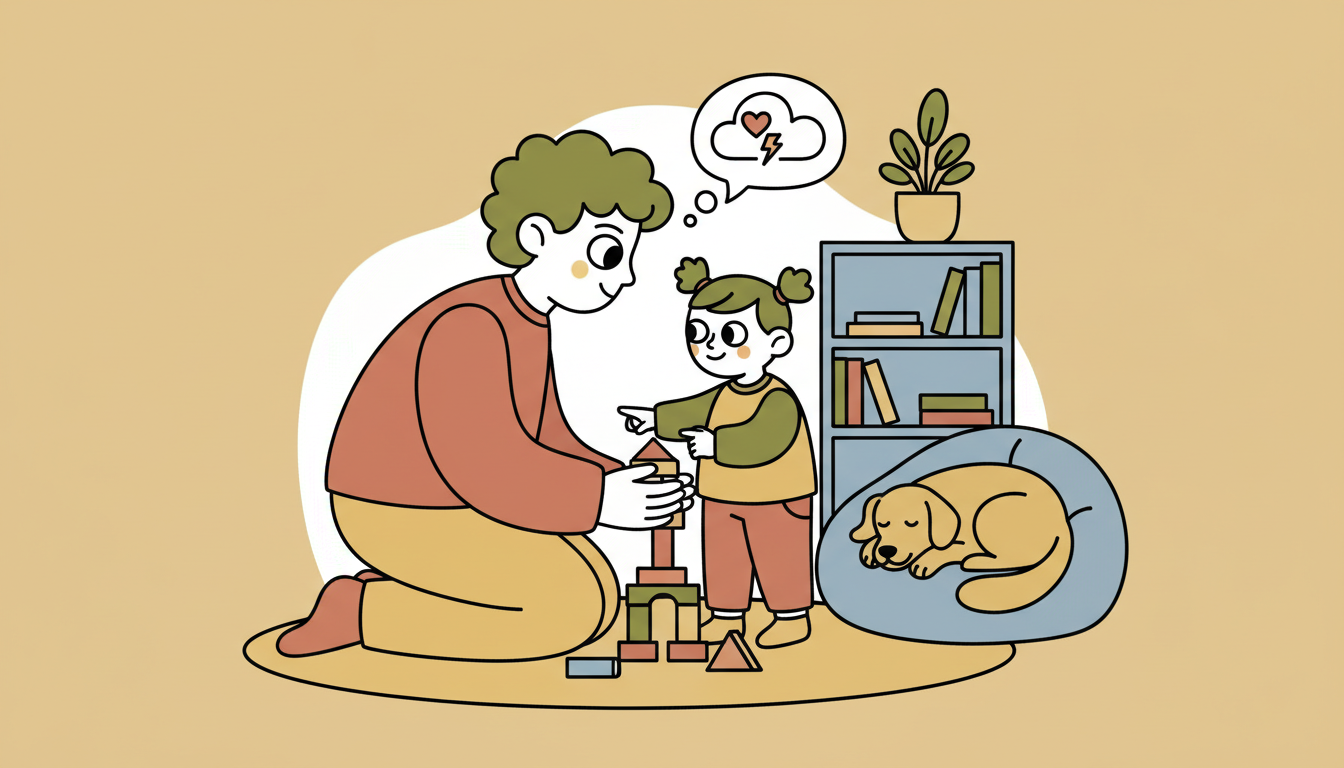
As you play together, narrate the feelings you observe. When your child laughs, say 'You are so happy playing with the blocks.' If they get frustrated, say 'You feel frustrated when the tower falls down. That is hard.' Naming feelings in the moment helps your child connect emotions to experiences.
Fait partie du parcours de développement Steadily — personnalisé pour ton enfant.
Comment faire cette activité
As you play together, narrate the feelings you observe. When your child laughs, say 'You are so happy playing with the blocks.' If they get frustrated, say 'You feel frustrated when the tower falls down. That is hard.' Naming feelings in the moment helps your child connect emotions to experiences.
Pourquoi ça marche
Validating children's empathetic and emotional responses in real time builds emotional intelligence. When parents show empathy to their child while teaching about emotions, children develop the safe foundation needed to recognize emotions in themselves and others (Bhansali, B., 2023). Children with empathetic parents show significantly higher social competence (Liu, S., Wang, L., Zhang, L., & Tian, L., 2020).
Conseils pour les parents
Notice and name both positive and challenging emotions. All feelings are valid.
Use simple, clear words. Repeat the same emotion words across different situations so your child learns the patterns.
Matériel nécessaire
Whatever toys you are already playing with
Méthodes d'apprentissage
Symbolic and Pretend PlaySongs, Stories, and RhymesSocial Learning Through Peers

Tu as aimé cette activité ? Laisse-nous planifier pour toi.
Steadily personnalise chaque activité pour ton enfant — ses centres d'intérêt, son stade de développement, les traits qu'il développe — pour que le jeu soit plus amusant et que chaque instant compte.
Découvre comment fonctionne Steadily →