Feelings about honesty
3–4 ansSuccess MindsetAucun matériel nécessaire
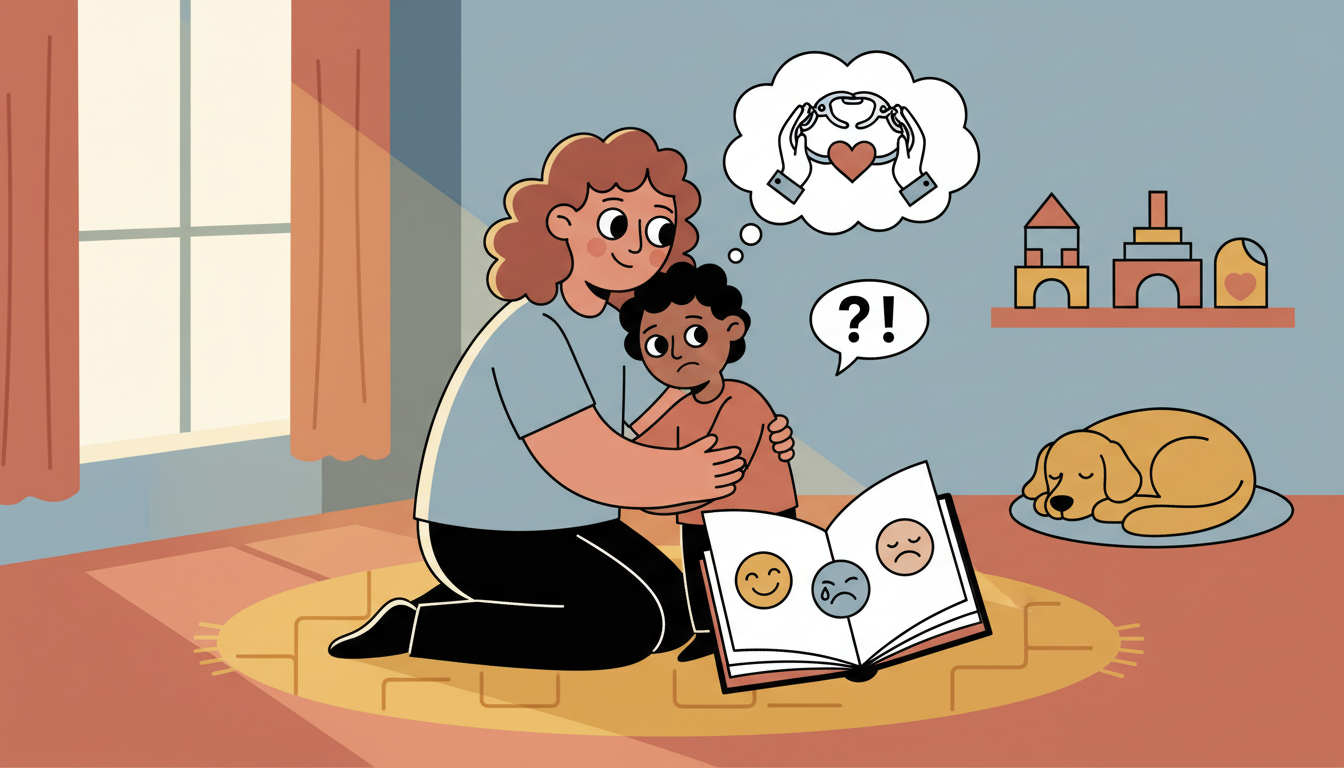
When honesty situations arise naturally, talk about the feelings involved. Discuss how it feels to tell the truth, how it feels when someone lies to us, and how trust makes relationships feel safe. Use simple emotion words your child knows. This connects integrity to emotional understanding.
Fait partie du parcours de développement Steadily — personnalisé pour ton enfant.
Comment faire cette activité
When honesty situations arise naturally, talk about the feelings involved. Discuss how it feels to tell the truth, how it feels when someone lies to us, and how trust makes relationships feel safe. Use simple emotion words your child knows. This connects integrity to emotional understanding.
Pourquoi ça marche
Children who demonstrate truthfulness and accountability show stronger trust-building capabilities, correlating with better collaborative relationships and academic success (Hoffman, 2000). At 36-48 months, emotional understanding is developing rapidly. Connecting honesty to feelings helps children internalize why integrity matters beyond just following rules.
Conseils pour les parents
Share your own feelings about honesty in simple terms. "I feel proud when I tell the truth, even when it's hard."
Validate your child's feelings about difficult honesty moments. "It can feel scary to tell the truth sometimes. I'm proud of you for being brave."
Matériel nécessaire
None
Méthodes d'apprentissage
Narrative and Literacy-Rich ExperiencesCollaborative and Cooperative PlayInquiry-Based Learning

Tu as aimé cette activité ? Laisse-nous planifier pour toi.
Steadily personnalise chaque activité pour ton enfant — ses centres d'intérêt, son stade de développement, les traits qu'il développe — pour que le jeu soit plus amusant et que chaque instant compte.
Découvre comment fonctionne Steadily →