Emotion check-in time
3–4 ansFamily ConnectionAucun matériel nécessaire
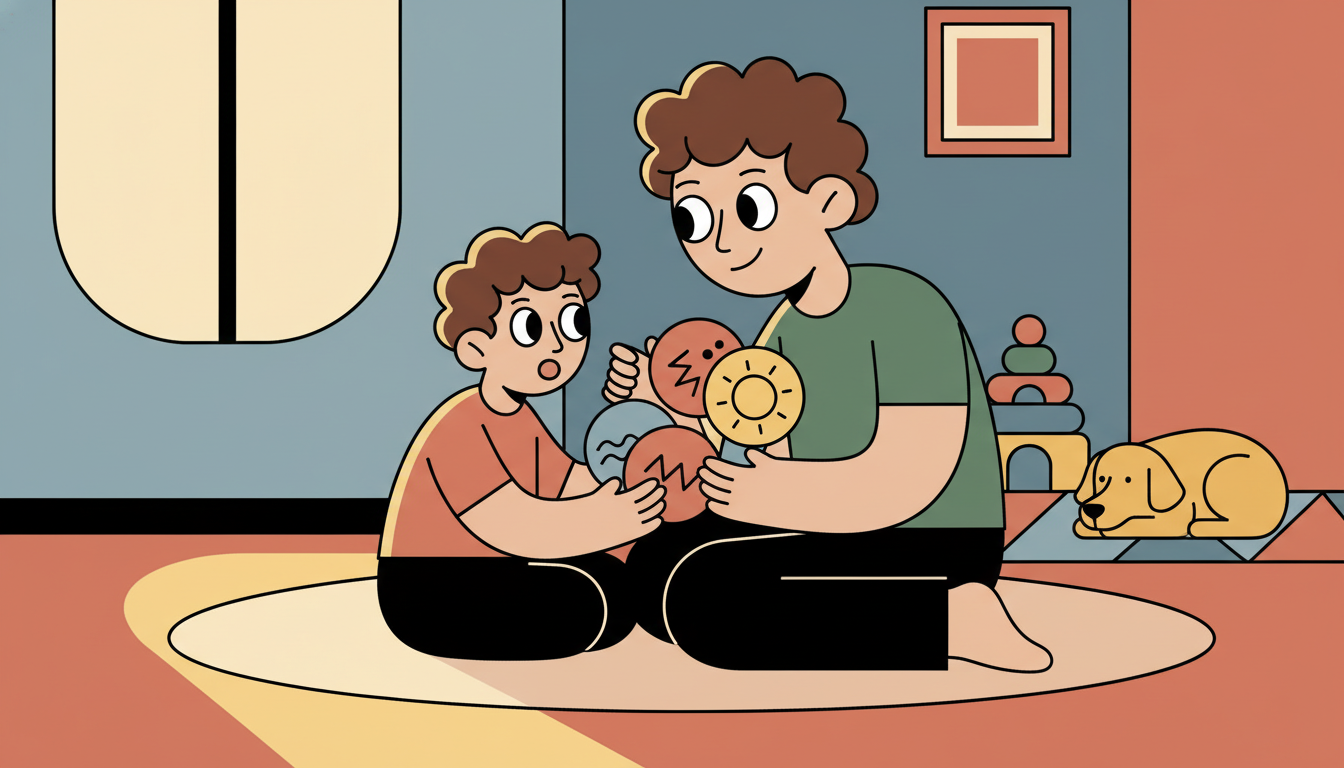
Set aside a few minutes each day to ask your child how they are feeling. Listen closely and reflect back what you hear. You might say, "It sounds like you felt frustrated when your tower fell down." This simple practice helps your child feel understood and builds trust between you.
Fait partie du parcours de développement Steadily — personnalisé pour ton enfant.
Comment faire cette activité
Set aside a few minutes each day to ask your child how they are feeling. Listen closely and reflect back what you hear. You might say, "It sounds like you felt frustrated when your tower fell down." This simple practice helps your child feel understood and builds trust between you.
Pourquoi ça marche
Secure attachment helps children learn to express emotions appropriately and develop better emotional regulation throughout life (Ainsworth et al., 1978). When you attune to and validate your child's emotions, you strengthen their ability to trust you with their feelings. Research shows securely attached children demonstrate better emotion understanding and modulation, as they learn to appraise situations with changing demands (Thompson, 2008).
Conseils pour les parents
Let your child lead the conversation. You do not need to fix their feelings, just acknowledge them.
Use simple feeling words like happy, sad, frustrated, or excited. Your child will learn to name their emotions.
If your child is not ready to talk, that is okay. You can try again later. Stay patient and available.
Matériel nécessaire
None
Méthodes d'apprentissage
Collaborative and Cooperative PlayNarrative and Literacy-Rich ExperiencesProject-Based Learning

Tu as aimé cette activité ? Laisse-nous planifier pour toi.
Steadily personnalise chaque activité pour ton enfant — ses centres d'intérêt, son stade de développement, les traits qu'il développe — pour que le jeu soit plus amusant et que chaque instant compte.
Découvre comment fonctionne Steadily →