Emotion check-in
2–3 ansEmotional WellbeingAucun matériel nécessaire
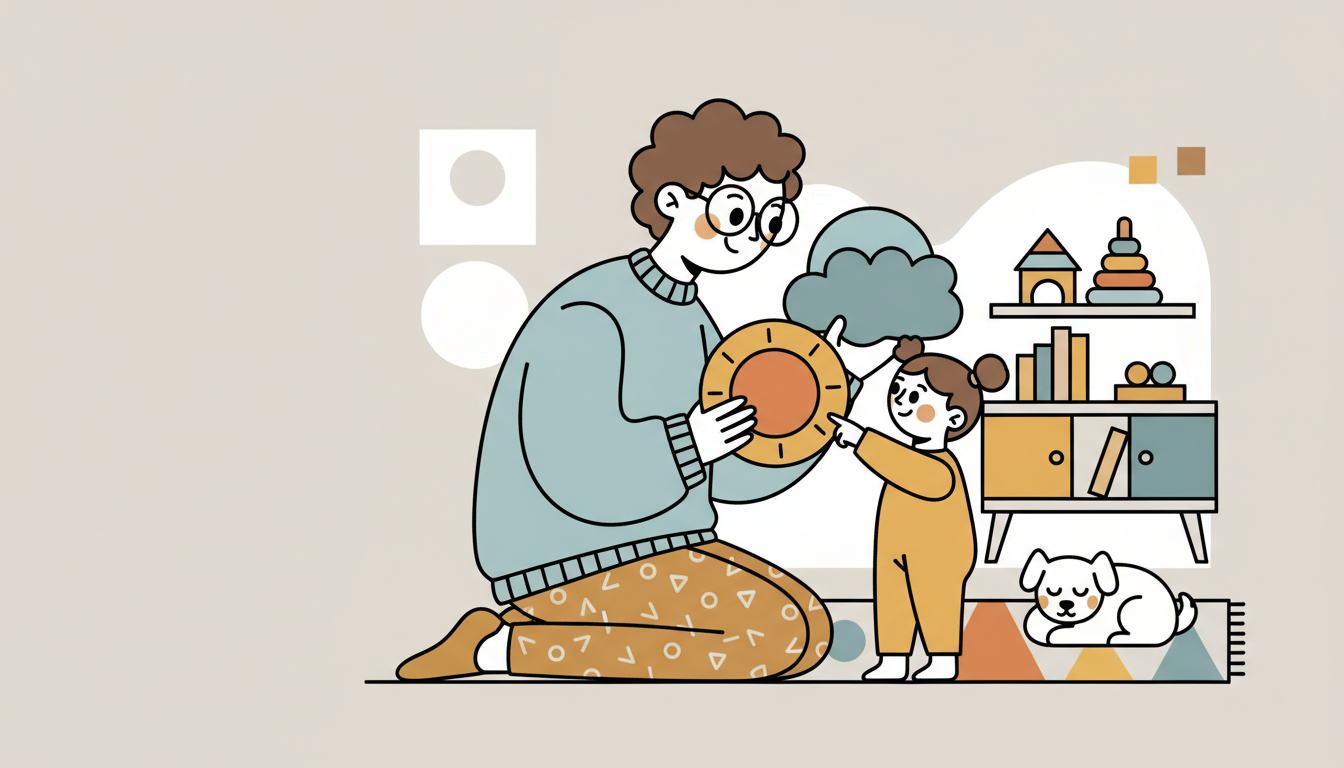
Build a routine of asking your child how they're feeling at regular times during the day. Use simple choices like 'Are you feeling happy or tired right now?' Accept whatever answer they give and name it back to them.
Fait partie du parcours de développement Steadily — personnalisé pour ton enfant.
Comment faire cette activité
Build a routine of asking your child how they're feeling at regular times during the day. Use simple choices like 'Are you feeling happy or tired right now?' Accept whatever answer they give and name it back to them.
This brief practice helps your child develop self-awareness by tuning into their internal emotional state. It normalizes talking about feelings as part of everyday life.
Pourquoi ça marche
Self-awareness is the foundational component of emotional intelligence (Goleman, 1995). Children whose emotions were acknowledged and labeled by parents at age 2-3 showed significantly better emotional regulation at age 4-5, and emotion coaching at this age predicted fewer behavior problems in elementary school (Goleman, 1995). This practice builds intrapersonal emotional intelligence, which research shows is linked to academic motivation (Mayer et al., 1999).
Conseils pour les parents
Share your own feelings too. You might say, 'I'm feeling a little tired right now.'
Don't correct their answer. If they say they're happy when they seem sad, just reflect it back. Self-awareness takes time to develop.
Matériel nécessaire
None
Méthodes d'apprentissage
Symbolic and Pretend PlaySongs, Stories, and RhymesSocial Learning Through Peers

Tu as aimé cette activité ? Laisse-nous planifier pour toi.
Steadily personnalise chaque activité pour ton enfant — ses centres d'intérêt, son stade de développement, les traits qu'il développe — pour que le jeu soit plus amusant et que chaque instant compte.
Découvre comment fonctionne Steadily →