What happens if experiment
2–3 ansSuccess MindsetMatériel : Water in a bowl or basin
Safe objects to test (plastic toys, wooden spoons, small balls, blocks)
Towel for cleanup
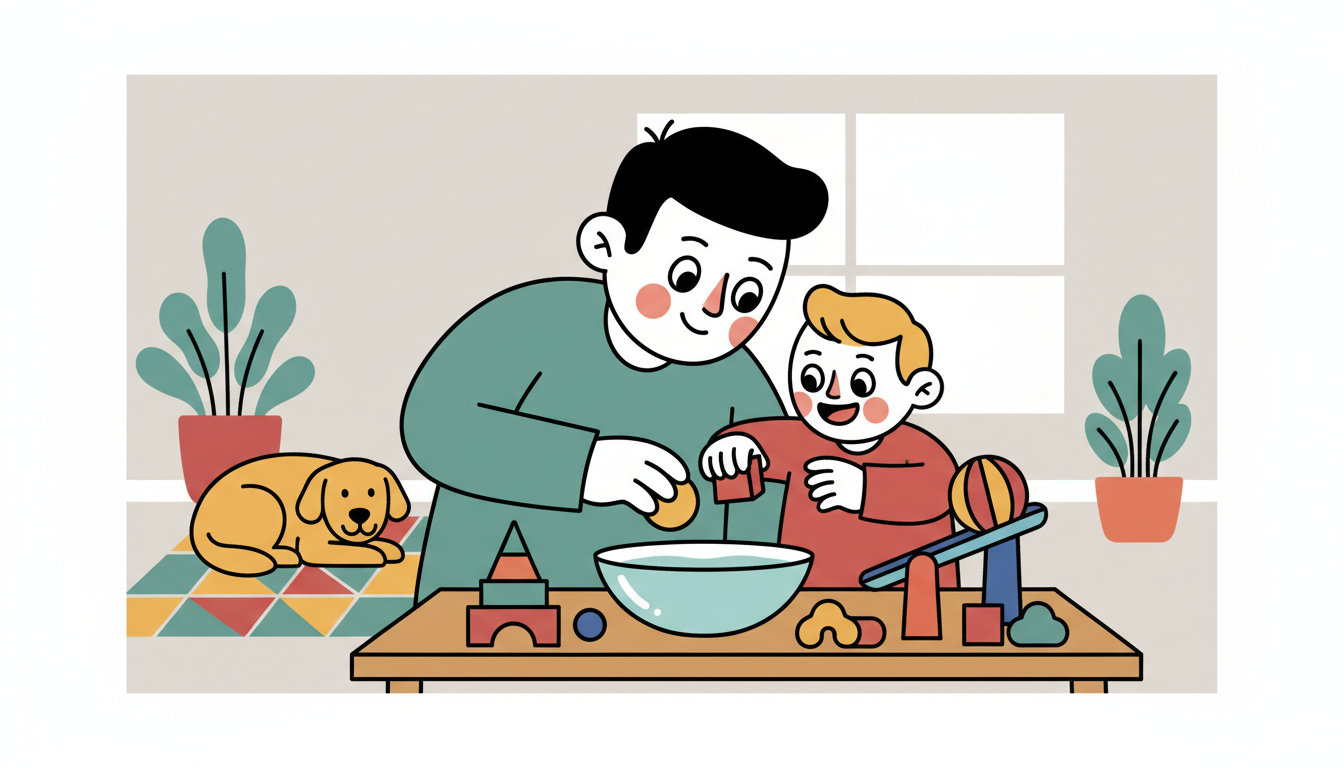
Set up simple cause-and-effect experiments using everyday items. Try dropping different objects into water to see what floats and what sinks. Roll balls of different sizes down a ramp. Stack blocks to see how high you can build before they fall. Let your child make predictions before each try, then discover what actually happens. Talk about what you both notice together.
Fait partie du parcours de développement Steadily — personnalisé pour ton enfant.
Comment faire cette activité
Set up simple cause-and-effect experiments using everyday items. Try dropping different objects into water to see what floats and what sinks. Roll balls of different sizes down a ramp. Stack blocks to see how high you can build before they fall. Let your child make predictions before each try, then discover what actually happens. Talk about what you both notice together.
Pourquoi ça marche
Trial-and-error problem solving is exactly how children this age learn best. When children are curious about outcomes, they remember what they discover much better than when they're simply told information (Gruber et al., 2014). This hands-on exploration builds scientific thinking skills while supporting your child's natural drive to understand how the world works. Research shows that fostering this kind of curiosity during early childhood optimizes later academic achievement (Arnone et al., 2011). The predictions and discoveries create memorable learning moments.
Conseils pour les parents
Ask open-ended questions like "What do you think will happen?" before each experiment. There are no wrong answers.
Keep the experiments simple and safe. You're building curiosity, not teaching physics concepts yet.
Let your child repeat the same experiment multiple times if they want. Repetition is how they learn at this age.
Matériel nécessaire
Water in a bowl or basin
Safe objects to test (plastic toys, wooden spoons, small balls, blocks)
Towel for cleanup
Méthodes d'apprentissage
Symbolic and Pretend PlayHands-On Sensory ActivitiesInteractive Play-Based Learning

Tu as aimé cette activité ? Laisse-nous planifier pour toi.
Steadily personnalise chaque activité pour ton enfant — ses centres d'intérêt, son stade de développement, les traits qu'il développe — pour que le jeu soit plus amusant et que chaque instant compte.
Découvre comment fonctionne Steadily →