Voice tone feelings
6–12 moisEmotional WellbeingAucun matériel nécessaire
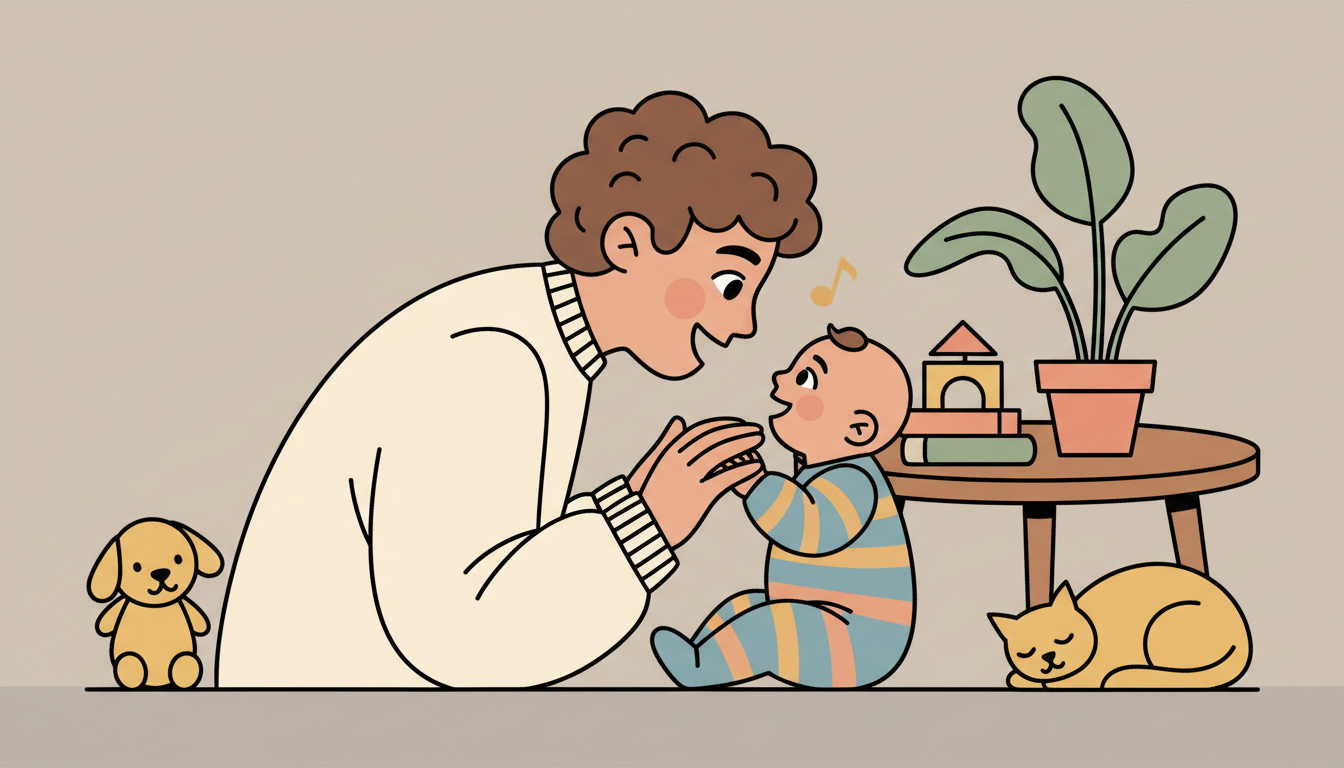
Use different tones of voice while talking to your child and notice their response. Try a calm, slow voice. Try a playful, higher voice. Try a warm, gentle voice. Your child will start to recognize what different tones communicate.
Fait partie du parcours de développement Steadily — personnalisé pour ton enfant.
Comment faire cette activité
Use different tones of voice while talking to your child and notice their response. Try a calm, slow voice. Try a playful, higher voice. Try a warm, gentle voice. Your child will start to recognize what different tones communicate.
Your tone of voice is an emotion all by itself. It teaches your child how to recognize feelings just by listening.
Pourquoi ça marche
Responsive interaction through vocal communication helps infants learn to recognize and respond to different emotional cues. Caregivers who vary their tone of voice teach children that emotions are expressed in multiple ways and help build emotional awareness. This sensory exploration of emotional communication, combined with responsive interaction, builds the emotional recognition skills that form the foundation of emotional intelligence (Goleman, 1995).
Conseils pour les parents
Exaggerate your tones a bit so your child can clearly hear the difference. This helps them learn to recognize emotional nuance.
Watch your child's response. Do they smile at playful tones? Do they settle with calm tones? Your child will guide you toward what works for them.
Matériel nécessaire
None
Méthodes d'apprentissage
Responsive InteractionSensory Exploration

Tu as aimé cette activité ? Laisse-nous planifier pour toi.
Steadily personnalise chaque activité pour ton enfant — ses centres d'intérêt, son stade de développement, les traits qu'il développe — pour que le jeu soit plus amusant et que chaque instant compte.
Découvre comment fonctionne Steadily →