Teddy needs care
2–3 ansFamily ConnectionMatériel : Stuffed animals or dolls
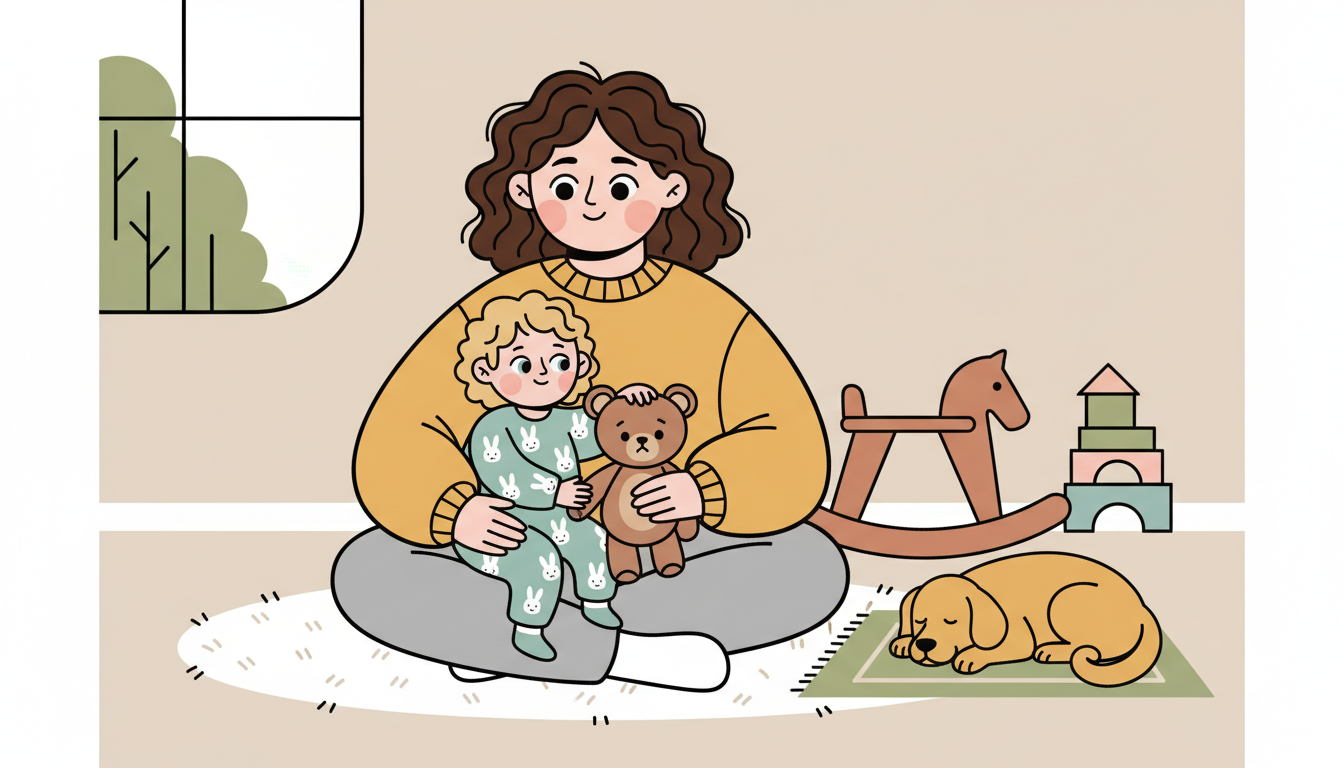
Give your child a stuffed animal or doll and suggest it might be tired, hungry, or sad. Encourage your child to care for it. You might say 'Bunny looks sad. What can we do?' Model gentle touches and soothing words. Let your child practice being kind and caring.
Fait partie du parcours de développement Steadily — personnalisé pour ton enfant.
Comment faire cette activité
Give your child a stuffed animal or doll and suggest it might be tired, hungry, or sad. Encourage your child to care for it. You might say 'Bunny looks sad. What can we do?' Model gentle touches and soothing words. Let your child practice being kind and caring.
Pourquoi ça marche
Pretend play caring for dolls teaches children to respond compassionately to others' emotions, a key childhood behavior that predicts stronger adult empathy (Eisenberg, N., Spinrad, T. L., & Knafo-Noam, A., 2015). When parents show empathy and model caring responses, children learn to create safe spaces for emotional expression (Bhansali, B., 2023). Symbolic and pretend play is critical for emotional development at this age.
Conseils pour les parents
Keep it simple. Your child may just hug the toy, and that is enough.
Praise caring behaviors warmly. Say 'You are being so gentle. Bunny feels better now.'
Matériel nécessaire
Stuffed animals or dolls
Méthodes d'apprentissage
Symbolic and Pretend PlaySongs, Stories, and RhymesSocial Learning Through Peers

Tu as aimé cette activité ? Laisse-nous planifier pour toi.
Steadily personnalise chaque activité pour ton enfant — ses centres d'intérêt, son stade de développement, les traits qu'il développe — pour que le jeu soit plus amusant et que chaque instant compte.
Découvre comment fonctionne Steadily →