Story time problem solving
2–3 ansFamily ConnectionMatériel : Children's books with simple conflict themes
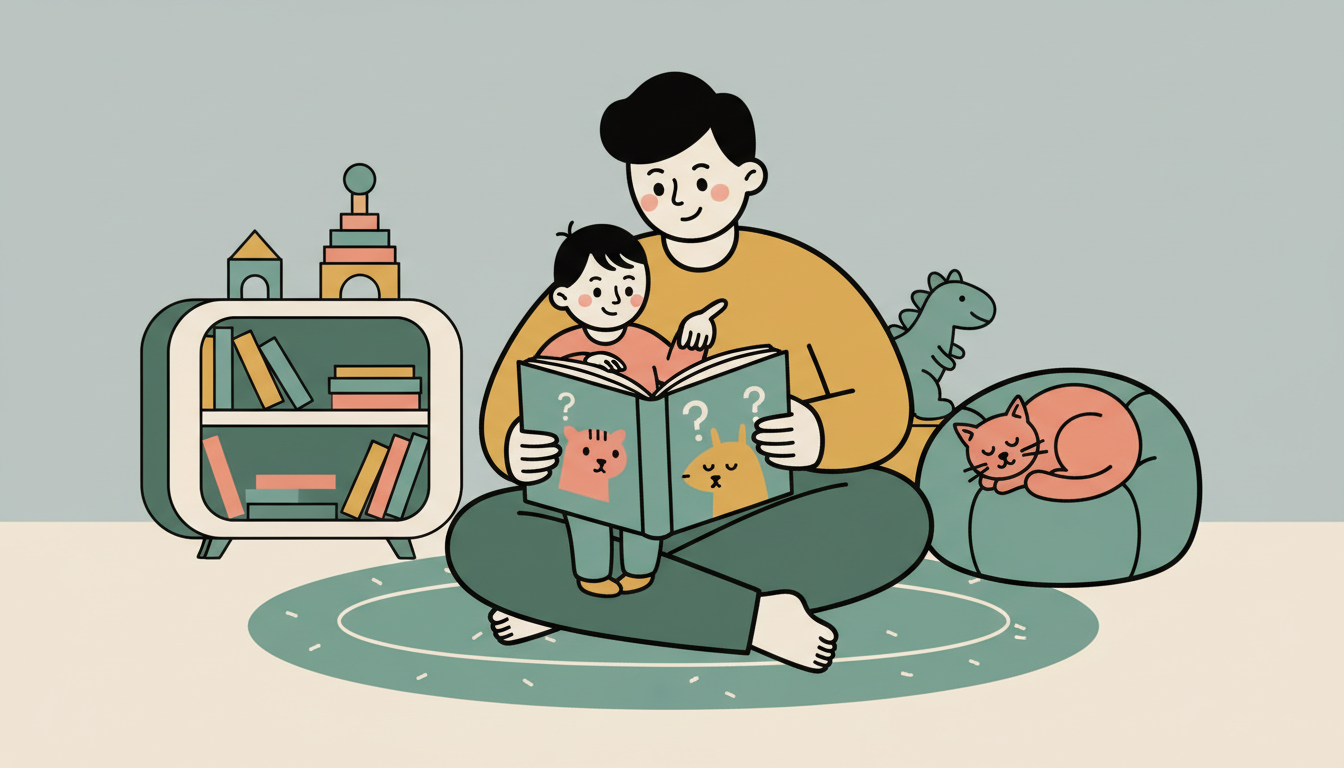
Choose books where characters have simple disagreements. Pause at conflict moments and ask 'What happened here? How do you think they feel?' Then ask 'What could they do?' Point to pictures as you talk. Keep it simple with one or two ideas. Books create safe distance to explore conflicts without personal stakes.
Fait partie du parcours de développement Steadily — personnalisé pour ton enfant.
Comment faire cette activité
Choose books where characters have simple disagreements. Pause at conflict moments and ask 'What happened here? How do you think they feel?' Then ask 'What could they do?' Point to pictures as you talk. Keep it simple with one or two ideas. Books create safe distance to explore conflicts without personal stakes.
Pourquoi ça marche
Stories provide scaffolding for understanding social situations and solutions. Children who learn to identify and discuss conflicts, even in pretend scenarios, develop stronger problem-solving abilities. Research shows children learning these skills maintain 30% better emotional regulation and relationship maintenance (Shantz, 1987).
Conseils pour les parents
Pick books with clear, simple conflicts appropriate for this age. Don't worry if your child can't answer questions yet. You can model by answering your own questions. The goal is exposure to conflict resolution concepts, not perfect comprehension.
Matériel nécessaire
Children's books with simple conflict themes
Méthodes d'apprentissage
Social Learning Through PeersSymbolic and Pretend PlayInteractive Play-Based Learning

Tu as aimé cette activité ? Laisse-nous planifier pour toi.
Steadily personnalise chaque activité pour ton enfant — ses centres d'intérêt, son stade de développement, les traits qu'il développe — pour que le jeu soit plus amusant et que chaque instant compte.
Découvre comment fonctionne Steadily →