Sitting challenge support
6–12 moisSuccess MindsetAucun matériel nécessaire
As your child practices sitting independently, stay close but let them balance on their own. When they wobble or tip, describe what's happening: 'You're working to stay up' or 'Your body is learning to balance.' Offer support only when needed. Each time they try again after tipping, acknowledge their persistence with simple words.
Fait partie du parcours de développement Steadily — personnalisé pour ton enfant.
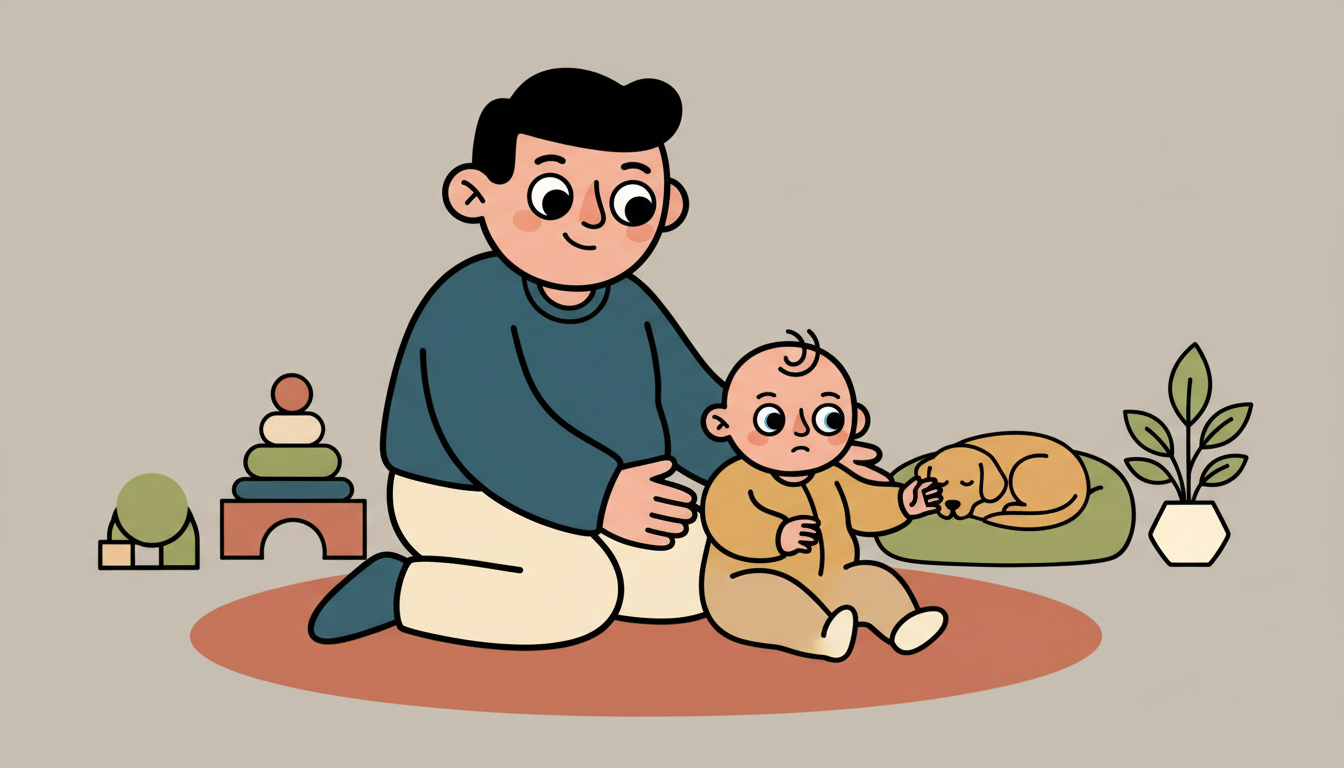
Comment faire cette activité
As your child practices sitting independently, stay close but let them balance on their own. When they wobble or tip, describe what's happening: 'You're working to stay up' or 'Your body is learning to balance.' Offer support only when needed. Each time they try again after tipping, acknowledge their persistence with simple words.
Pourquoi ça marche
Learning to sit requires repeated attempts and frequent failures. By staying present but not rescuing immediately, you teach your child that setbacks are normal and that trying again is valued. Students with growth mindset show 30 to 40 percent greater likelihood of completing challenging tasks compared to fixed mindset peers (Duckworth, A. L., Peterson, C., Matthews, M. D., & Kelly, D. R., 2007). This persistence begins in infancy when caregivers respond to struggles with calm support rather than immediate solutions.
Conseils pour les parents
Sit nearby with hands ready but not hovering. Give them space to problem-solve their balance.
Keep sessions short. Two to three minutes is enough for this age.
Matériel nécessaire
None
Méthodes d'apprentissage
Responsive InteractionMovement-Based Learning

Tu as aimé cette activité ? Laisse-nous planifier pour toi.
Steadily personnalise chaque activité pour ton enfant — ses centres d'intérêt, son stade de développement, les traits qu'il développe — pour que le jeu soit plus amusant et que chaque instant compte.
Découvre comment fonctionne Steadily →