Puzzle piece practice
1–2 ansSuccess MindsetMatériel : Simple 2-4 piece puzzle
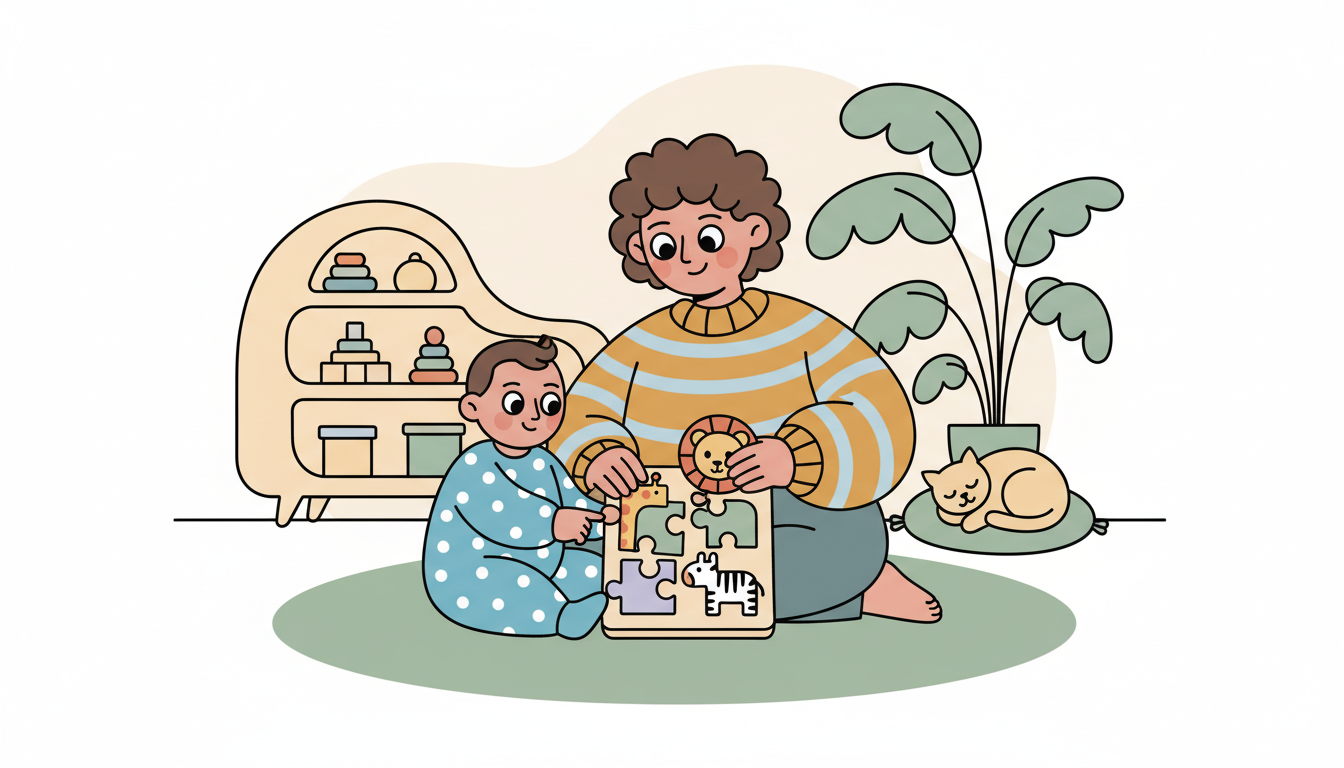
Offer a simple two to four piece puzzle that's slightly challenging for your child's current skill level. Sit nearby and let them explore. When they struggle, comment on what they're doing: 'You're trying to fit that piece' or 'You turned it around.' If they get frustrated, you can try one piece yourself, narrating your own trial and error: 'This one doesn't fit. Let me try another.' This normalizes the learning process.
Fait partie du parcours de développement Steadily — personnalisé pour ton enfant.
Comment faire cette activité
Offer a simple two to four piece puzzle that's slightly challenging for your child's current skill level. Sit nearby and let them explore. When they struggle, comment on what they're doing: 'You're trying to fit that piece' or 'You turned it around.' If they get frustrated, you can try one piece yourself, narrating your own trial and error: 'This one doesn't fit. Let me try another.' This normalizes the learning process.
Pourquoi ça marche
Providing challenges slightly above current ability level creates optimal learning opportunities. Research demonstrates that growth mindset interventions lead to 7 to 10% improvement in achievement compared to fixed mindset peers, with students actively seeking challenging tasks (Blackwell, Trzesniewski, & Dweck, 2007). Puzzles teach children that they can improve through practice and trying different strategies.
Conseils pour les parents
Choose puzzles just above their current skill level. Too easy won't build persistence. Too hard will frustrate.
Wait before jumping in to help. Count to 10 silently if you need to.
When they succeed, focus on their effort: 'You kept trying different ways until it worked.'
Matériel nécessaire
Simple 2-4 piece puzzle
Méthodes d'apprentissage
Hands-On ExplorationImitation and ModelingMontessori Practical Life Activities

Tu as aimé cette activité ? Laisse-nous planifier pour toi.
Steadily personnalise chaque activité pour ton enfant — ses centres d'intérêt, son stade de développement, les traits qu'il développe — pour que le jeu soit plus amusant et que chaque instant compte.
Découvre comment fonctionne Steadily →