Naming feelings together
1–2 ansEmotional WellbeingAucun matériel nécessaire
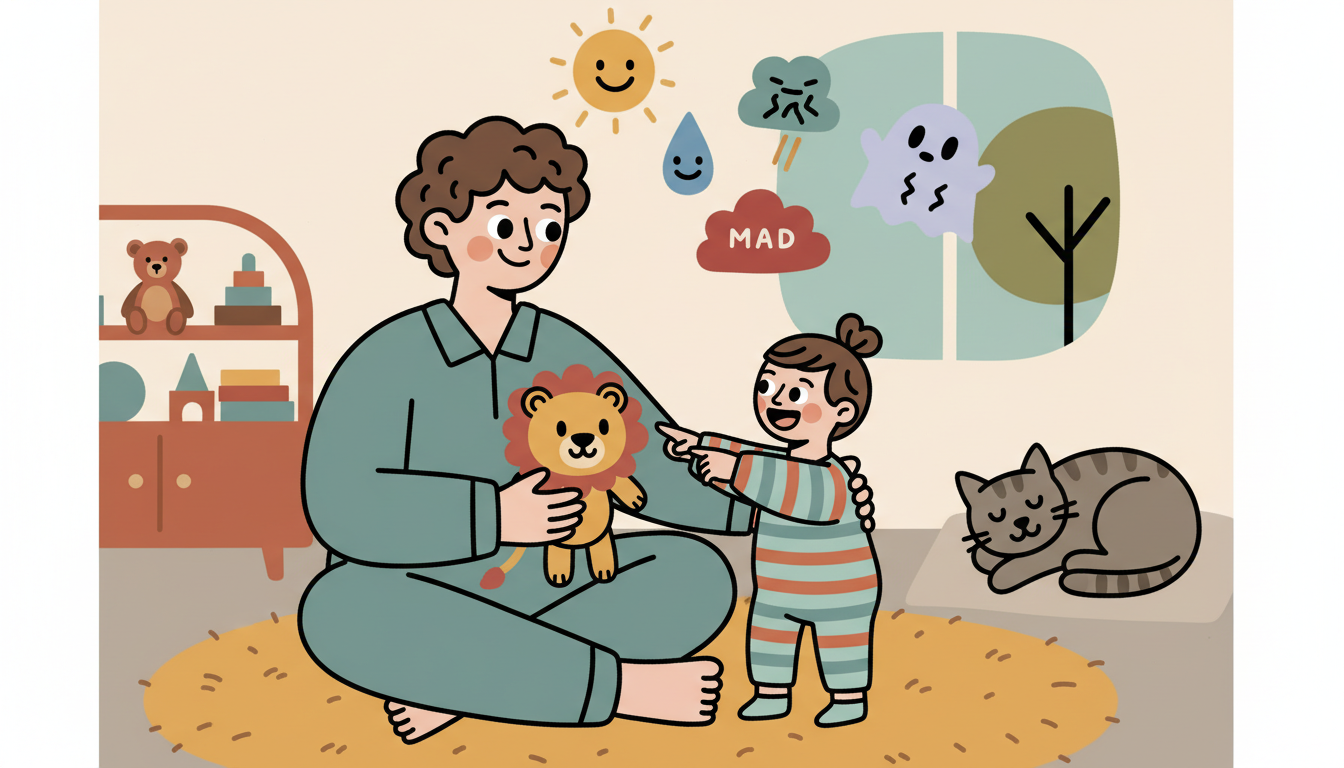
As you play with your child, label emotions as they happen. When your child laughs, say 'You're feeling happy.' When they seem frustrated with a toy, say 'You're feeling frustrated.' Use simple emotion words like happy, sad, mad, and scared. This helps your child connect words to their internal experiences.
Fait partie du parcours de développement Steadily — personnalisé pour ton enfant.
Comment faire cette activité
As you play with your child, label emotions as they happen. When your child laughs, say 'You're feeling happy.' When they seem frustrated with a toy, say 'You're feeling frustrated.' Use simple emotion words like happy, sad, mad, and scared. This helps your child connect words to their internal experiences.
Pourquoi ça marche
Language development at this age enables explicit emotion labeling and discussion. When children learn to name their emotions, they develop better emotional recognition and expression skills that carry into adulthood (Goleman, 1995). This builds the foundation for self-awareness, a core component of emotional intelligence.
Conseils pour les parents
Keep it simple with one or two emotion words at a time.
Use a calm, matter-of-fact tone when naming emotions.
Label your own emotions too, like 'I'm feeling tired' or 'I'm feeling happy to see you.'
Matériel nécessaire
None
Méthodes d'apprentissage
Language-Rich EnvironmentImitation and ModelingBeginning Symbolic Play

Tu as aimé cette activité ? Laisse-nous planifier pour toi.
Steadily personnalise chaque activité pour ton enfant — ses centres d'intérêt, son stade de développement, les traits qu'il développe — pour que le jeu soit plus amusant et que chaque instant compte.
Découvre comment fonctionne Steadily →