Name what baby feels
6–12 moisFamily ConnectionAucun matériel nécessaire
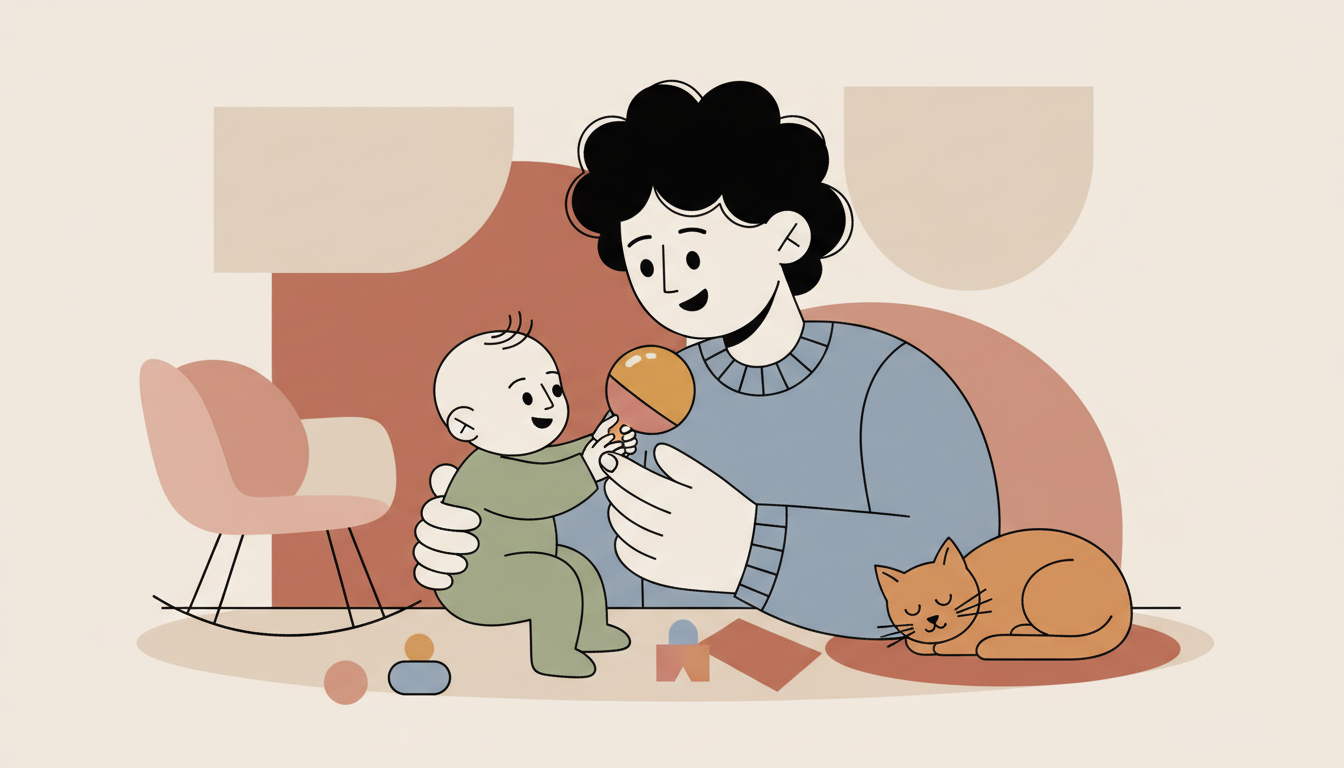
As you interact with your baby, put words to what they might be feeling. When they reach for a toy, you might say, "You're excited about that rattle." When they cry, try "You feel frustrated right now." You're not expecting them to understand the words yet, but you're showing them that feelings can be recognized and shared. This builds the foundation for emotional intelligence.
Fait partie du parcours de développement Steadily — personnalisé pour ton enfant.
Comment faire cette activité
As you interact with your baby, put words to what they might be feeling. When they reach for a toy, you might say, "You're excited about that rattle." When they cry, try "You feel frustrated right now." You're not expecting them to understand the words yet, but you're showing them that feelings can be recognized and shared. This builds the foundation for emotional intelligence.
Pourquoi ça marche
Labeling emotions helps babies begin to understand their internal experiences. When parents show empathy by naming feelings, they demonstrate care and compassion consistently, which is how empathy emerges in children (Hoffman, 2000). Research confirms that recognizing and responding sensitively to emotions in early childhood predicts stronger empathy development later (Eisenberg et al., 2015).
Conseils pour les parents
Use a calm, warm voice even when naming difficult feelings like frustration or sadness.
Keep it simple with one feeling word at a time.
This practice helps you tune into your baby's emotional world too.
Matériel nécessaire
None
Méthodes d'apprentissage
Responsive InteractionSensory Exploration

Tu as aimé cette activité ? Laisse-nous planifier pour toi.
Steadily personnalise chaque activité pour ton enfant — ses centres d'intérêt, son stade de développement, les traits qu'il développe — pour que le jeu soit plus amusant et que chaque instant compte.
Découvre comment fonctionne Steadily →