Name feelings as they happen
1–2 ansFamily ConnectionAucun matériel nécessaire
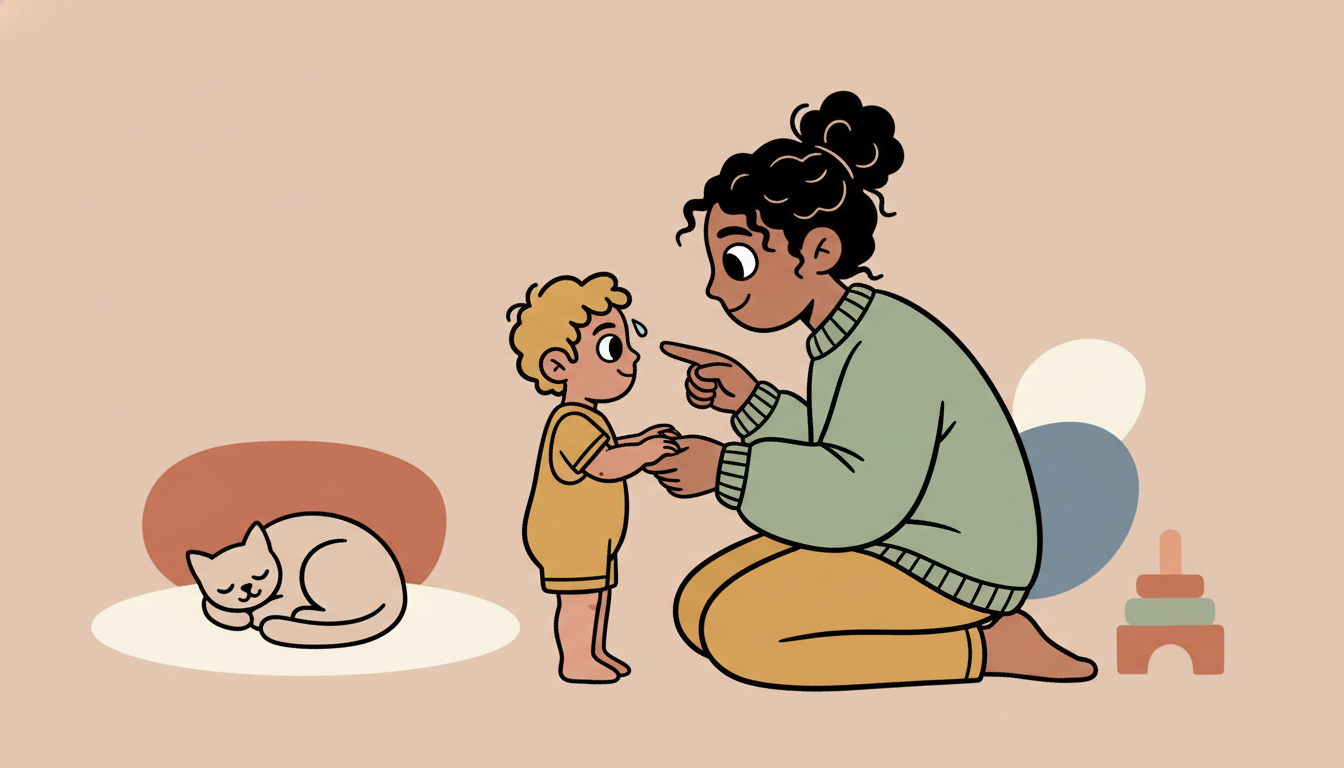
When you notice your child experiencing an emotion, name it for them. Say things like, you seem frustrated, or you look happy. This helps them begin to understand their internal experiences. Keep your tone warm and accepting of whatever they feel.
Fait partie du parcours de développement Steadily — personnalisé pour ton enfant.
Comment faire cette activité
When you notice your child experiencing an emotion, name it for them. Say things like, you seem frustrated, or you look happy. This helps them begin to understand their internal experiences. Keep your tone warm and accepting of whatever they feel.
Pourquoi ça marche
Secure attachment promotes developmental competence in emotion expression and helps children understand and modulate emotions (Thompson, 2008). When you name emotions with acceptance, you teach your child that feelings are safe to express and that you understand their inner world.
Conseils pour les parents
Use simple feeling words like happy, sad, mad, or scared.
Name your own feelings too so they learn emotions are normal.
Accept all emotions without trying to change how they feel.
Matériel nécessaire
None
Méthodes d'apprentissage
Language-Rich EnvironmentImitation and Modeling

Tu as aimé cette activité ? Laisse-nous planifier pour toi.
Steadily personnalise chaque activité pour ton enfant — ses centres d'intérêt, son stade de développement, les traits qu'il développe — pour que le jeu soit plus amusant et que chaque instant compte.
Découvre comment fonctionne Steadily →