Feelings picture walk
2–3 ansFamily ConnectionMatériel : Family photos or picture books
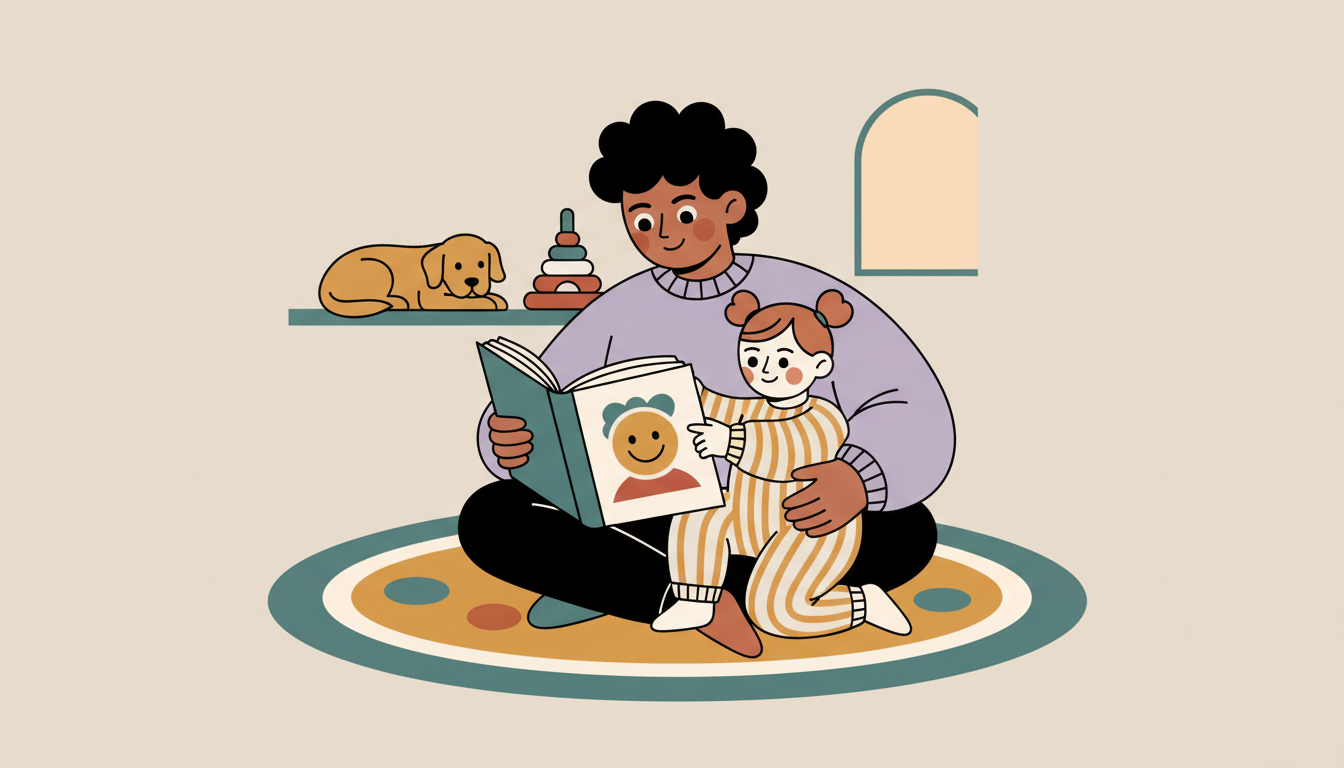
Look at family photos or pictures in books together. Point to faces and ask 'Is grandma happy or sad here?' Talk about what you see in their expressions. You might say 'Look at daddy's big smile. He was so happy that day.' This helps your child practice reading emotional cues in faces.
Fait partie du parcours de développement Steadily — personnalisé pour ton enfant.
Comment faire cette activité
Look at family photos or pictures in books together. Point to faces and ask 'Is grandma happy or sad here?' Talk about what you see in their expressions. You might say 'Look at daddy's big smile. He was so happy that day.' This helps your child practice reading emotional cues in faces.
Pourquoi ça marche
Learning to recognize emotions in others is a foundational empathy skill. This activity helps children move beyond egocentric thinking to understand that others have distinct feelings. The ability to distinguish self from others and recognize others' feelings emerges between 24 and 36 months, making this an ideal activity for this developmental window (Hoffman, M. L., 2000). Recognizing and responding sensitively to emotions predicts positive relationships throughout life (Eisenberg, N., Spinrad, T. L., & Knafo-Noam, A., 2015).
Conseils pour les parents
Use photos of people your child knows. Familiar faces make it easier to connect emotions to real people.
Start with clear, strong emotions. Save subtle expressions for when your child is older.
Matériel nécessaire
Family photos or picture books
Méthodes d'apprentissage
Symbolic and Pretend PlaySongs, Stories, and RhymesSocial Learning Through Peers

Tu as aimé cette activité ? Laisse-nous planifier pour toi.
Steadily personnalise chaque activité pour ton enfant — ses centres d'intérêt, son stade de développement, les traits qu'il développe — pour que le jeu soit plus amusant et que chaque instant compte.
Découvre comment fonctionne Steadily →