Feelings and faces
1–2 ansFamily ConnectionAucun matériel nécessaire
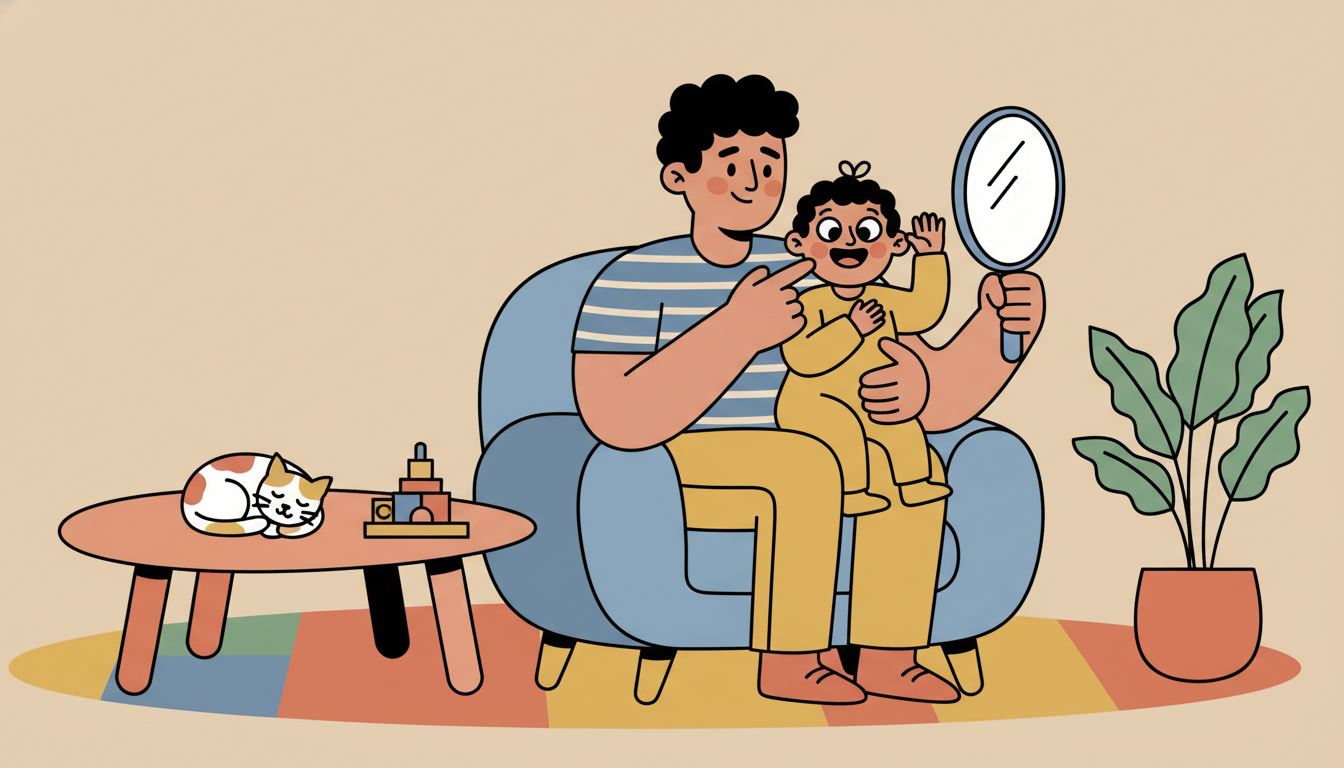
Throughout your day, name your child's feelings when you notice them. Say things like you look happy or I see you feel frustrated. Use a calm, warm tone. You can also make faces together in a mirror and name the emotions you both show.
Fait partie du parcours de développement Steadily — personnalisé pour ton enfant.
Comment faire cette activité
Throughout your day, name your child's feelings when you notice them. Say things like you look happy or I see you feel frustrated. Use a calm, warm tone. You can also make faces together in a mirror and name the emotions you both show.
Pourquoi ça marche
Naming and validating feelings establishes a safe space for open communication, which research shows is essential for building strong parent-child relationships (Hartos & Power, 2000). Quality communication that includes empathy and appropriate responses enhances relationship quality and supports your child's psychological development (Zhang & Li, 2024). Starting this practice during the language explosion period helps your child develop both emotional vocabulary and the habit of expressing feelings openly.
Conseils pour les parents
Keep emotion words simple. Happy, sad, mad, and scared work well for this age.
Name your own feelings too. This helps your child learn that everyone has emotions.
Stay calm and matter of fact. Your child is learning that feelings can be talked about safely.
Matériel nécessaire
None
Méthodes d'apprentissage
Language-Rich EnvironmentImitation and Modeling

Tu as aimé cette activité ? Laisse-nous planifier pour toi.
Steadily personnalise chaque activité pour ton enfant — ses centres d'intérêt, son stade de développement, les traits qu'il développe — pour que le jeu soit plus amusant et que chaque instant compte.
Découvre comment fonctionne Steadily →