Emotional storytelling with toys
1–2 ansEmotional WellbeingMatériel : Stuffed animals or dolls your child already has
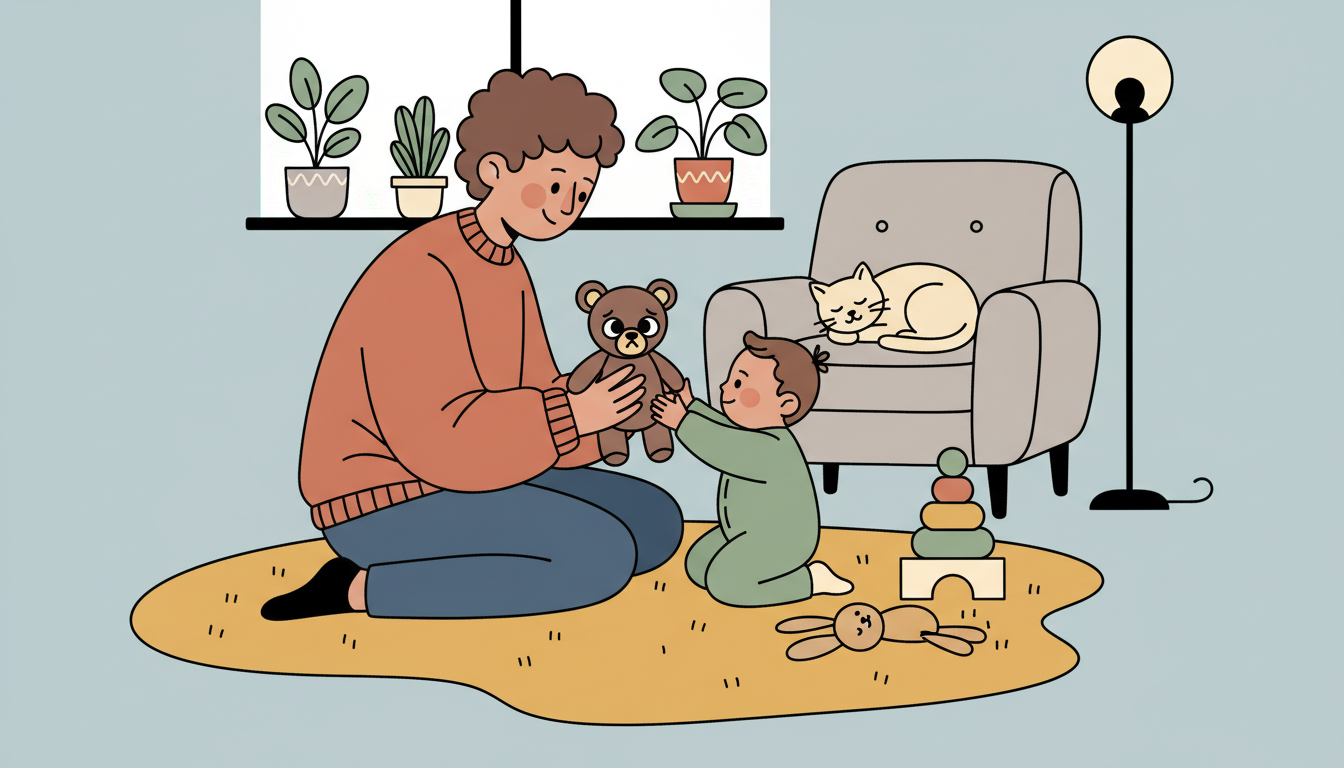
During play time, use your child's toys to act out simple emotional scenarios. Make a stuffed bear sad because it lost its toy, then help it feel better. Use simple language like 'Bear is sad. Bear needs a hug.' Invite your child to help comfort the toy. This uses symbolic play to explore feelings safely.
Fait partie du parcours de développement Steadily — personnalisé pour ton enfant.
Comment faire cette activité
During play time, use your child's toys to act out simple emotional scenarios. Make a stuffed bear sad because it lost its toy, then help it feel better. Use simple language like 'Bear is sad. Bear needs a hug.' Invite your child to help comfort the toy. This uses symbolic play to explore feelings safely.
Pourquoi ça marche
Beginning symbolic play at this age allows children to explore emotional scenarios safely. This builds both emotional understanding and empathy as children practice helping others feel better. Children with higher emotional intelligence show significantly better relationship satisfaction and job performance in adulthood (Bar-On, 2006). Pretend play supports emotional skill development.
Conseils pour les parents
Keep scenarios very simple with clear emotions and resolutions.
Let your child lead sometimes and respond to their play ideas.
End scenarios positively to show that emotions pass and problems can be solved.
Matériel nécessaire
Stuffed animals or dolls your child already has
Méthodes d'apprentissage
Language-Rich EnvironmentImitation and ModelingBeginning Symbolic Play

Tu as aimé cette activité ? Laisse-nous planifier pour toi.
Steadily personnalise chaque activité pour ton enfant — ses centres d'intérêt, son stade de développement, les traits qu'il développe — pour que le jeu soit plus amusant et que chaque instant compte.
Découvre comment fonctionne Steadily →