Emotion matching cards
1–2 ansEmotional WellbeingMatériel : Cards or pictures with simple facial expressions
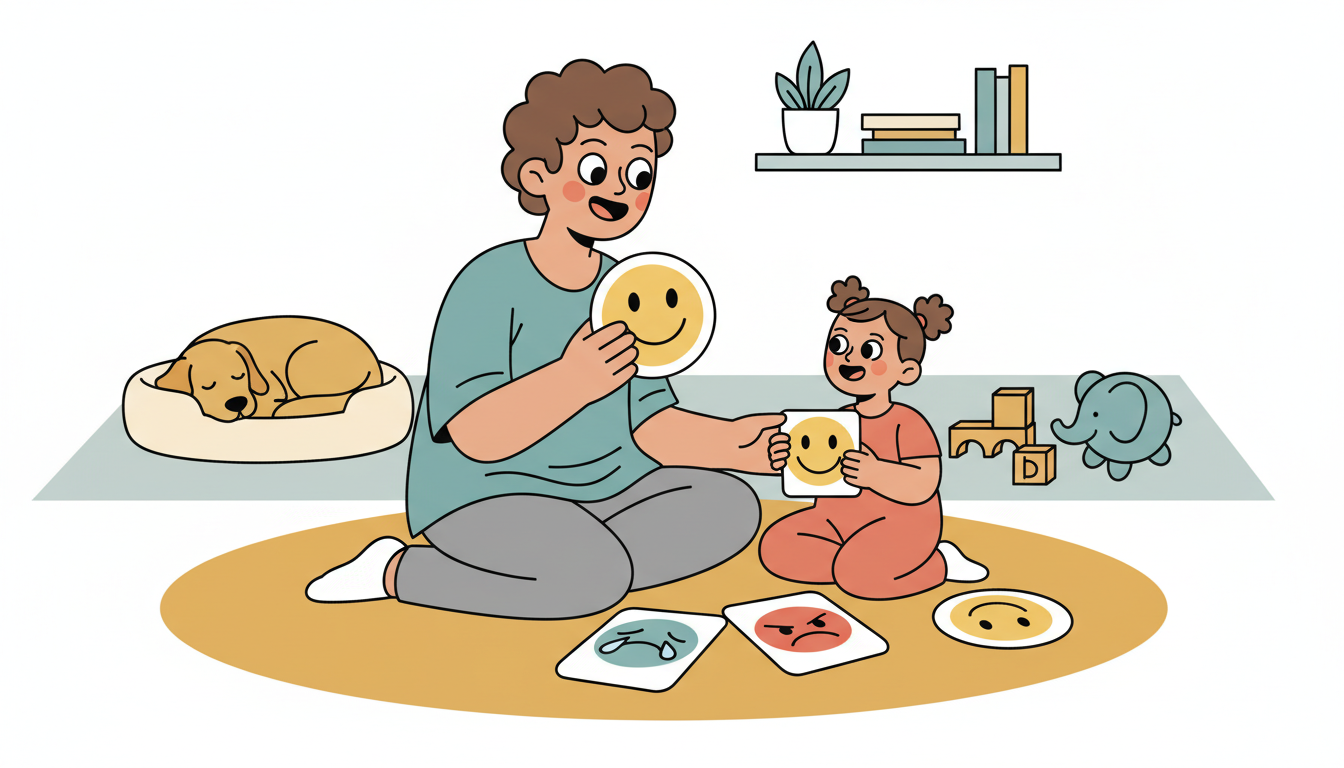
Use simple cards or pictures showing happy, sad, and mad faces. Show your child one card and make that face yourself. Then help them find another card with the same expression. Keep the game short and playful. You can make your own cards by drawing simple faces or cutting pictures from magazines.
Fait partie du parcours de développement Steadily — personnalisé pour ton enfant.
Comment faire cette activité
Use simple cards or pictures showing happy, sad, and mad faces. Show your child one card and make that face yourself. Then help them find another card with the same expression. Keep the game short and playful. You can make your own cards by drawing simple faces or cutting pictures from magazines.
Pourquoi ça marche
Toddlers at this age can recognize and match similar items, making this activity developmentally appropriate. Matching emotions builds emotional recognition skills, a key component of emotional intelligence. Students with higher emotional intelligence show better psychological well-being and positive psychological characteristics (Brackett, Rivers, & Salovey, 2011).
Conseils pour les parents
Start with just two emotions and add more as your child masters these.
Celebrate when they make a match, even if it takes time.
Use real photos of faces if your child responds better to realistic images.
Matériel nécessaire
Cards or pictures with simple facial expressions
Méthodes d'apprentissage
Language-Rich EnvironmentImitation and ModelingBeginning Symbolic Play

Tu as aimé cette activité ? Laisse-nous planifier pour toi.
Steadily personnalise chaque activité pour ton enfant — ses centres d'intérêt, son stade de développement, les traits qu'il développe — pour que le jeu soit plus amusant et que chaque instant compte.
Découvre comment fonctionne Steadily →