Feelings in books
1–2 añosFamily ConnectionMateriales: Picture books with clear emotions shown on faces
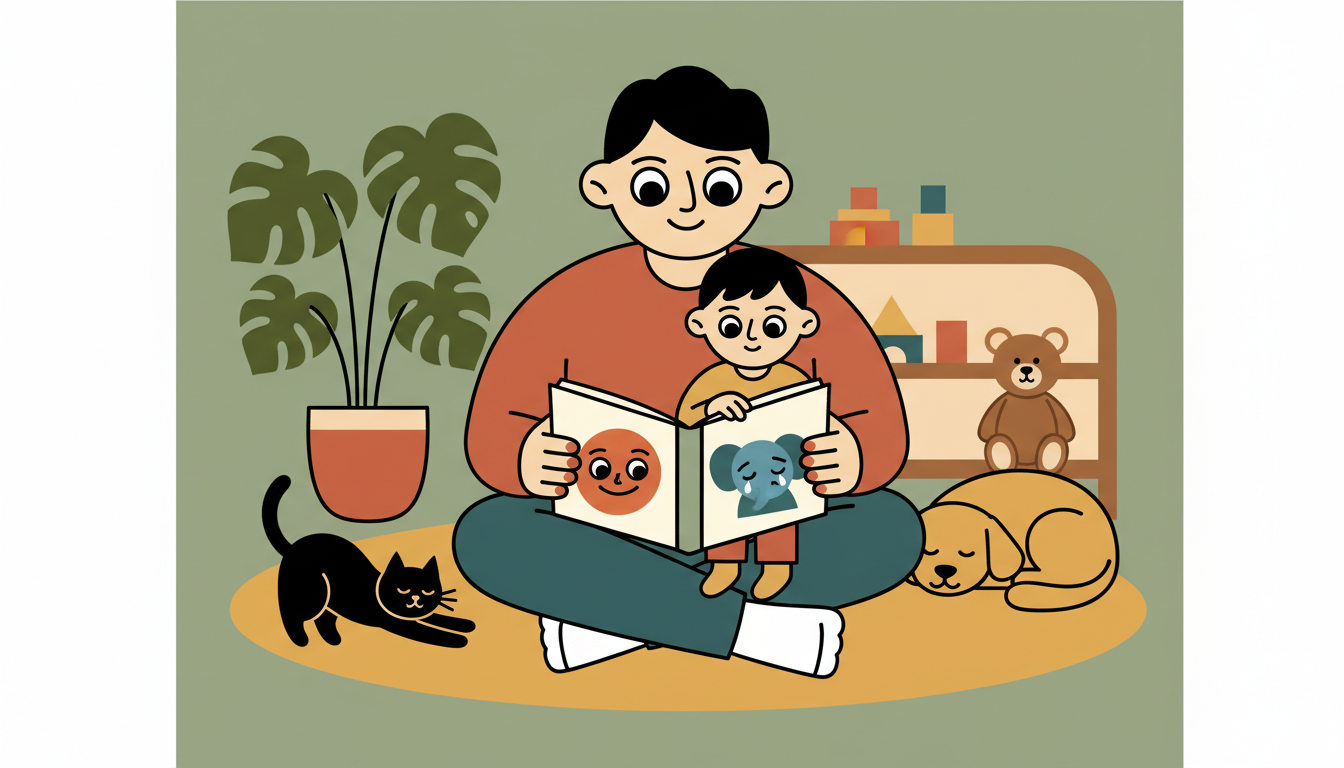
Choose a simple picture book and point out how characters feel as you read together. When you see a happy character, point and say 'She is happy. See her smile?' When a character looks sad, say 'He is sad' and make a sad face. Pause to let your child look at the pictures. This helps your child learn to recognize emotions in others through the safe distance of a story.
Parte del viaje de desarrollo de Steadily — personalizado para tu peque.
Cómo hacer esta actividad
Choose a simple picture book and point out how characters feel as you read together. When you see a happy character, point and say 'She is happy. See her smile?' When a character looks sad, say 'He is sad' and make a sad face. Pause to let your child look at the pictures. This helps your child learn to recognize emotions in others through the safe distance of a story.
Por qué funciona
Books provide a valuable tool for building empathy by showing diverse emotional situations in a safe, controlled way. Research shows that empathy development follows a predictable path from emotional contagion in infancy to cognitive empathy later, and books support this progression by helping children recognize and understand others' emotions (Eisenberg et al., 2015). The language-rich environment of reading together also supports the vocabulary explosion happening at this age, giving children words to think and talk about feelings.
Consejos para padres
Pick books with clear facial expressions in the pictures. Simple board books work well.
Keep your comments short and clear. One or two words about the feeling is enough.
Let your child point at pictures too. Follow their interest and name what they notice.
Materiales necesarios
Picture books with clear emotions shown on faces
Métodos de aprendizaje
Language-Rich EnvironmentImitation and ModelingBeginning Symbolic Play

¿Te encantó esta actividad? Deja que nosotros planifiquemos por ti.
Steadily personaliza cada actividad para tu hijo/a —sus intereses, su etapa, los rasgos que está desarrollando— para que la hora de jugar sea más divertida y cada momento cuente.
Descubre cómo funciona Steadily →