Stuffed animal feelings
2–3 añosEmotional WellbeingMateriales: Stuffed animals or dolls
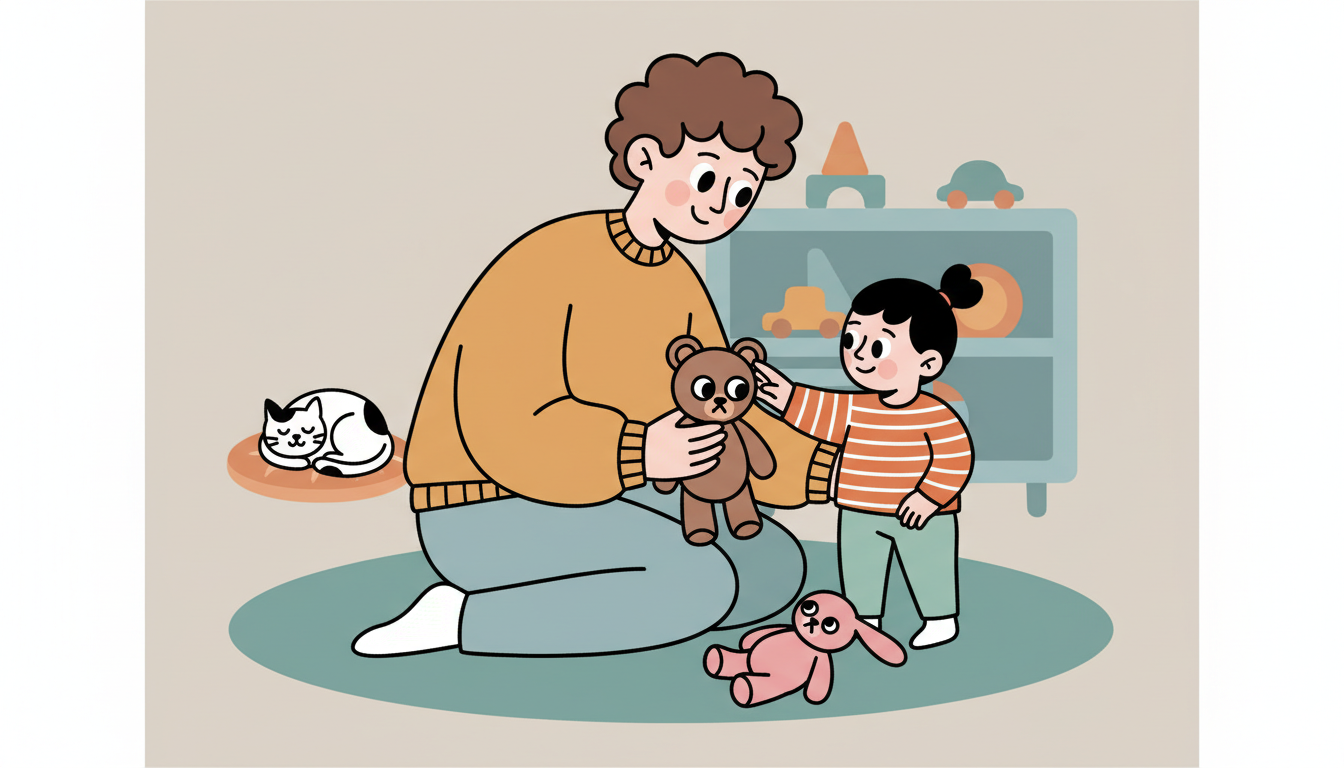
Use stuffed animals or dolls to act out simple emotional scenarios. You might say, 'Teddy fell down. How does Teddy feel?' Let your child respond, then help Teddy feel better together.
Parte del viaje de desarrollo de Steadily — personalizado para tu peque.
Cómo hacer esta actividad
Use stuffed animals or dolls to act out simple emotional scenarios. You might say, 'Teddy fell down. How does Teddy feel?' Let your child respond, then help Teddy feel better together.
This play-based approach lets your child practice empathy and problem-solving in a safe, pretend context. It's easier to talk about a toy's feelings than their own big emotions.
Por qué funciona
Symbolic and pretend play is critical for cognitive, social, and emotional development at this age. Research shows that early emotional intelligence development leads to better emotional recognition and expression skills in adulthood (Goleman, 1995). Empathy is one of the five core components of EQ, and children with higher emotional intelligence experience significantly better relationship satisfaction and mental health outcomes (Bar-On, 2006).
Consejos para padres
Follow your child's lead. If they want to make the stuffed animal do something different, go with it.
You can introduce simple solutions like, 'Should we give Teddy a hug to help him feel better?'
Materiales necesarios
Stuffed animals or dolls
Métodos de aprendizaje
Symbolic and Pretend PlaySongs, Stories, and RhymesSocial Learning Through Peers

¿Te encantó esta actividad? Deja que nosotros planifiquemos por ti.
Steadily personaliza cada actividad para tu hijo/a —sus intereses, su etapa, los rasgos que está desarrollando— para que la hora de jugar sea más divertida y cada momento cuente.
Descubre cómo funciona Steadily →